WIN Celebrates Zhao Pan's 2026 Ig Nobel Physics Prize
Research that started with a splash and ended with international recognition
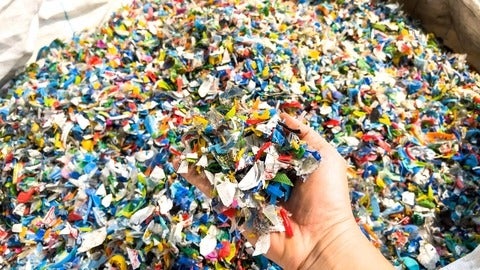
WIN is spotlighting Dr. Yimin A. Wu’s seed‑funded research, which uses nanotechnology to break down and repurpose plastic waste, advancing Waterloo’s sustainability goals through the Global Futures Initiative.
The University of Waterloo continues to be recognized among the top universities in Canada and globally according to the 2025 Academic Ranking of World Universities subject rankings by Shanghai Ranking Consultancy. Five programs rank first in Canada while thirteen programs rank top 50 globally.
Dr. Yanwei Lum has been selected as the recipient of the prestigious Waterloo Institute for Nanotechnology (WIN) 2025 Rising Star Award.
Dr. Lum, Assistant Professor at the National University of Singapore, Department of Chemical and Biomolecular Engineering will accept this award in person at the WIN Day Talk on May 1, 2026.
Dr. Fengwang Li has been selected as the recipient of the prestigious Waterloo Institute for Nanotechnology (WIN) 2024 Rising Star Award.
Dr. Li, a Senior Lecturer & Director of Learning & Teaching at the University of Sydney, Faculty of Engineering, School of Chemical and Biomolecular Engineering, will accept this award in person at the WIN Day Talk on Thursday, May 1, 2025.
Linda Nazar, University of Waterloo professor and Canada Research Chair has been recognized for her outstanding contribution in the field of energy with a Royal Society U.K. Hughes Medal.
New Ontario Battery and Electrochemistry Research Centre (OBEC) to be spearheaded by WIN Members Linda Nazar and Michael Pope.
On 18th January 2024, a Memorandum of Understanding (MOU) was signed between the Technical University of Liberec (TUL) in the Czech Republic and University of Waterloo (UWaterloo) through the Department of Chemical Engineering and the Waterloo Institute for Nanotechnology (WIN).
Article courtesy of Media Relations.
Researchers at the University of Waterloo have developed a simple, low-cost method for accurately encapsulating core materials (which could be pure liquid or liquid containing suspended functional ingredients) that could make important contributions to a wide range of industry applications.