
As AI transforms industries worldwide, scientists' roles are evolving with it. The Faculty of Science is responding by advancing learning and research initiatives that equip students and faculty to use AI responsibly and effectively.
By combining scientific expertise with emerging AI technologies, we aim to accelerate discovery, strengthen scientific education, and prepare graduates for the future of work.
How are we integrating AI into science?
Science brings AI into classrooms and research labs through hands‑on support from postdoctoral fellows who help integrate new tools, redesign courses, and build responsible AI literacy. This flexible, forward‑looking approach keeps pace with rapid technological change while staying grounded in what matters most: preparing our students and researchers to make meaningful contributions in science and society.
Meet our postdoctoral fellows

Mohsen Rezaeian: AI for Health & Biomedical Sciences

Lucie Delobel: AI for Environment & Ecology
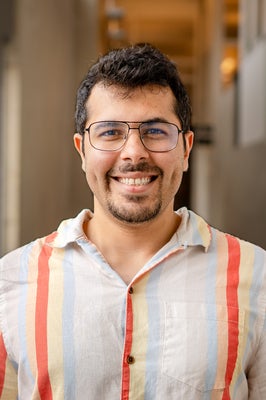
Amer Marwan EI-Samman: AI for Physical Sciences
What scientific problem would you love to see AI help solve?
"I would love to see AI make medicine truly personal. In cancer care, we know that seemingly similar cancers can require entirely different treatments. Imagine AI reliably predicting how an individual patient’s tumour will respond to treatment before it begins, rather than relying on a one-size-fits-all approach. This could help identify safer, more effective therapies and transform how we prevent, diagnose, and treat disease."
- Mohsen Rezaeian
"Our understanding of Mars's wind environment comes from indirect evidence: orbital imagery, occasional lander readings, and the dune and ripple patterns my research uses to infer local wind regimes. It's an estimate, not a complete picture. I would love to see AI close that gap, turning sparse data into physically realistic simulations of the wind field, precise enough to tell us what it would actually feel like to stand on the Martian surface, and to anticipate how sand transport and dune migration might threaten future habitats well before we ever put boots on the ground."
- Lucie Delobel
"Since discovering science as a child, I have wanted to see the invisible machinery of nature as a whole. Not as isolated parts, but alive and in motion, with its rhythms and interactions unfolding at once. I would love AI to build virtual replicas of natural systems, from proteins and materials to living cells and tissues. Imagine watching a medicine move through a virtual human body, seeing it reach a tumour and affect every organ, or designing a material that removes pollutants from our atmosphere. AI could transform what we can only infer into something we can actively explore."
- Amer El-Samman
Courses on AI for scientific discovery
INTEG 275: Fundamentals of AI: Discovery & Exploration
Artificial Intelligence for Science introduces science students to AI as a tool for asking, investigating, and evaluating scientific questions. The course explores 5 broad ways AI can contribute to science: Investigate, Discover, Estimate, Adapt, Synthesize (IDEAS).
Through real scientific problems, students will learn what these different capabilities make possible, how they work, and where they can fail.
A question runs throughout the course: How do we know? Finding a pattern, making an accurate prediction, or generating a new drug does not automatically make it good for science. Students will learn to examine the evidence behind AI-supported results and decide what they allow us to conclude.
Applications of AI in Environmental Science and Ecology.
This course examines how artificial intelligence is being applied to address complex environmental and ecological challenges. Students will explore practical AI applications in areas such as remote sensing, species and habitat mapping, environmental monitoring, and ecosystem modelling. Through case studies and hands-on exercises using real environmental datasets, learners will gain experience applying AI tools to support research and identify opportunities for innovation.
Applications of AI in Health and Biomedical Sciences
This course examines how artificial intelligence is being applied to address complex challenges and support discovery in health and biomedical sciences. Students will gain hands-on experience applying AI tools and methods to analyze complex data, identify patterns, develop predictive models, support modelling and simulation, and generate new insights across biomedical, health, and medical contexts. Through case studies, practical exercises, and project-based learning, students will apply AI to tackle scientific questions and explore emerging applications in biomedical research and healthcare.
Applications of AI for the Physical Sciences
How can AI help us investigate questions in chemistry and physics? In this project-based course, students will choose a problem in the physical sciences and explore it throughout the term. As they learn new machine learning methods, they will test different approaches, compare their results, and examine what each method reveals about the underlying science. Lectures, quizzes, and hands-on work will provide the tools to build, evaluate, and communicate their findings.
Your questions about science & AI, answered!
Q: If AI can answer questions and generate scientific ideas, why do we still need scientists?
A: Scientists do much more than produce answers. Their role is to ask meaningful questions, design investigations, interpret results, and decide which problems are worth solving. AI can support this work, but it cannot replace scientific judgment.
Q: Is AI eliminating jobs in science?
A: AI is changing how many jobs are done, but it is not eliminating the need for scientists. Like calculators, microscopes, and computers before it, AI is a tool that helps people tackle more complex problems and work more efficiently.
Q: Why study science in the age of AI?
A: Because AI needs knowledgeable people to direct it. The future belongs not just to those who can use AI, but to those who can ask the right questions and apply AI to make meaningful discoveries that benefit society.
Q: How does AI affect academic integrity?
A: AI can be a powerful learning tool, but it also raises important questions about academic integrity. Using AI responsibly means understanding when it is appropriate to seek assistance, how to properly acknowledge its use, and when work must reflect your own knowledge and effort. Professors will help guide students on the appropriate and ethical use of AI in their courses and disciplines. Students will learn how to use AI as a tool to support learning while maintaining academic integrity and developing their own knowledge and skills.
Q: How is Waterloo Science preparing students for an AI-driven future?
A: Scientific expertise combined with AI literacy will be essential for tackling tomorrow's biggest challenges. That is why Waterloo Science is integrating responsible AI use into scientific learning and offering new interdisciplinary courses focused on Artificial Intelligence for Science. Through these courses, Waterloo Science students will learn how to question, guide, evaluate, and apply AI to solve complex scientific problems.
Q: How is AI changing scientific research?
A: AI allows scientists to analyze enormous amounts of data, identify patterns, and explore questions that were once too complex, too large, or too time-consuming to investigate. As AI becomes more capable, scientific expertise becomes even more important!
