Carbide as an Ancillary Ligand for Multielectron Reactivity in a Pentanuclear Nickel Complex
Samuel Johnson
Professor, Department of Chemistry
University of Windsor
Thursday, June 26, 2025
11:00 a.m.
In-person: C2-361
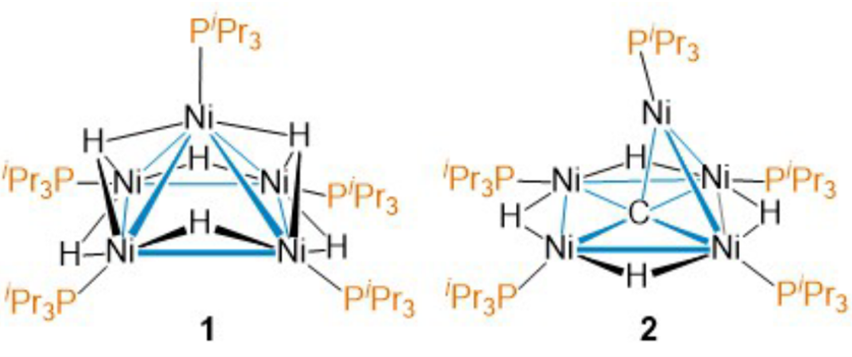
Abstract: Although carbon atoms acting as ligands at the centre of molecular clusters have been known for decades, much of this chemistry is dominated by electron precise clusters with largely well understood reactivity, and often great stability. In contrast, nature uses the carbide supported FeMoco in nitrogenase to support multielectron reduction of N2, potentially made possible by the supporting role of the central carbide ligand in a weaker ligand field environment. In our studies of the atypical pentanuclear 66-electron [(iPr3P)Ni]5H6 (1) cluster, it was found that facile carbon atom abstraction occurs from terminal alkynes, to give the 68-electron [(iPr3P)Ni]5(C)H4 (2) carbide supported cluster. One might suspect that cluster 2 might be electron-precise, and thus exceeding stable; however, it has a rich reactivity and catalytic potential, undergoing both oxidative and reductive reactions.
Sam Johnson completed his B.Sc. at McMaster University, and dabbled with dicey superacid chemistry in the summers (great memories of building a vacuum line out of aluminum for handling fluorine gas and a distillation apparatus out of Teflon to concentrate dilute HF). After an undergraduate thesis doing computational work under the supervision of Richard Bader and Ron Gillespie, studying apparent exceptions to the VSEPR theory, he went on to get his Ph.D. at Univ. British Columbia (Vancouver) in 2000, under the supervision of Mike Fryzuk, studying the activation of dinitrogen. This was followed by post-doctoral studies from 2000-2002, in the Tilley group at the University of California, Berkeley. Sam joined the University of Windsor in 2002 and was promoted to full professor in 2013. His research group continues to have fun trying to make theory defying Ni complexes and get them to do crazy bond activations catalytically.