Newly renewed Canada Research Chair Dr. Brian Kendall reflects on his first term and toward his next
Following the success of his first term, Dr. Brian Kendall has had his Canada Research Chair (CRC) in Redox-Sensitive Metal Isotope Geochemistry (Tier 2) renewed for another five years.
When he was first named a CRC in 2020, Kendall and his team had lofty goals for the five-year term, and with the renewal comes expanded research and new goals to explore. In his research program, Kendall uses redox-sensitive metal isotope systems to advance understanding of natural resource formation and the co-evolution of Earth’s environment and life.
In the first five years of his CRC, Kendall and his team investigated how changes in ocean chemistry affected the evolution of multicellular eukaryotes, including animals, on Earth over time by using isotope tracers like molybdenum and uranium. They studied multiple mass extinction events to determine if expansion of oxygen-deficient waters in the oceans (called "anoxia") were responsible for wiping out large groups of species. They also explored why the first complex life forms took so long to appear after oxygen levels first became high enough to support them.
“What we found was that even small increases in ocean anoxia could lead to major extinction events and that the delay in the evolution of early complex lifeforms wasn’t just about oxygen levels,” he says. “Environmental challenges, ecological competition and genetic hurdles also had a big part to play.”
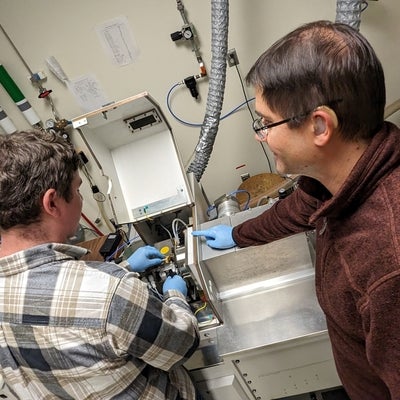
Brian Kendall and Ivan Edgeworth, a current PhD student.
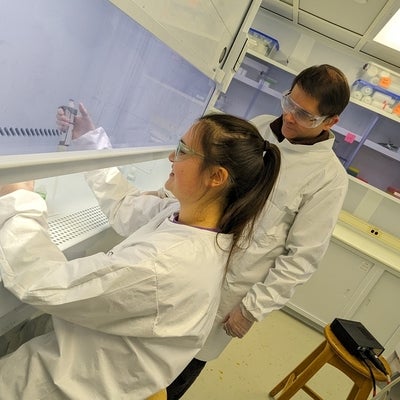
Brain Kendall and lab technician Natasha Bell (BSc '19, MSc '23).
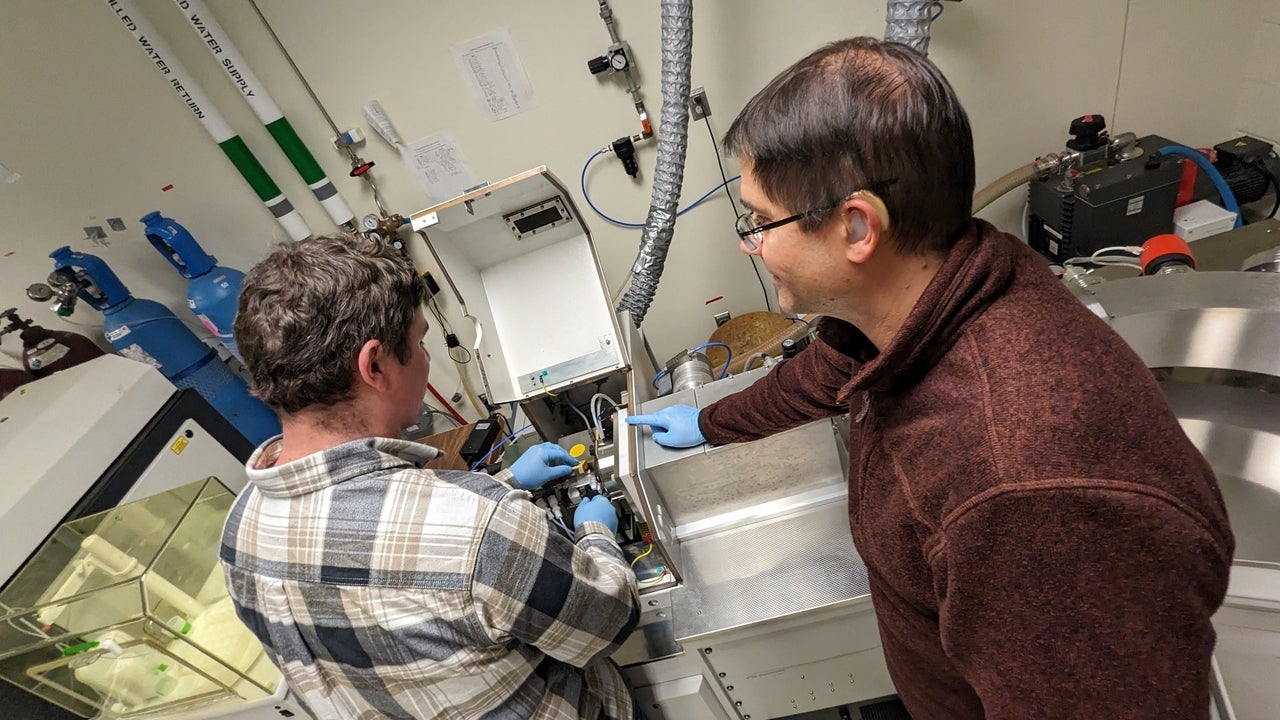
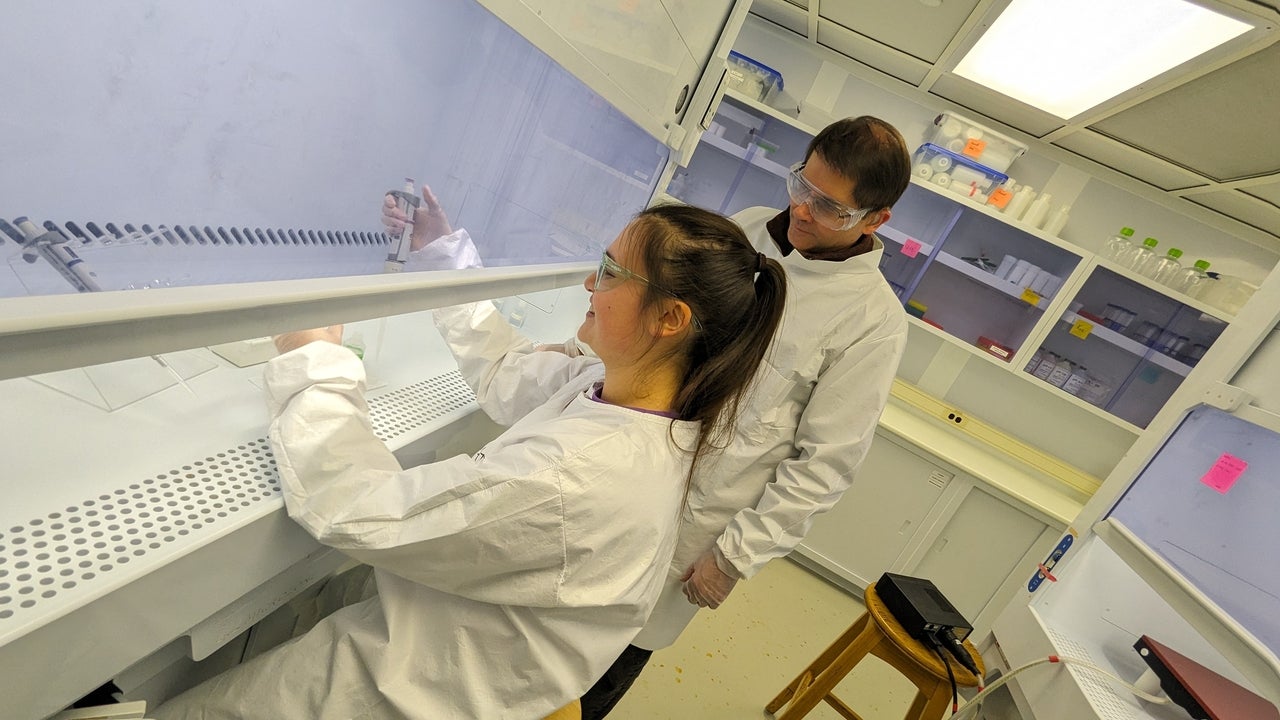
Now, with renewed funding and successful development of new analytical methods during the first CRC term, Kendall and his team are shifting focus to the application of novel thallium and rhenium isotope systems to gain new insights into the genesis of critical mineral and gold deposits and potentially use them as a tool to identify high-grade mineralization. Using these innovative methods, they will also be further exploring the extent of ancient ocean oxygen loss caused by massive volcanic greenhouse gas releases (like in the Mesozoic Era), because they believe this may help us predict future ocean deoxygenation due to climate change.
“Redox-sensitive metal isotope systems are valuable tools for shedding light on past environmental conditions,” he says. “Because the solubility and behaviour of metals depend on their oxidation state, which in turn is set by environmental conditions, analyzing their isotopic composition in ancient ocean sediments (now sedimentary rocks) helps scientists understand how ocean oxygen levels varied in response to ancient climate change.”
By connecting the chemistry of Earth’s past to today’s climate crisis, Kendall’s work could help pinpoint future climate risks associated with ocean deoxygenation. In parallel, the same redox-sensitive metal isotope systems can provide insights into how critical minerals form, supporting the search for new deposits that are essential for Canada’s green economy.