PhD student Sijia Wang explores the intersection of gravity, quantum mechanics, and information theory to illuminate the mysteries of quantum gravity.
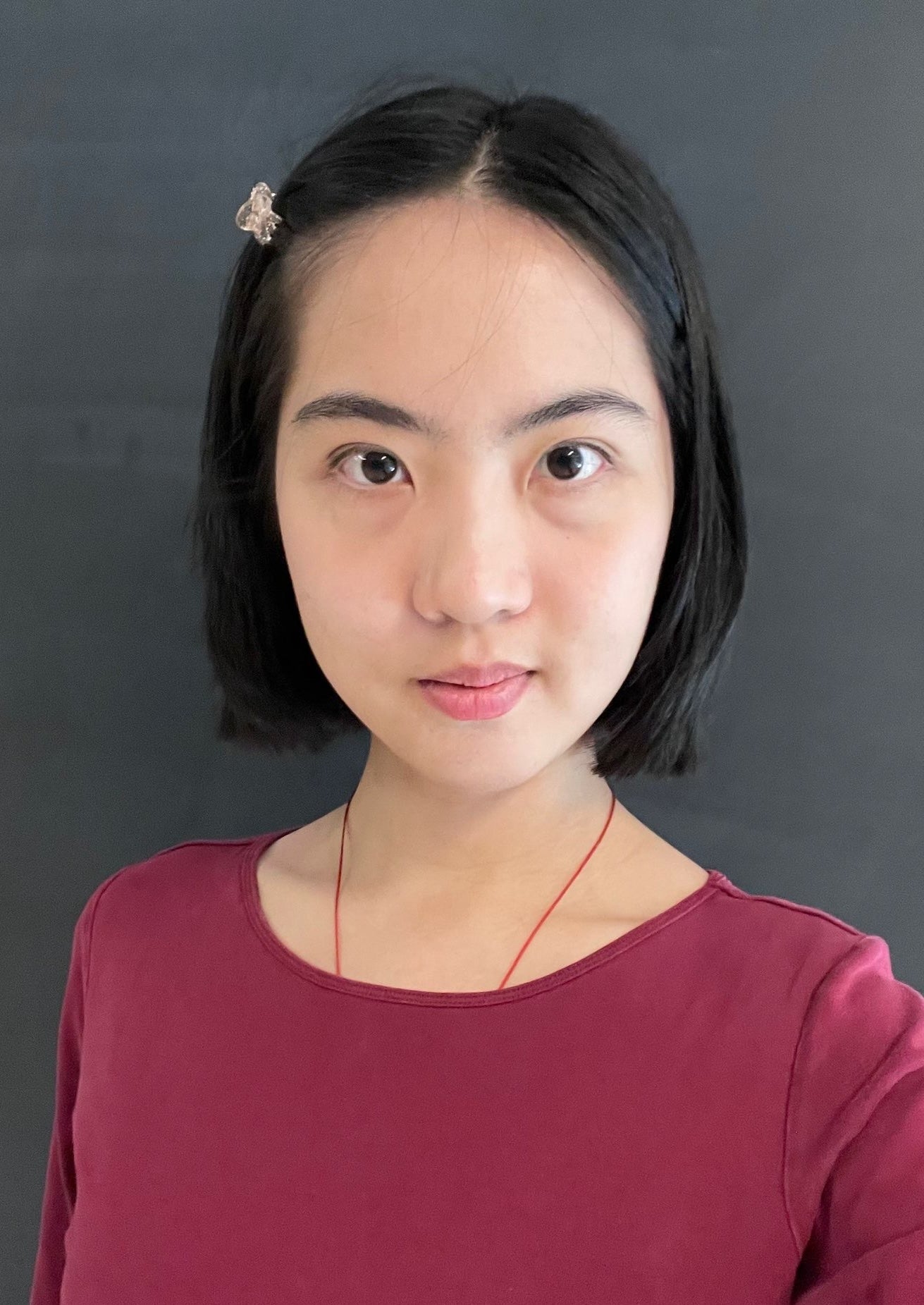
What happens when you drop a quantum computer into a black hole? For Sijia Wang, a PhD student in physics at the University of Waterloo, this is more than just a thought experiment!
Exploring Relativistic Quantum Information (RQI), Wang’s research brings together three main pillars of physics (gravity, quantum mechanics, and information theory) to understand the relationship between general relativity and quantum information.
“While general relativity and quantum mechanics each work well on their own, reconciling gravity and quantum mechanics remains a major challenge,” she says. “It is our hope that by introducing this third pillar of information theory, we can illuminate certain aspects of a unified theory of quantum gravity.”
Under the supervision of professor Robert Mann, Wang is exploring how strong gravitational fields, like those near black holes, affect quantum bits (qubits). Unlike regular bits that are either a zero or a one, qubits can be both at once. When the qubits are exposed to gravity, they react in unexpected ways, showing unusual patterns of “clicks”.
“These findings suggest black holes affect the vacuum structure of space in ways we don’t yet understand, offering clues to the nature of quantum gravity,” says Wang.
Wang’s fascination with physics started at a young age, reading books on physics borrowed from the university library where her mother worked. Though she majored in statistics as an undergraduate, she felt a pull to explore the unknown. That curiosity led her to the University of Waterloo, home to the Institute for Quantum Computing and closely connected with the Perimeter Institute, making it one of Canada’s top destinations for cutting-edge research in quantum physics.
“I received direct entry to my PhD from my bachelor’s degree, and it was scary at first, but Dr. Mann and my research group have been my rock,” she says. “I am so grateful for their support that has allowed me to build confidence in my work.”
Wang’s research is already getting noticed, recently presenting her work in Saskatoon and Naples. Looking ahead, she would like to continue pursuing academia as a professor where she hopes to inspire others with her love for physics.