
By Vanessa Parks
Internal Communications and Engagement Specialist
Mario Coniglio has retired before, but this time, it’s for real. He had already begun to pack up his office when he was asked to step into the role of Chair for the Earth and Environmental Sciences department. He couldn’t say no and, rather than going into full retirement in 2022, came back part-time in the Chair role for his final three years.
“It was a transitional phase that allowed me to return to my roots in the department and enhance my connections here,” says Coniglio. He completed his term at the end of June, capping off a 39-year career marked most notably in its latter half by a passion for academic service.
Coniglio spent his four years as Chair determined to prepare the department for the future of Earth sciences education while continuing to strengthen its outstanding reputation for high-impact research. He guided the process of establishing a departmental strategic plan that aligns with the larger Future of Science strategic plan recently released by the Faculty of Science.
He also prepared the path for an implementation plan, something the Interim Chair, Brian Kendall, will pick up and then pass along once the Chair role is filled on a more permanent basis. “It’s essential to develop an accountability system,” says Coniglio. “There has to be regular tracking and reporting of the good, the bad, and the challenges for each goal. This is how a strategic plan lives and succeeds.”
Coniglio has also overseen the development of the Departmental Organization and Operations document, which outlines how the department functions through its various committees and appointments, and has increased staff representation on committees to an unprecedented level. “Staff have insights and experiences, they can help us make wise decisions, and yet we still have this faculty and staff gap,” says Coniglio. “Staff, particularly our permanent staff, have as much skin in the game as our faculty. We need to treat the two biggest employee groups at the university more equitably.”

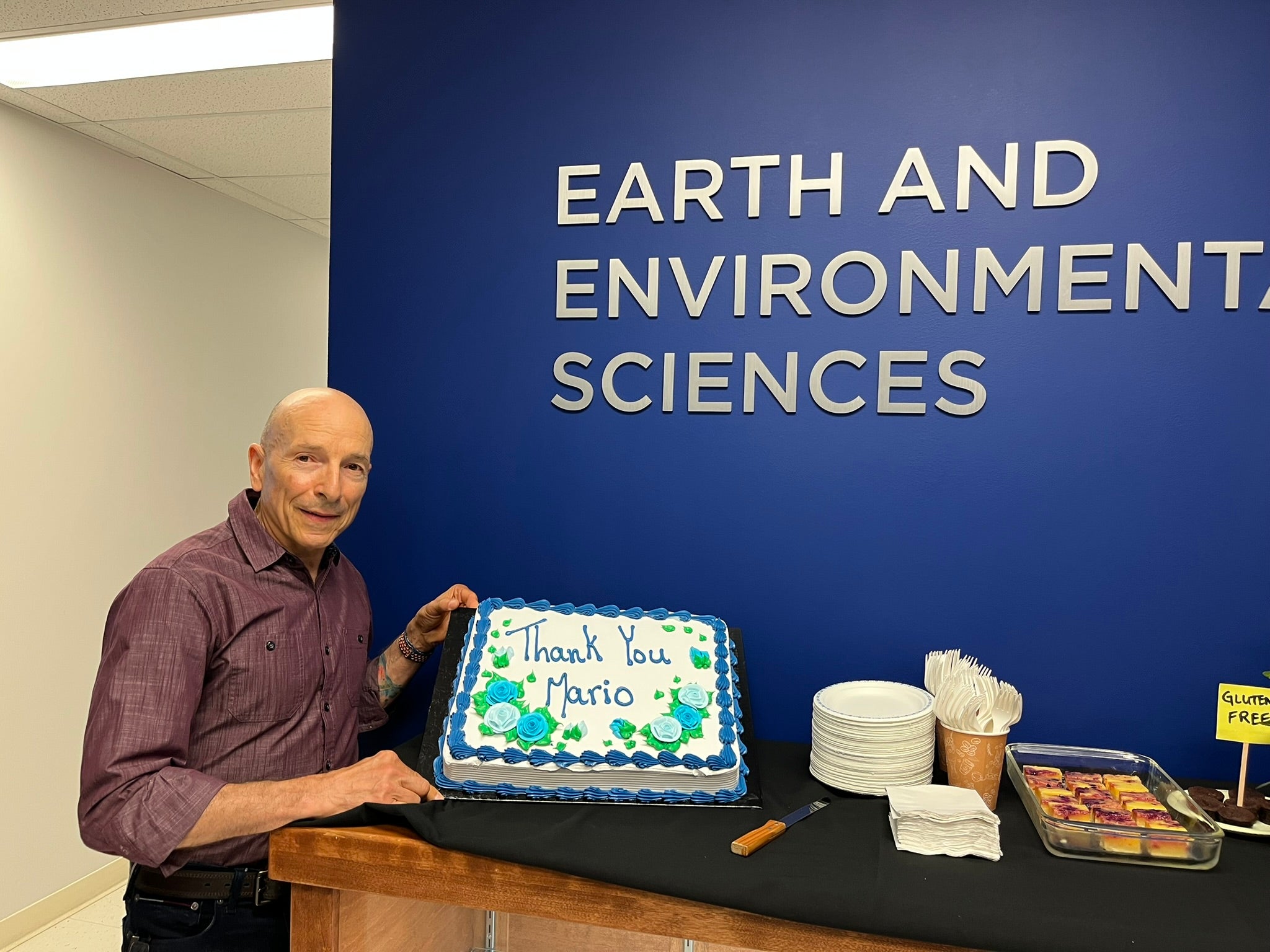
Coniglio completed his term as Chair in the Earth and Environmental Sciences department at the end of the June.

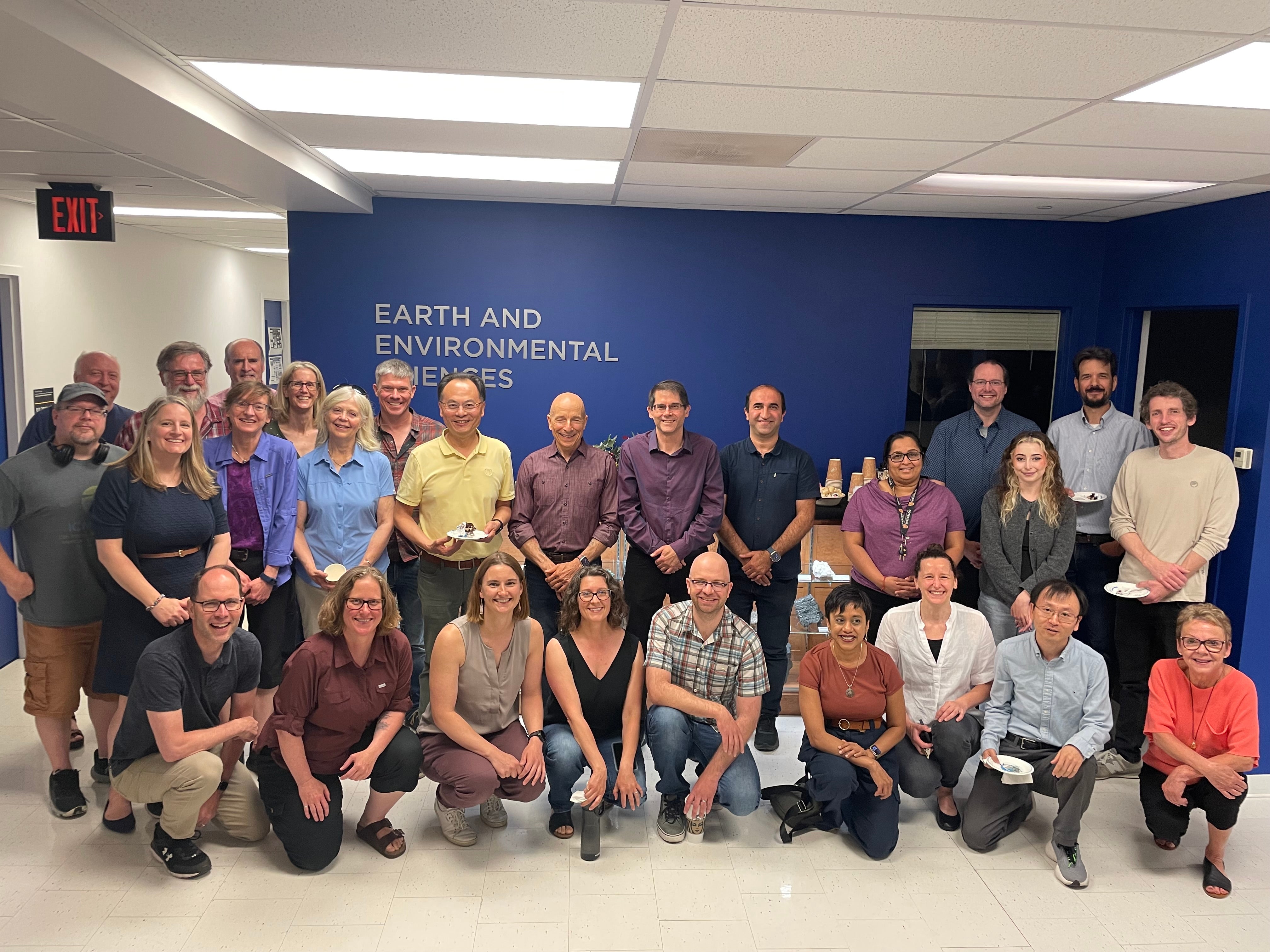
The administrative team in the Earth and Environmental Sciences department say goodbye to Coniglio as he wraps up as Chair.

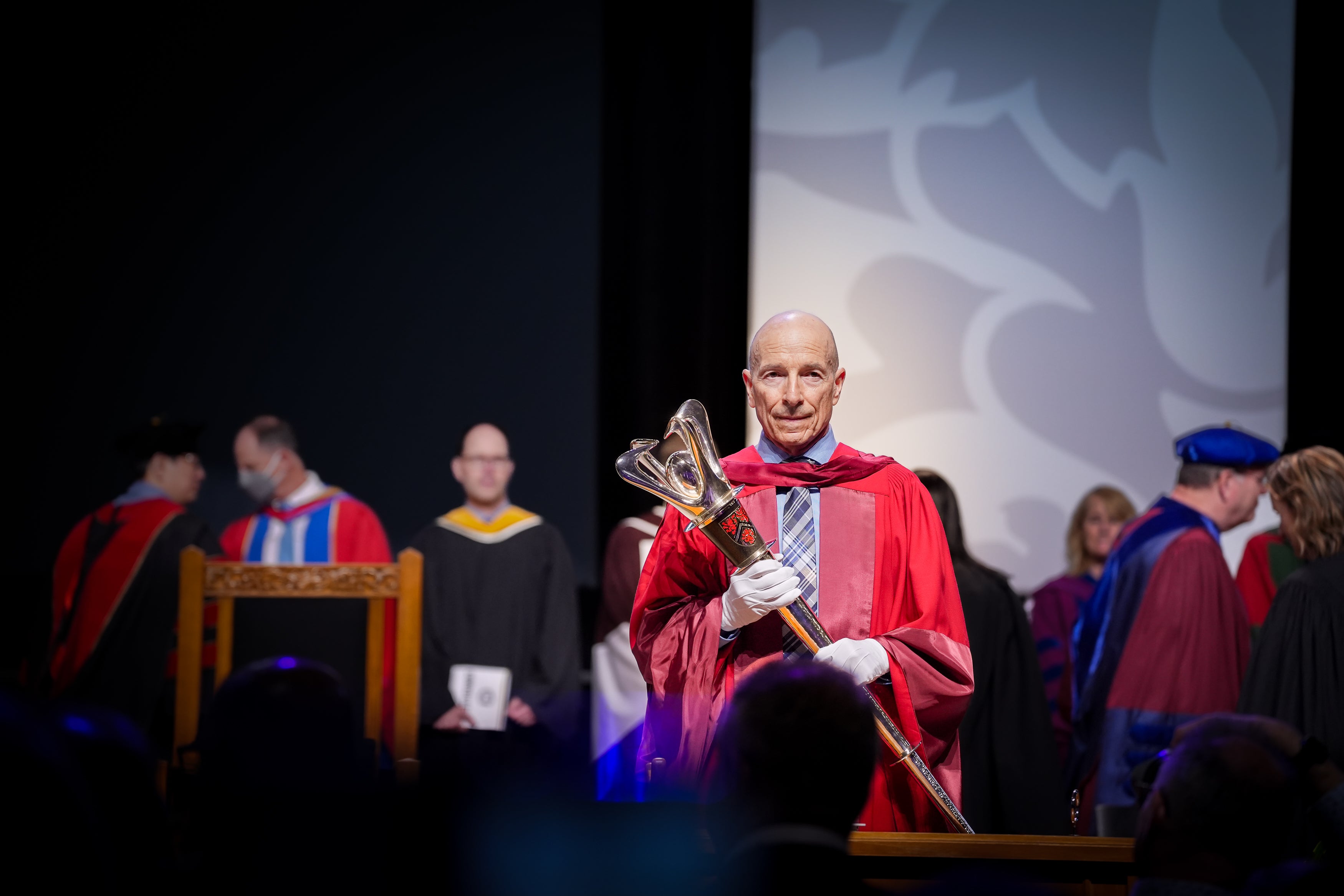
Coniglio carrying the mase at the Spring 2025 Convocation.
For much of his career, Coniglio’s research focused on sedimentary rocks, mainly limestones and dolomites. He studied how the chemical and physical properties of these rocks led them to become porous oil or gas reservoirs and groundwater aquifers. He was drawn to this work because of his love of the outdoors. He enjoyed remote field work, a highlight of which was watching the sun circle the sky while soaking in the isolation of the Arctic.
But it was in the latter half of his career that Coniglio discovered that academic service in a variety of leadership roles was where he could really make a difference. As Associate Dean of Science, Undergraduate Studies, Coniglio found personal satisfaction in guiding students through their university careers. It was here he felt he could “move the needle,” as he puts it.
He later moved on to the Associate Vice-President Academic (AVPA) role, which he held for nearly six and a half years. As AVPA, Coniglio helped establish the fall break students still enjoy today, as well as set up a university-wide online course evaluation system, among other projects.
Coniglio definitely didn’t anticipate his path into academic leadership or what he found when he got there, but he wouldn’t change a thing about how his career unfolded. “If you told me as a 29-year-old assistant professor that I’d have an enriching career on this track, I would never have believed it, not in a million years,” says Coniglio, smiling. “And even now I still can’t believe how fulfilling it’s been.”

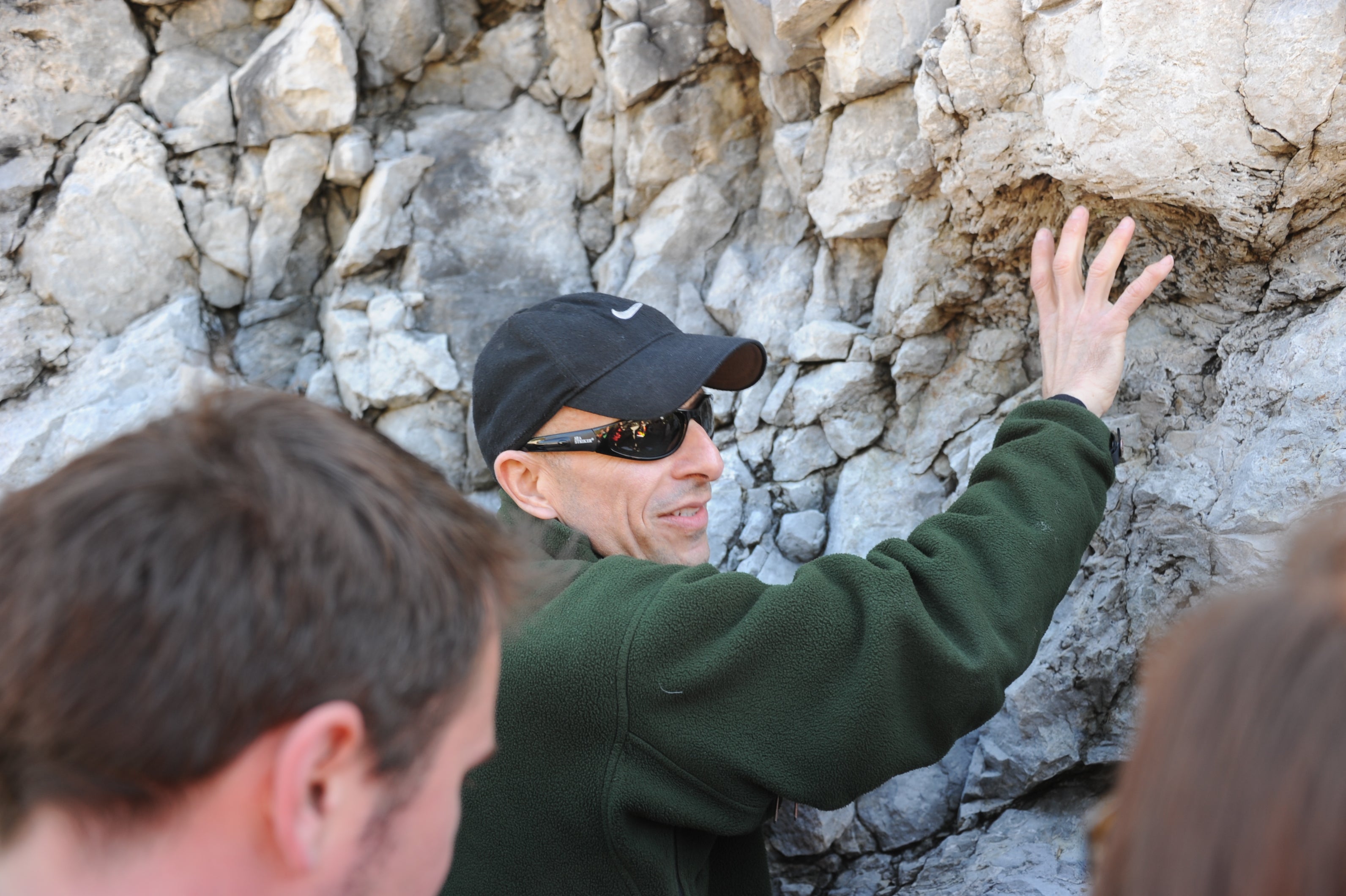
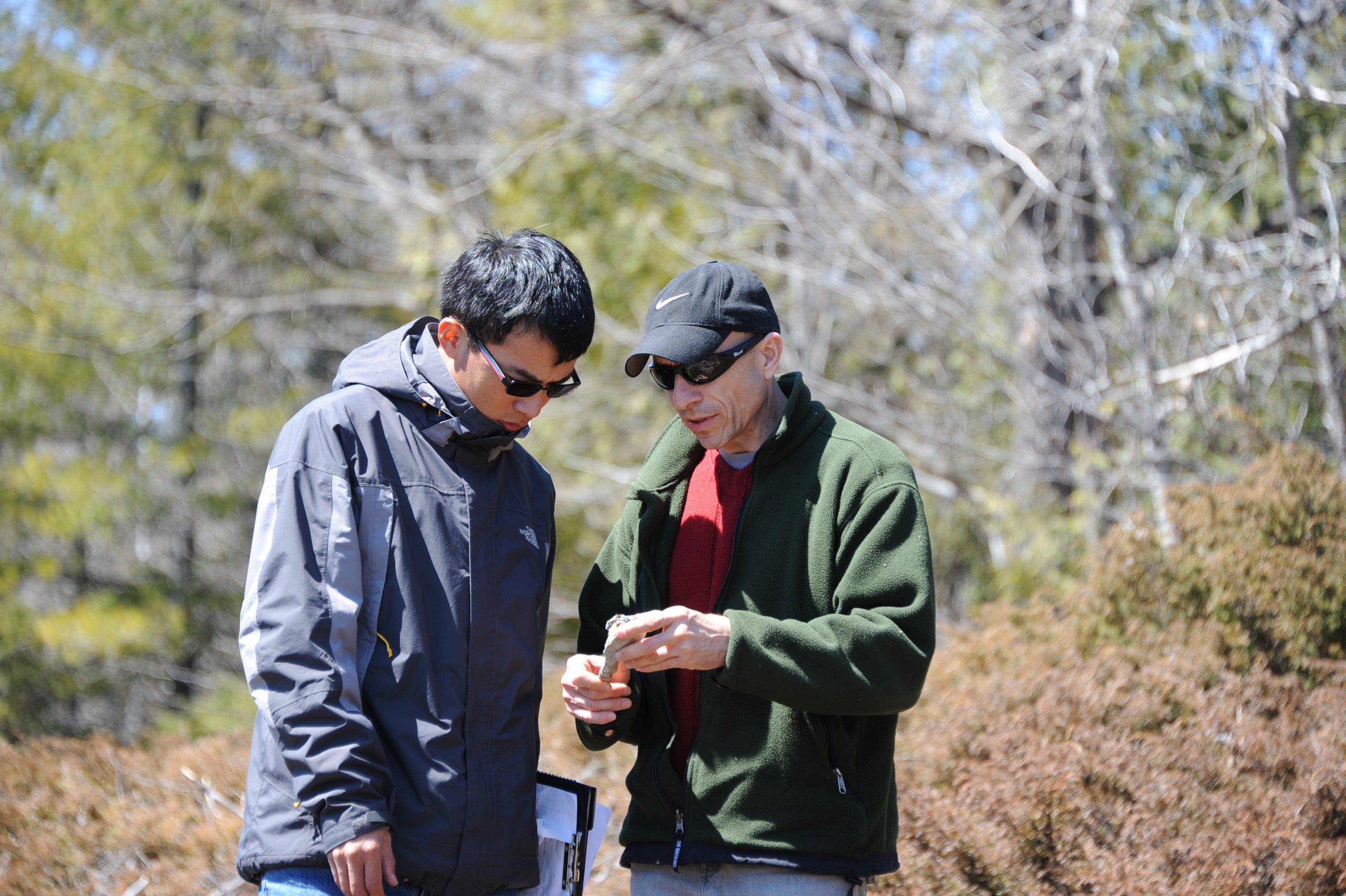
Coniglio explains the features of carbonate rocks found on Manitoulin Island to a group of undergraduate students during a third-year field trip.

Coniglio led the annual field trip for EARTH 390: Methods in Geological Mapping.

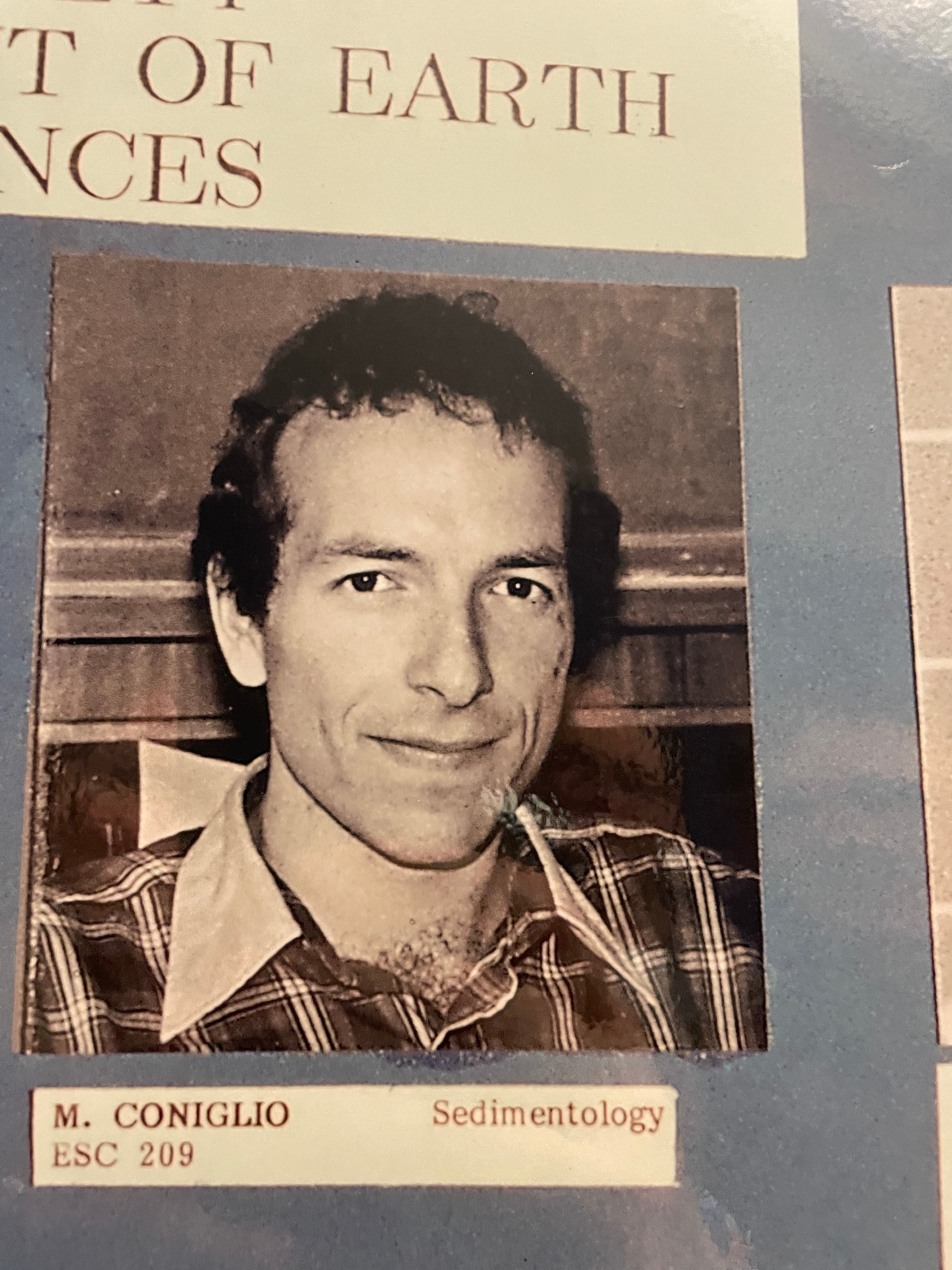
Coniglio early in his career at the University of Waterloo.
In retirement, you’ll still find Coniglio doing what he loves – getting outside and serving his community. “I’m going to fly fish and get out on trail walks and pheasant hunts with my dog,” he says. “My wife, Shelley, and I have a forested property that I love spending time on, when the bugs aren’t too bad!” He also plans to give more time to his volunteer work with the Hullett Provincial Wildlife Area and Conestogo Pheasant Club. And if that’s not enough, he intends to pick up his guitar again, pursue his passion for wildlife photography, and read the pile of books waiting on his shelves.