By Ethan Gardner
On a breezy, spring night in Havelock, Ontario, the wind rustles through the trees as spring peepers call in a nearby pond. A group of science students from the University of Waterloo gather in a wigwam around a stove fire as Anishinaabe Elders Wendy and Mark captivate them with traditional stories and teachings, ones that their people have passed down from generation to generation since time immemorial.
After a full day on the land, the night stretches on, time dissolving into its natural state of fluidity, like water running over a rock. As each moment falls into the next, so do the words and stories of the Elders, unveiling new ways of seeing, knowing, and being, that, despite all of Canada’s intentions and efforts to eradicate, thankfully still live on. This describes a typical night in SCI 211: Traditional Medicines Land Based Field Course.
This course provided a variety of experiences, immersing us in stories, teachings, and traditional Anishinaabe ceremonies and activities, such as setting up a tipi and participating in a sweat lodge ceremony. Being immersed in these experiences on the land did many things, but one of the most powerful, in my opinion, was the forging and strengthening of relationships, with the land, between people, with ourselves, and with all of creation.
Through these relationships, I find myself more grounded in my understanding of the past, present, and future. I have a clearer understanding of where I fit into the larger story of this world and this country, of how to carry myself and foster positive relationships, and most of all, I am humbled by how much more there is still to learn from one another to unite collectively. Leaning into these relationships and experiences helped me to achieve a greater balance of mind, body, and spirit.
While there were some heavy stories to sit with as Wendy and Mark unpacked some of their personal and collective experiences of colonization and discrimination, as the sun went down at the end of each day, I felt full in my heart, head, and spirit.
As someone with both settler and Indigenous heritage, I felt both guilt and grief for the actions and suffering of my ancestors and relatives. But when we talk about Truth and Reconciliation, learning to sit with this discomfort and these stories is an important part of listening and furthering our progress together. These stories are all part of the bigger picture of Canada’s history, where we fit into it, and how we must put forth our greatest, honest, and humble effort to live in harmony with one another.
This course filled me with hope that as we carry these experiences, stories, and teachings with us throughout our lives, we will be able to use our collective strength to care for each other to create a better earth for generations to come.
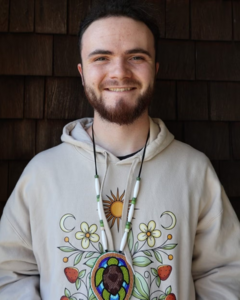
Ethan Gardner - Psychology student in the Faculty of Science.
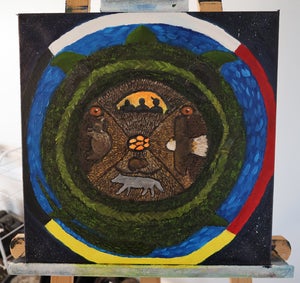
Gardner's final reflection painting was submitted for grading at the end of the course.