
Recent Listeria outbreaks have many Canadians paying closer attention to food recalls while grocery shopping. Fresh produce, cheeses and deli meat are high-risk foods often contaminated by harmful bacteria. According to the World Health Organization, unsafe food causes 866 million illnesses and 1.5 million deaths annually, highlighting the need for innovative approaches to improve food safety. Henry Abanum, a Master of Science in Pharmacy student, aims to address this challenge by developing a bacteria-responsive coating for food contact materials that integrates toxin detection with on-demand antimicrobial delivery.

Henry Abanum (he/him), Master of Science in Pharmacy student

Henry Abanum (he/him), Master of Science in Pharmacy student

Henry Abanum (he/him), Master of Science in Pharmacy student
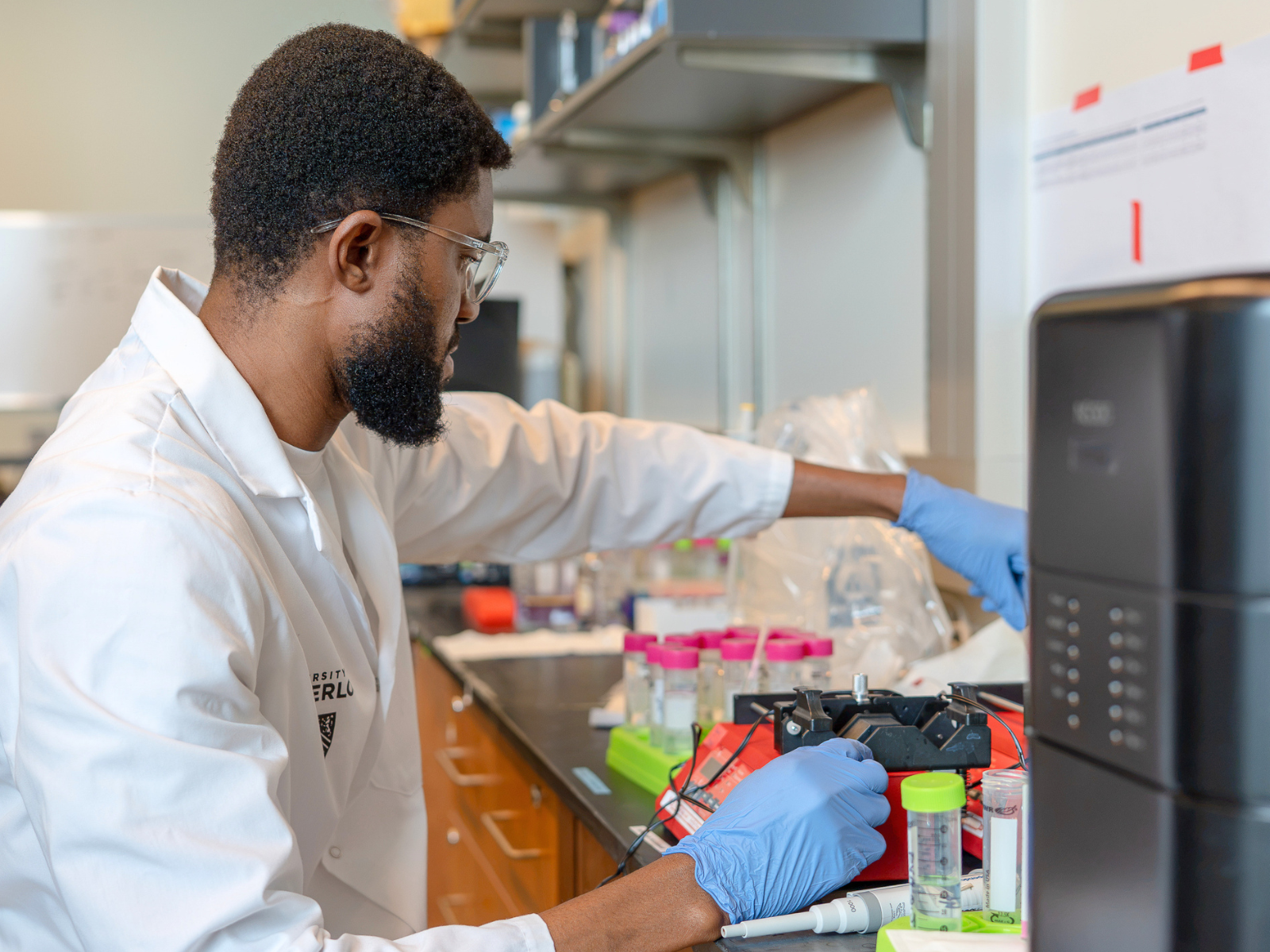

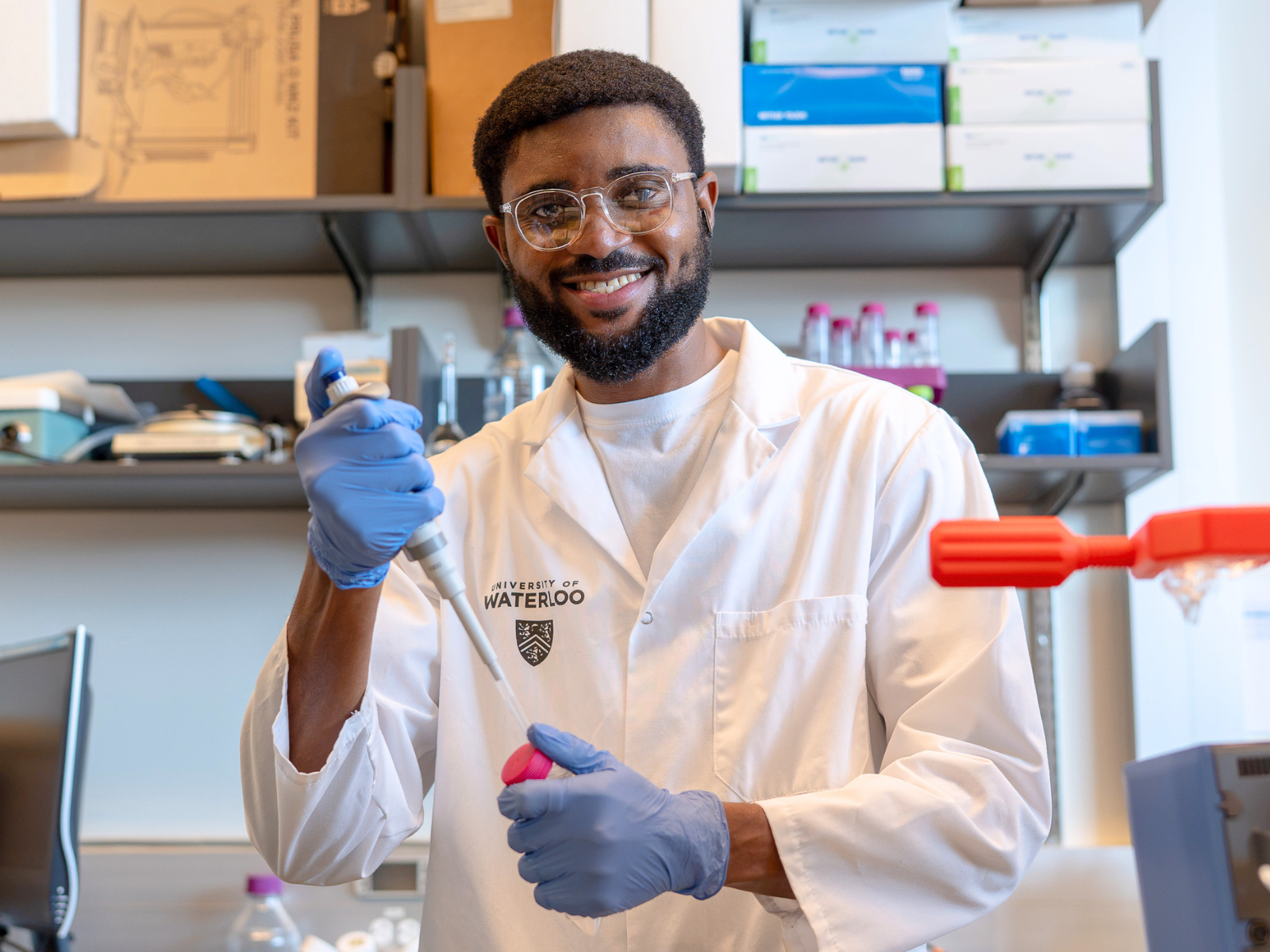
The coating is composed of tiny, biocompatible carriers called liposomes, which are designed to respond to bacterial toxins and release an encapsulated naturally derived antimicrobial agent—but only when needed. His research blends drug delivery strategies with food safety to develop a responsive system that could enhance food quality, extend shelf life and improve consumer confidence in the safety of packaged foods. By helping to reduce spoilage, it also addresses the growing environmental challenge of food waste, a major contributor to global greenhouse gas emissions.
The passion for applying science to solve real-world problems first took shape during Abanum's pharmacy training in Nigeria. There, he became particularly interested in industrial pharmacy and how pharmaceutical research can be translated into practical solutions that improve public health. After completing his Doctor of Pharmacy (PharmD), and working as a clinical pharmacist, he was eager to deepen his research skills, so he applied for graduate studies in the School of Pharmacy at the University of Waterloo. He credits Waterloo's multidisciplinary research environment, strong collaborations with industry, and outstanding research opportunities as what made it the ideal place to pursue research that has a meaningful impact.
“My experience at Waterloo has been incredibly rewarding. Working alongside researchers from different disciplines, learning from supportive mentors, and having access to advanced research facilities have broadened my scientific perspective and strengthened my skills as a researcher.”- Henry Abanum, Master of Science in Pharmacy student
Interested in conducting research in graduate school?
We asked Henry about his experience as a graduate student at Waterloo and his future goals.
What is the working relationship like with your supervisor, Dr. Emmanuel Ho?
I am fortunate to have a very supportive supervisor, Dr. Ho, who is very approachable and responsive. He has provided valuable guidance, mentorship, and constructive feedback throughout my research journey at the School of Pharmacy. His support and encouragement have helped me develop as an independent researcher while also challenging me to think critically and approach scientific problems from different perspectives.
What are you looking forward to in the future regarding your studies?
I hope to share my work through scientific presentations and collaboration. After graduation, I would like to continue contributing to advancements in pharmaceutical science, whether through research or by helping develop strategies that improve health outcomes.
What has your experience been like as a Graduate Teaching Assistant (GTA)?
My experience has been so fulfilling. It has allowed me to share my knowledge and experience with PharmD students while strengthening my communication, leadership, and mentorship skills. Having been an undergraduate pharmacy student, I understand the challenges and level of dedication required in the program, and this has motivated me to support students’ academic progress as a GTA. Receiving the Best Graduate Teaching Assistant Award for 2025-2026 was a meaningful recognition of my dedication to supporting and mentoring students.
How do you like to spend your time outside your studies? And what do you enjoy about living in Waterloo Region?
I go to the gym, watch football matches and spend time with my colleagues and friends—this helps me relax and maintain a healthy work-life balance. I enjoy living in Waterloo Region because of its welcoming community, diversity, and strong connection to innovation.