
Guided by a curiosity about how complex systems work, Shahrzad Tofighi is applying physics to one of today’s most urgent global health challenges: the rise of antimicrobial resistance (AMR). AMR occurs when bacteria, viruses, fungi and parasites no longer respond to antimicrobial medicines like antibiotics. The World Health Organization estimates that bacterial AMR was responsible for 1.27 million deaths in 2019, highlighting the urgent need for new approaches. As a result, scientists around the world—including Tofighi—are seeking innovative ways to combat bacterial infections.

Shahrzad Tofighi presenting her research at a conference.

Shahrzad Tofighi (she/her), Master of Science in Physics student

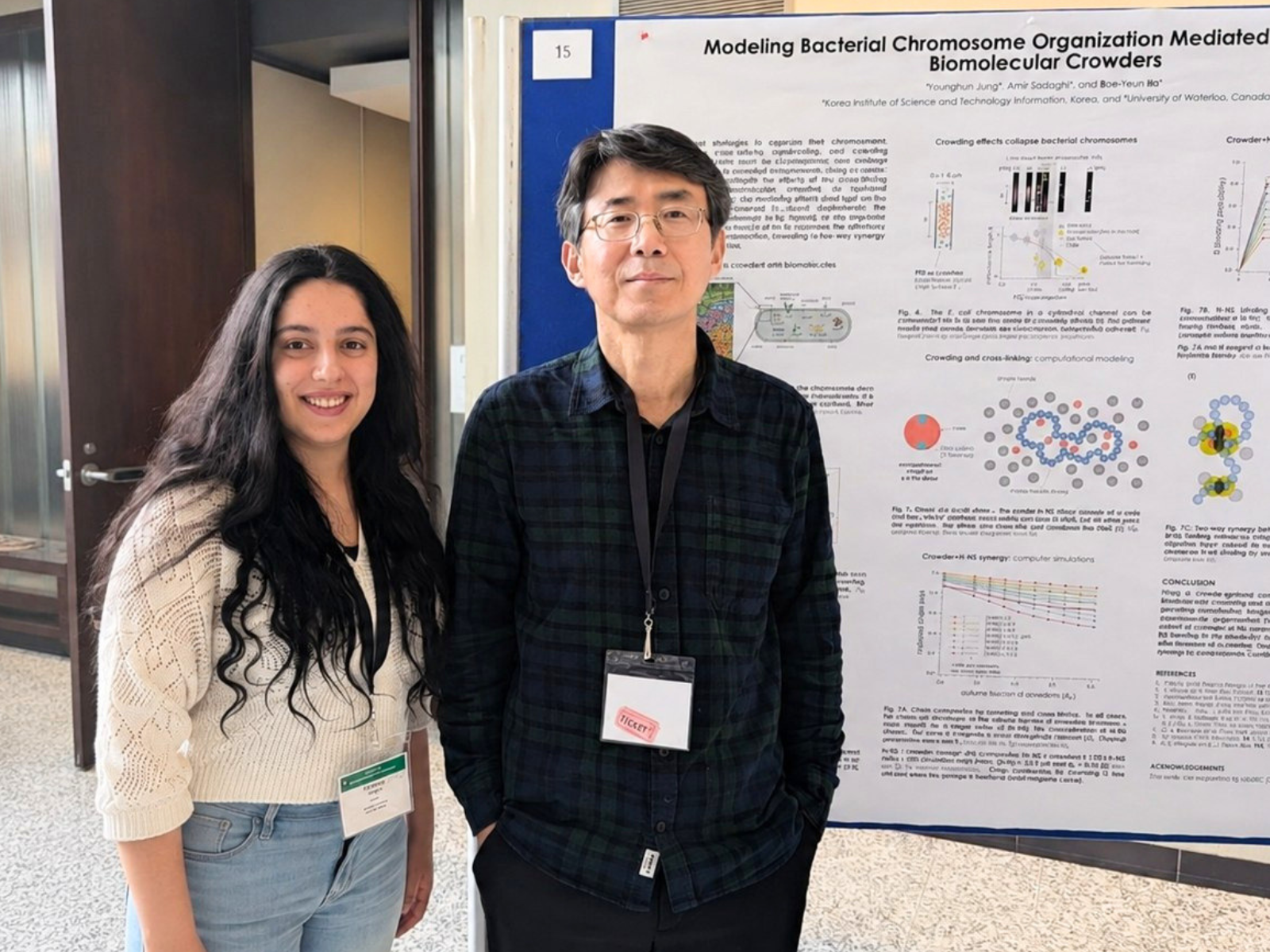
Shahrzad Tofighi and Dr. Bae-Yeun Ha

Shahrzad Tofighi (she/her), Master of Science in Physics student

Shahrzad Tofighi (she/her), Master of Science in Physics student
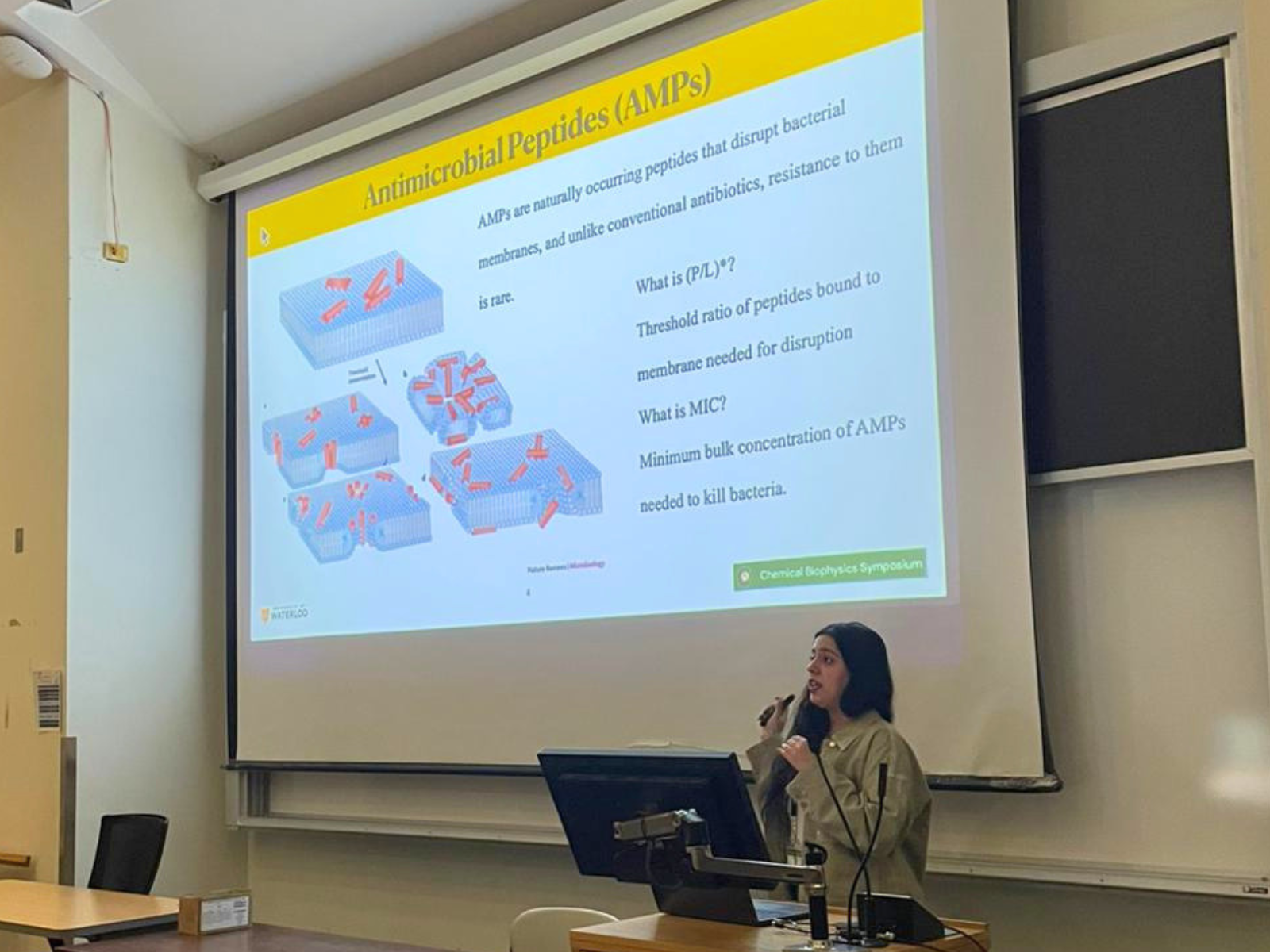
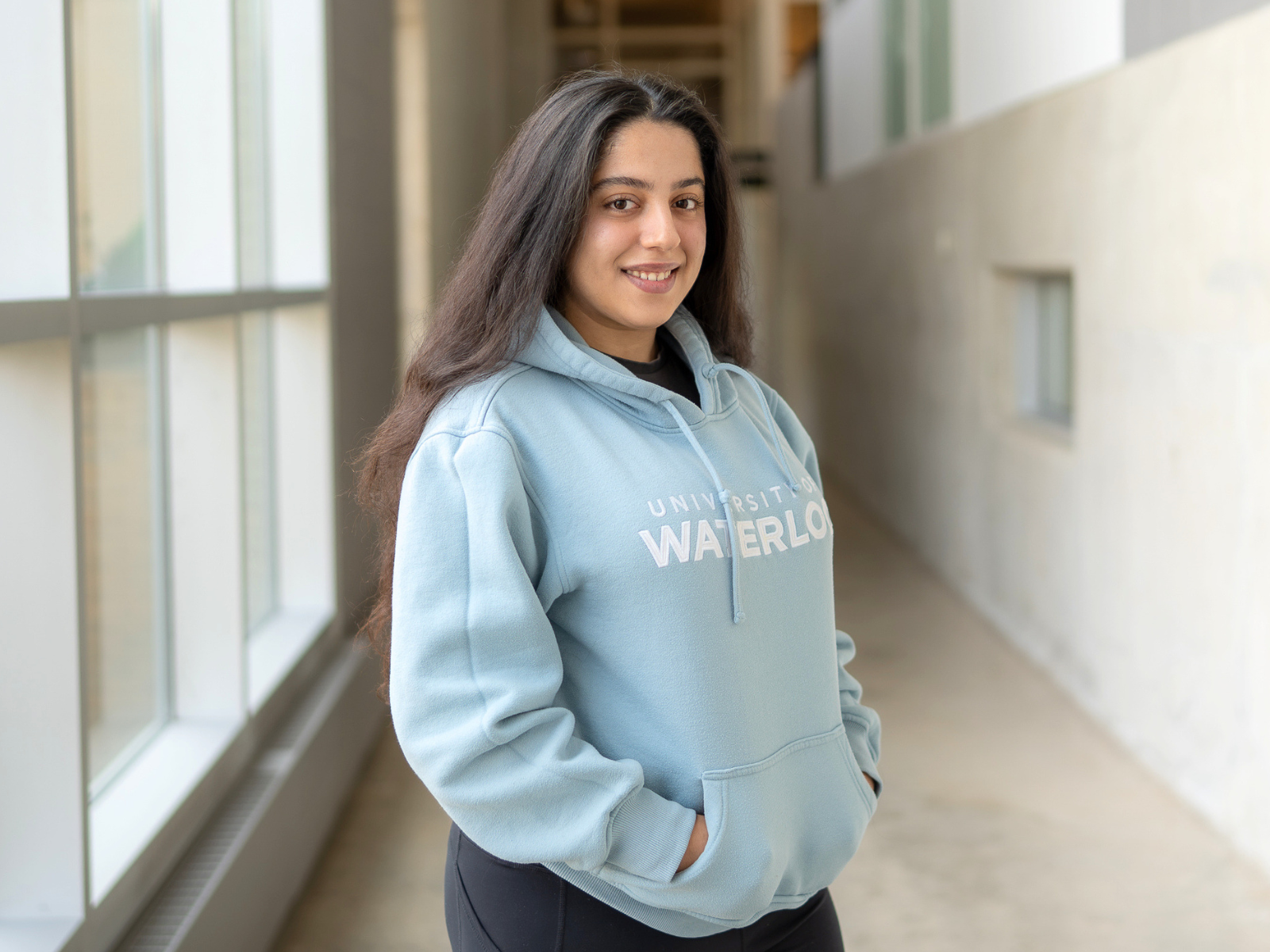
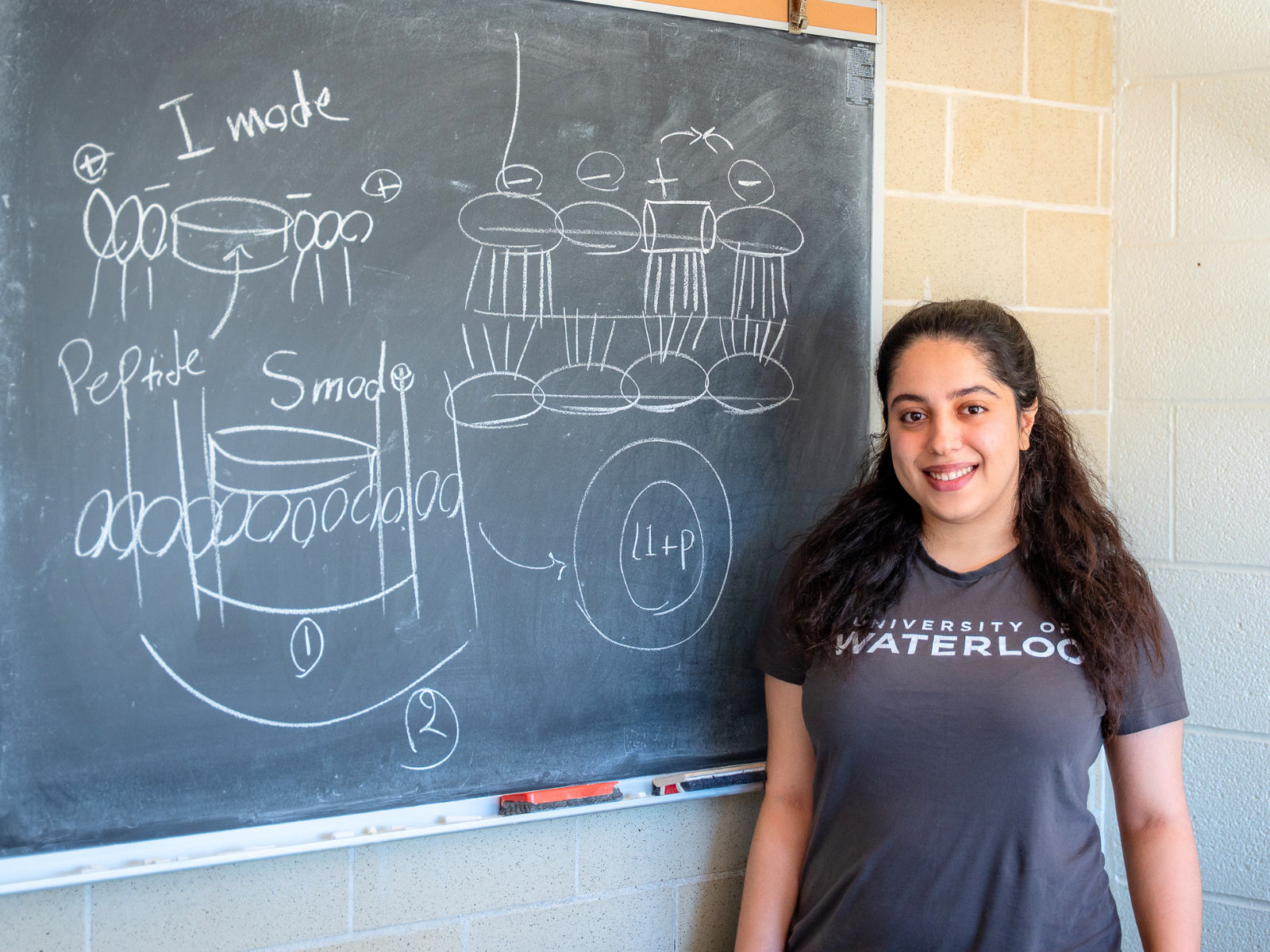

As a Master of Science in Physics student at the University of Waterloo, she uses physics-based mathematical modelling to better understand how antimicrobial peptides interact with bacterial membranes. These peptides are being studied as promising candidates for future antibiotics because they can attack bacteria through their membranes, a mechanism that makes resistance harder to develop. Rather than changing the peptides themselves, Tofighi studies how environmental conditions, such as salt concentration, can influence how effectively antimicrobial peptides interact with bacterial membranes and kill bacteria.
In the long term, this type of theoretical work could help explain how antimicrobial peptides act under biologically relevant conditions, providing guidance for future experiments and for the development of more effective peptide-based antibiotic strategies. Strong physical models allow researchers to make predictions using calculations and simulations, reducing the need for costly lab experiments and helping guide studies on safe and effective doses. Through her work, Tofighi is helping build the theoretical foundation for understanding how antimicrobial peptides could be used more effectively against antibiotic-resistant infections.
Interested in conducting research in graduate school?
What is the working relationship like with your supervisor, Dr. Bae-Yeun Ha?
When I started my master’s, I was still thinking like an undergraduate student in a course-based setting, where problems often have clear instructions and answers. With Dr. Ha’s guidance, I’ve learned to think critically, question assumptions, and work through uncertainty. His mentorship has helped me grow into a more independent researcher, someone who can question assumptions, sit with uncertainty, and develop ideas with confidence.
What has your experience been like as a graduate student at Waterloo?
Graduate school has been about more than research—it’s taught me resilience, how to ask for support, and how to grow as a person. My experience at Waterloo has been both meaningful and challenging. I’m grateful for resources such as Campus Wellness, Counselling Services, and Accessibility Services, which have helped me continue with more support and stability.
What are you looking forward to in the future regarding your studies?
I’m excited to compare my theoretical results with experiments to better understand how well our models reflect real systems. I also look forward to completing my thesis. After my degree, I hope to gain work experience before deciding whether to pursue a PhD.
How do you spend your time outside your studies?
I enjoy exploring new places, spending time with friends, and trying different cuisines. Coming from a busy city, I appreciate Waterloo’s quiet, peaceful environment, especially its trails, green spaces, and welcoming community. Since moving to Canada, I’ve also come to value the ordinary parts of independent life: walking through the city, discovering quiet places to work, and creating small routines that make a new place feel like home.