
Transferring schools after your first year can be an overwhelming experience that involves finding a new place to live, navigating your course sequence, and making friends in a new community. Fourth-year Life Physics student, Rachel Tagliabracci, knew that the University of Waterloo was the right place for her to take that chance and alter her path.
Interested in pursuing medicine, Tagliabracci’s first year of postsecondary education was spent as a nursing student at Sault College in Sault Ste. Marie. Her time at college helped her realize she was interested in a role that focused more on the technical and specialized aspects of healthcare over being hands on with patients. She chose Waterloo’s renowned physics program for its specialized courses in biophysics.
“Waterloo is really supportive of transfer students,” she says. “I was able to directly enter into the co-op program, which was a top priority for me.”
The University of Waterloo’s co-op program helps students develop work-ready skills and secure meaningful employment. For Tagliabracci, co-op seamlessly merged classroom materials with hands-on learning as she took on a role in medical physics at the Verspeeten Family Cancer Centre. Half of her day was spent supporting research on radiotherapy and new technologies, while the other half involved hands-on quality assurance for radiation therapy treatments.
Before a cancer patient receives radiation treatment, their treatment plan must be tested and validated. Tagliabracci assisted with these tests using phantoms to obtain measurements on the radiation output and ensure it aligned with the expected values.
"It’s a job most people have never heard of, even when they know someone who has gone through cancer treatment,” she says. “But it’s such a vital part of care that I loved being part of.”
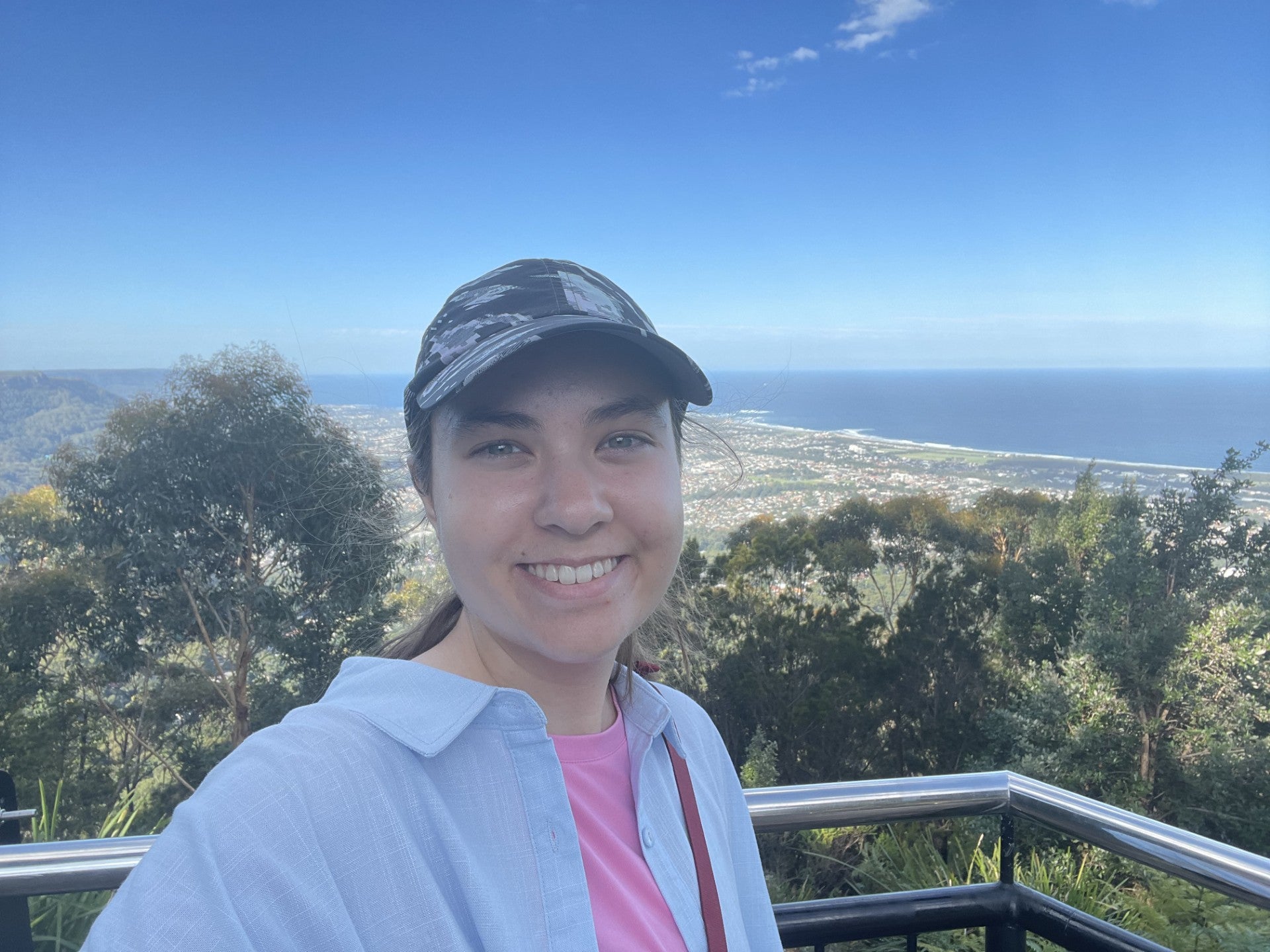
Being comfortable with being uncomfortable became her mantra throughout her degree. As Waterloo became home, she pushed herself out of her comfort zone again, this time, halfway across the world on an academic exchange at the University of Wollongong in Australia. While living in Australia, she was able to continue studying medical physics at the only accredited program outside of North America.
During her exchange, she went the extra mile to sign up for activities she wouldn’t normally do, including her first-ever 5-kilometre race and a 35-kilometre fundraising walk for Mitochondrial Disease research that stretched from Coledale Beach to Stuart Park.
“Throughout my undergraduate degree, I wanted to take every opportunity I could to step outside of my comfort zone and try new things,” she says. “I hope my experiences lead to achieving an IDEAL Scholar medal at convocation to acknowledge all of the amazing opportunities I’ve had at Waterloo.”
When she walks across the stage at convocation this June, she will graduate from Waterloo with a knack for adventure and the willingness to say yes to new things, both admirable attributes that will translate to a successful career in healthcare.
The IDEAL Scholar program encourages Science undergraduate students to participate in activities throughout their time at Waterloo that support Innovation, Discovery, Engagement, Application, and Leadership. Students who complete activities in two or more of these themes can apply to be an IDEAL scholar and receive a medallion at graduation.