Current students

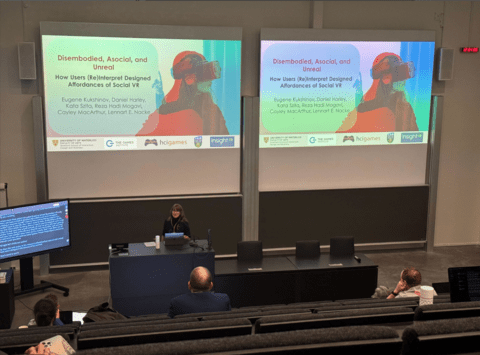
This year’s Designing Interactive Systems (DIS) Conference took place in Copenhagen, Denmark from July 1 to July 5. 12 GI members and alumni presented their on-going research, facilitated workshops, and participated in panels 

Congratulations to all who were accepted, attended, and presented! 

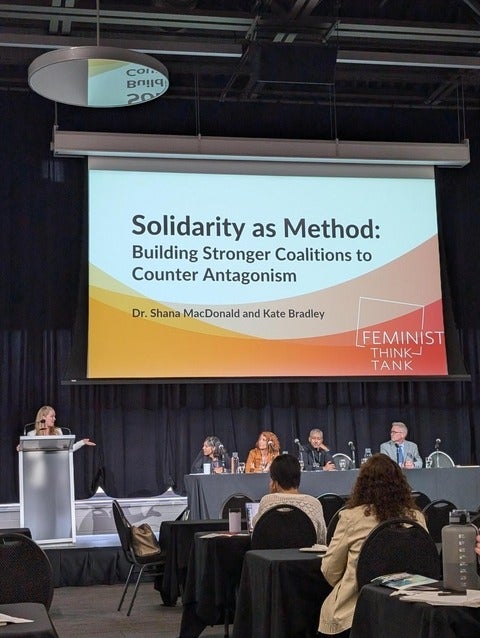
From June 27th to 28th, GI members presented and attended UWaterloo’s in-person conference that brought together international and local scholars from various disciplines to demonstrate the different ways our communities can—and shouldfoster trust within academia. 

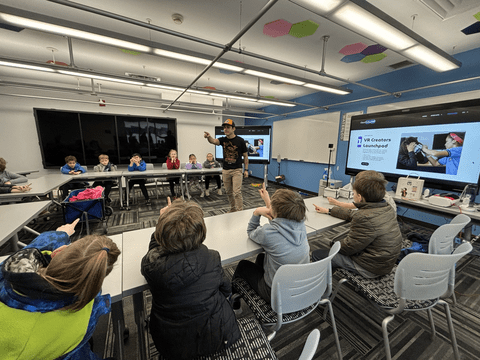
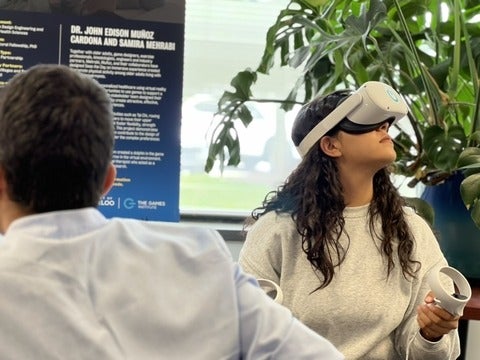
The Games Institute (GI) in collaboration with Engineering Outreach recently hosted a collaborative event that turned the GI into a vibrant workshop for young virtual reality (VR) enthusiasts.

On July 2nd, the Games Institute (GI) welcomed its latest postdoctoral fellow Dr. Geneva Smith. Dr. Smith, who is also an instructor of Game Design in Communication Arts and will be co-supervised by Drs. Lennart Nacke (Stratford School of Interaction Design and Business) and Mark Hancock (Management Science and Engineering).

Thursday, June 27, 2024

Dr. Lai-Tze's U&AI Lab

Dr. Lai-Tze Fan announced her new U&AI Lab funded by the Canadian Foundation for Innovation! The purpose of Dr. Fan’s work and the creation of the lab will be to examine the systemic oppression integrated into modern AI technology. The U&AI Lab will focus on three case studies in AI using frameworks from social sciences and humanities with STEM research in FATE (fairness, accountability, transparency, ethics): (1) generative textual and language-based AI, (2) facial recognition technologies, and (3) AI hardware and the environment. Dr. Fan also hopes to write a novel that can help others disrupt inequitable AI at critical stages of development and prevent unfair and unethical impacts to end users. 

The GI congratulates Dr. Fan on her new project and looks forward to future updates! 

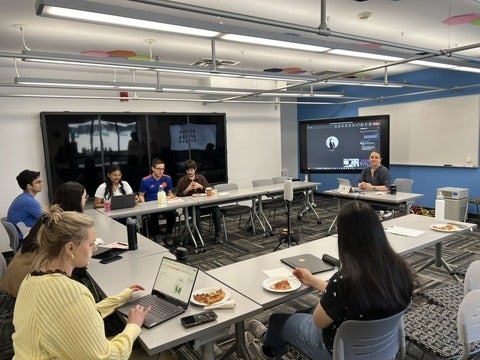
Following the success of last year’s visit, GI welcomed another cohort of visitors from Mexico eager to explore the world of games and interactive technology. These students are from the RoboSEIP program managed by Renison University. During the visit, students attended presentations and interactive sessions and participated in research.

Dr. Hector Perez worked with many Indigenous communities during his time as a postdoctoral fellow including the Peguis First Nation in Manitoba who often asked him, “When are you coming back?” One of the most valuable lessons Perez learned was that Indigenous communities would expect visitors, including researchers, to return to the community to share their research insights and participate in social gatherings. As Perez moves on to new opportunities, there are five lessons he wants to impart on our community.