Ekaterina Durmanova: How to Puzzle Your Way Through Academia
Master’s student Ekaterina Durmanova (Ekat) has been a part of the GI community in more ways than one since 2016.
On April 19th, the Games Institute (GI) celebrated the conclusion of its 2022 seed grant program with “Disrupting Disciplinary Divides for a Digital Future” – a research symposium. The symposium not only demonstrated the outcomes of 8 separate research projects but also what makes the GI stand out as a unique research ecosystem.
On December 2nd, Drs. Brianna Wiens (English Language and Literature) and Daniel Harley (Stratford School of Interaction Design and Business) presented their work and research in areas of feminist and responsible design.
Canadian Cap and Trade Simulation (CCTS) is a serious game/simulation designed to teach undergraduate Chemical Engineering and Environmental Studies students about carbon tax and trade systems in Canada created by PhD candidate Alex Fleck and Dr. Jason Grove.
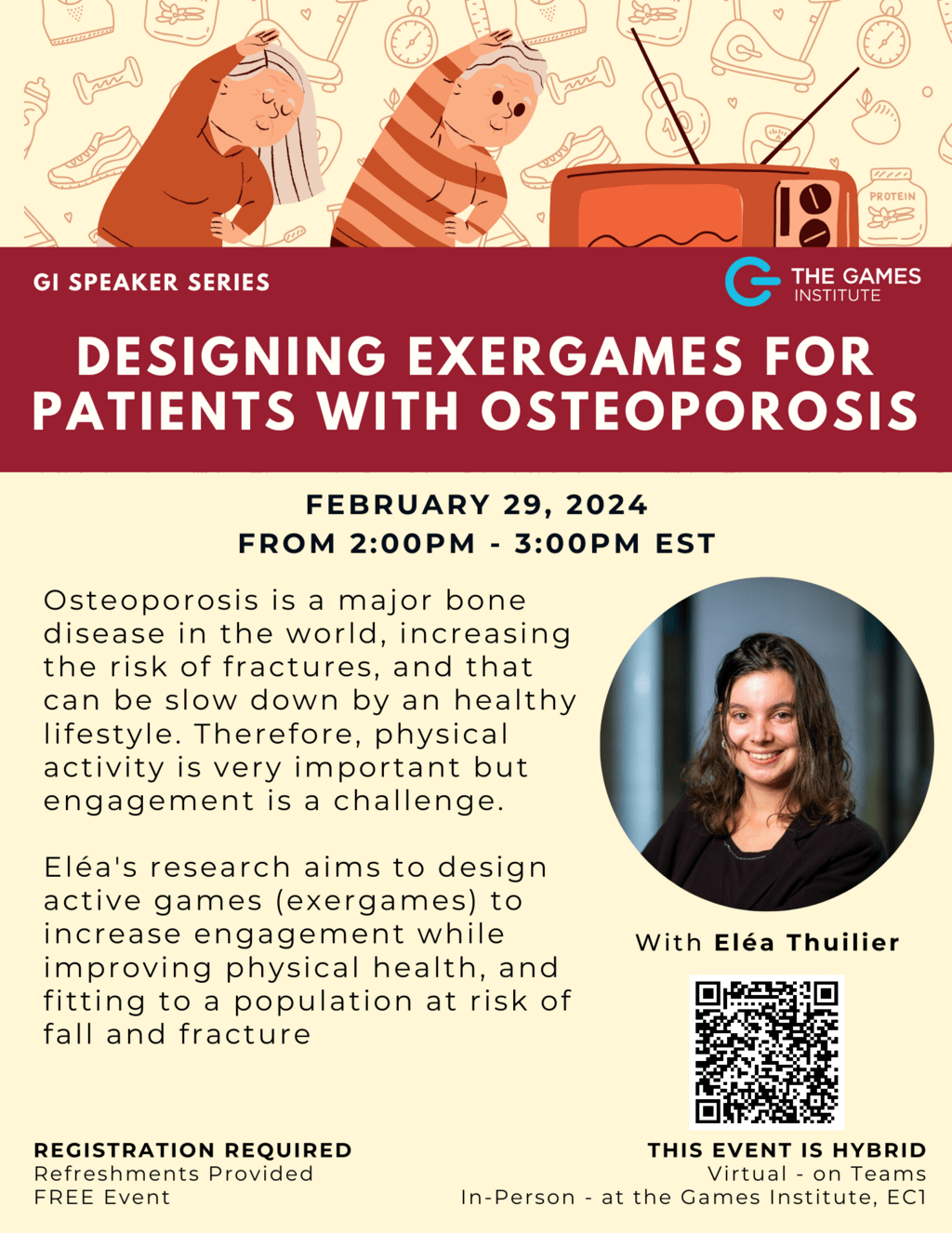
Osteoporosis is a major bone disease in the world, increasing the risk of fractures, and that can be slow down by an healthy lifestyle. Therefore, physical activity is very important, but engagement is a challenge. Eléa's research aims to design active games (exergames) to increase engagement while improving physical health, and fitting to a population at risk of fall and fracture.
This event will be held in HYBRID format. Please join us in-person at the Games Institute, EC1 at the University of Waterloo or virtually through Microsoft Teams.
Speaker: Eléa Thuilier
Eléa Thuilier is a PhD student at the university of Galway (Ireland). She has a background of software and computer science engineer in France. She's also part of the Canadian AGE-WELL network as an HQP. Her research focus on the use of technology for older adults.
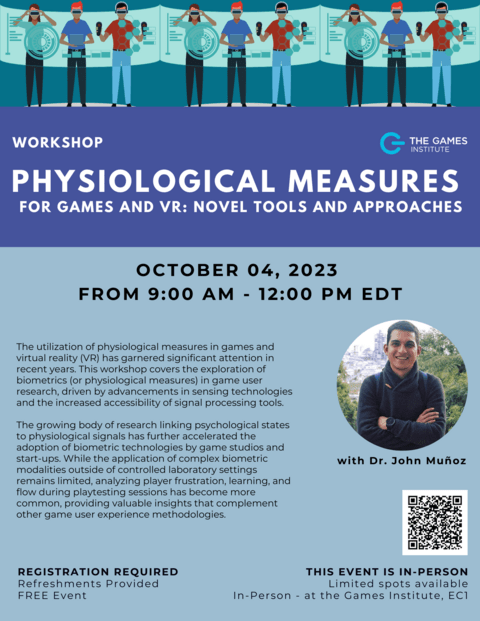
The utilization of physiological measures in games and virtual reality (VR) has garnered significant attention in recent years. This hybrid panel covers the exploration of biometrics (or physiological measures) in game user research, driven by advancements in sensing technologies and the increased accessibility of signal processing tools.
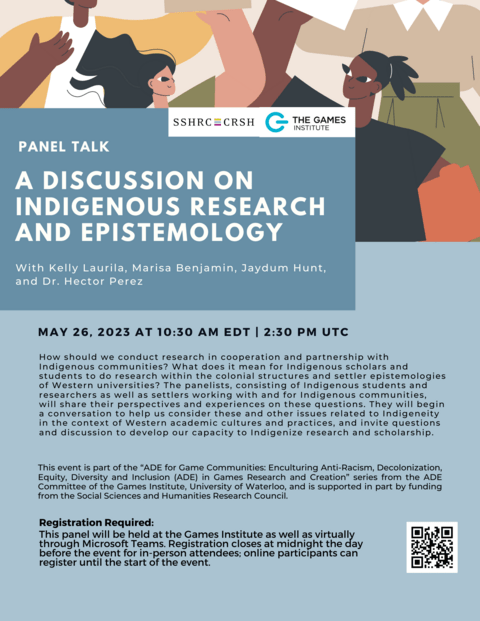
How should we conduct research in cooperation and partnership with Indigenous communities? What does it mean for Indigenous scholars and students to do research within the colonial structures and settler epistemologies of Western universities? The panelists, consisting of Indigenous students and researchers as well as settlers working with and for Indigenous communities, will share their perspectives and experiences on these questions. They will begin a conversation to help us consider these and other issues related to Indigeneity in the context of Western academic cultures and practices, and invite questions and discussion to develop our capacity to Indigenize research and scholarship.
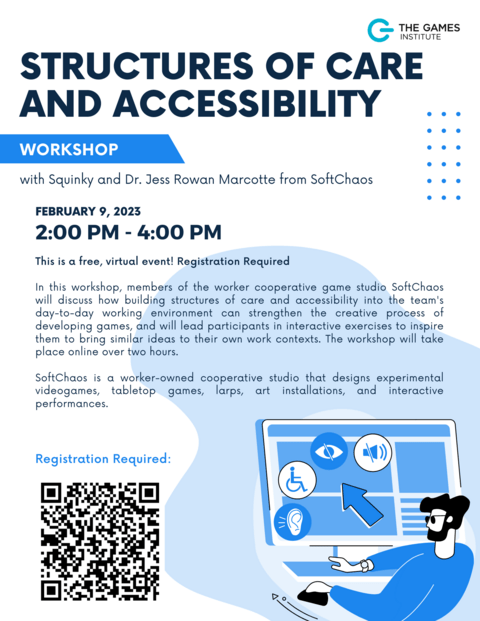
In this workshop, members of the worker cooperative game studio SoftChaos will discuss how building structures of care and accessibility into the team's day-to-day working environment can strengthen the creative process of developing games, and will lead participants in interactive exercises to inspire them to bring similar ideas to their own work contexts. The workshop will take place online over two hours.
We are hosting an unjudged, unranked, private, safe-space, game jam workshop. Please Register via Eventbrite. There will be a small fee of $5 to cover the cost of lunch.
Join us at the Games Institute for a Brown Bag talk from GI memeber and PhD student in the School of Environment, Enterprise, and Development Sid Heeg!
Feel free to bring your lunch with you to eat during the talk. Coffee and tea will be provided but we ask that you bring your own mug!