Celebrating the Institute for Quantum Computing's year of impact and collaboration
Driven by our community of researchers who are dedicated to advancing quantum information science and technology, the Institute for Quantum Computing (IQC) celebrates our community's many accomplishments in research, training, outreach and commercialization in 2025.
The International Year of Quantum amplified both national and global conversations around quantum research. IQC forged new collaborations and fortified existing ones with collaborators across Canada and globally, contributing to the necessary dialogue on the significance of our field: how supporting theoretical and experimental researchers can help unveil fundamental scientific discoveries and propel us into a quantum-safe future, and how research commercialization turns research into real-world solutions and helps our economy grow and prosper.
Thank you to our community, partners, colleagues, and supporters. IQC wishes you a safe and happy holiday. We look forward to working together in 2026.
Research
IQC researchers are influential globally and the institute continues to be a draw for postdoctoral scholars, graduate students, institutional collaborators and funders.
In the 2024-2025 fiscal year, IQC members, associates and affiliates received close to $25 million in funding. IQC researchers published 158 peer-reviewed journal articles and led 209 research projects. More about new and notable research published by IQC faculty, post docs, and graduate students in 2025 in the image carousel.
IQC had 49 post docs, nine new ones joined and two positions were renewed in the 2025 calendar year. IQC researchers have published over 3,000 peer-reviewed papers since the institute's founding in 2002 that have amassed more than 125,000 citations. And our annual flagship scientific event Quantum Innovators welcomed 24 Canadian and global postdoctoral fellows and junior professors to showcase their work, connect with peers, and join the IQC community for the week.
Researchers from IQC are also impacting industry.
- Twenty-five quantum startups have spun out of IQC research.
- New notables ones include Phantom Photonics and Foqus.
- Fifty per cent of researchers are involved in commercialization.
- In the past fiscal year, 50 newly created jobs in Canada were linked to IQC through the hiring practices of research spin-off companies, which accounts for 10 per cent of job growth in the Waterloo region.
IQC was heartened by the federal government’s financial commitment to advancing the country’s quantum capabilities. In the 2025 budget, it earmarked $334.3 million over five years, signalling a reinforcement of the country’s global position at the forefront of quantum science and technology advancement.

Dr. Christine Muschik, IQC faculty and professor, Department of Physics and Astronomy, published papers in Nature Physics and Nature Communications in 2025 with international collaborators. Both papers showed groundbreaking simulations reaching milestones in quantum information science.

IQC researchers working on the Quantum EncrYption and Science Satellite (QEYSSat), a satellite demonstrating secure ground-to-space quantum communication, published a white paper with Canadian collaborators outlining a future mission opportunity to establish a step towards a Canada wide quantum internet.

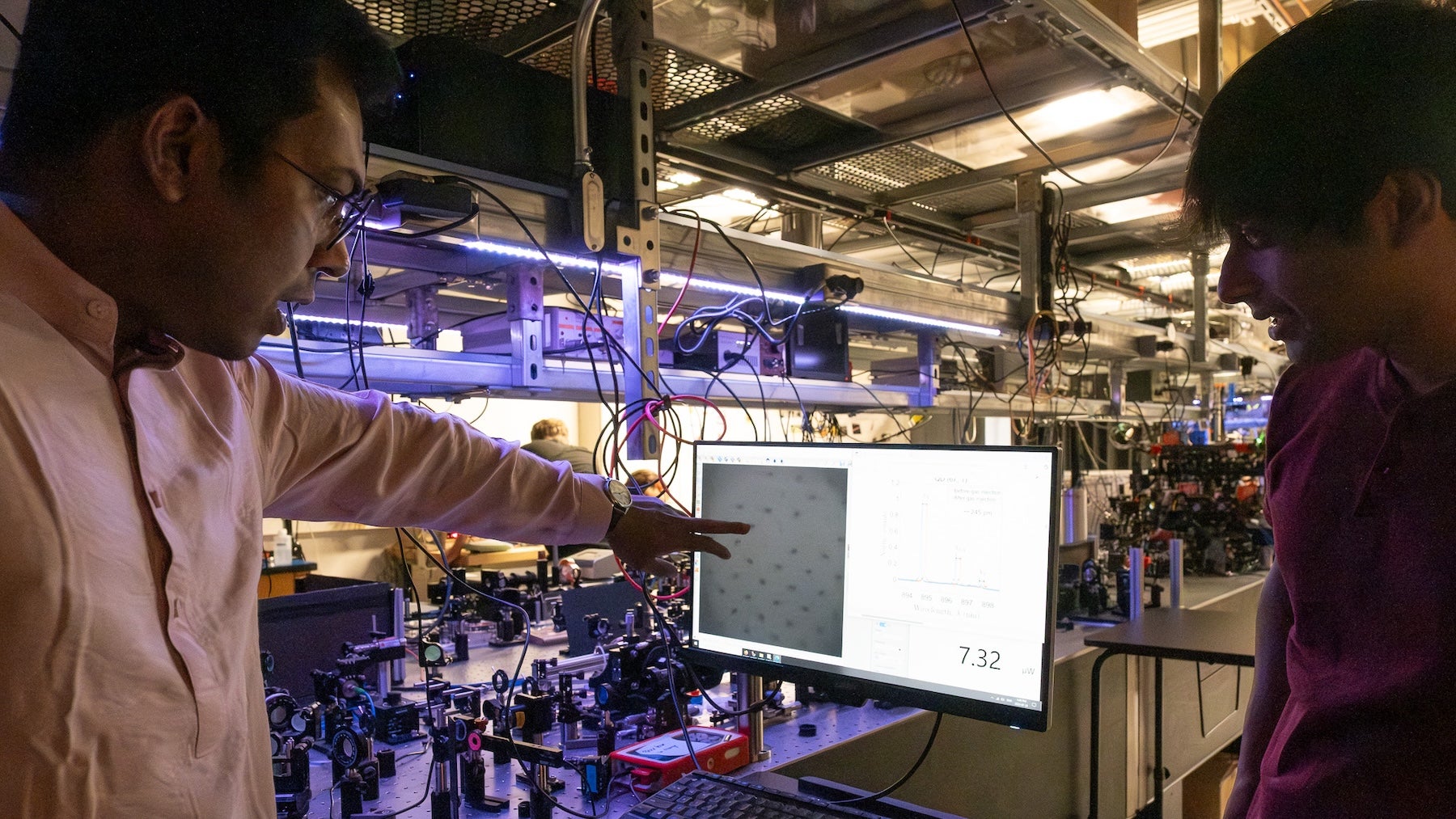
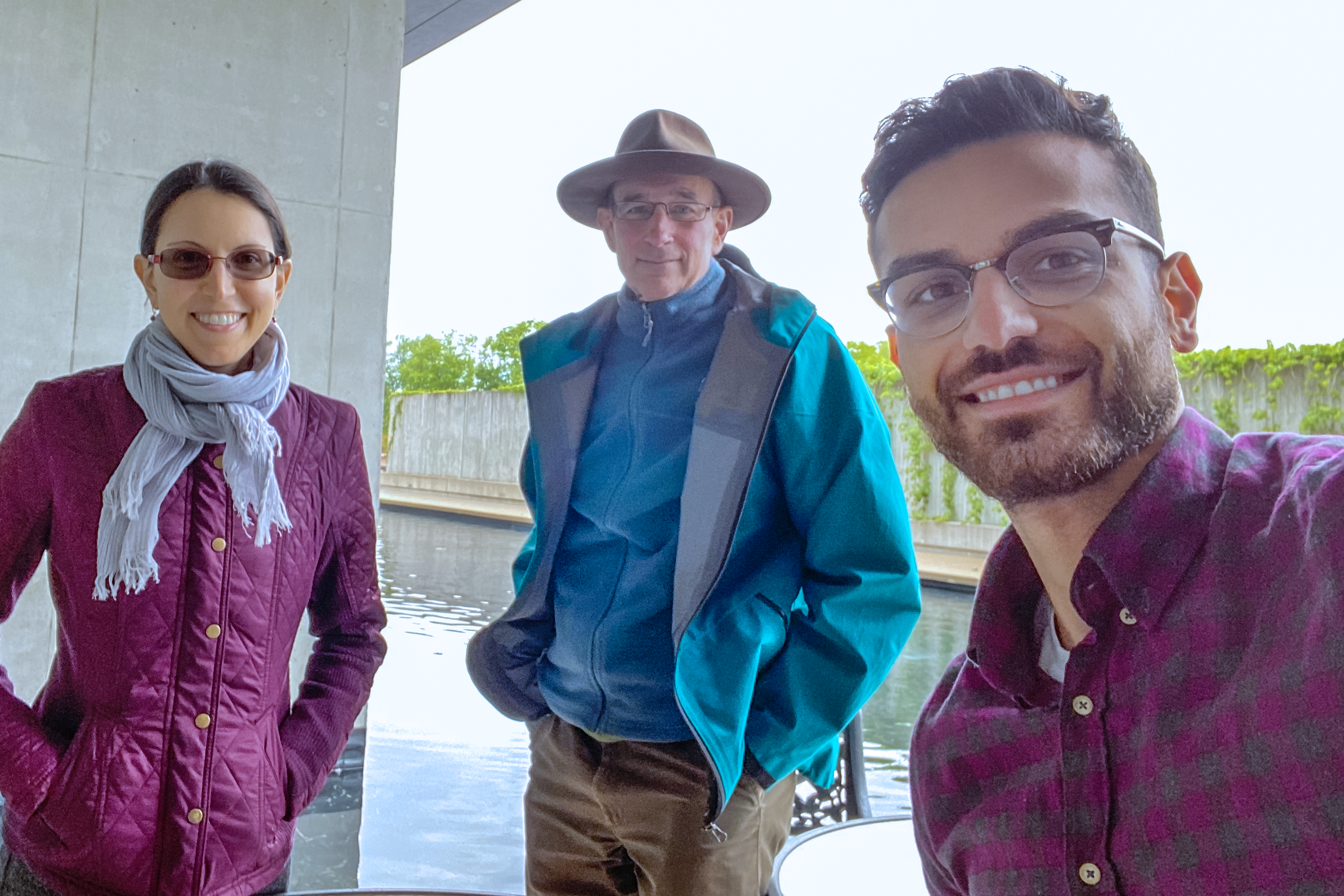
Research demonstrated a new technique to help connect quantum devices over long distances, a critical component to realizing a quantum internet. It was led by Dr. Michal Bajcsy in collaboration with Dr. Michael Reimer and Dr. Kevin Resch. Research associate Dr. Rubayet Al Maruf (L) and Sreesh Venuturumilli, IQC PhD student, work closely with Bajcsy, professor in the Department of Electrical and Computer Engineering, on quantum communications research.

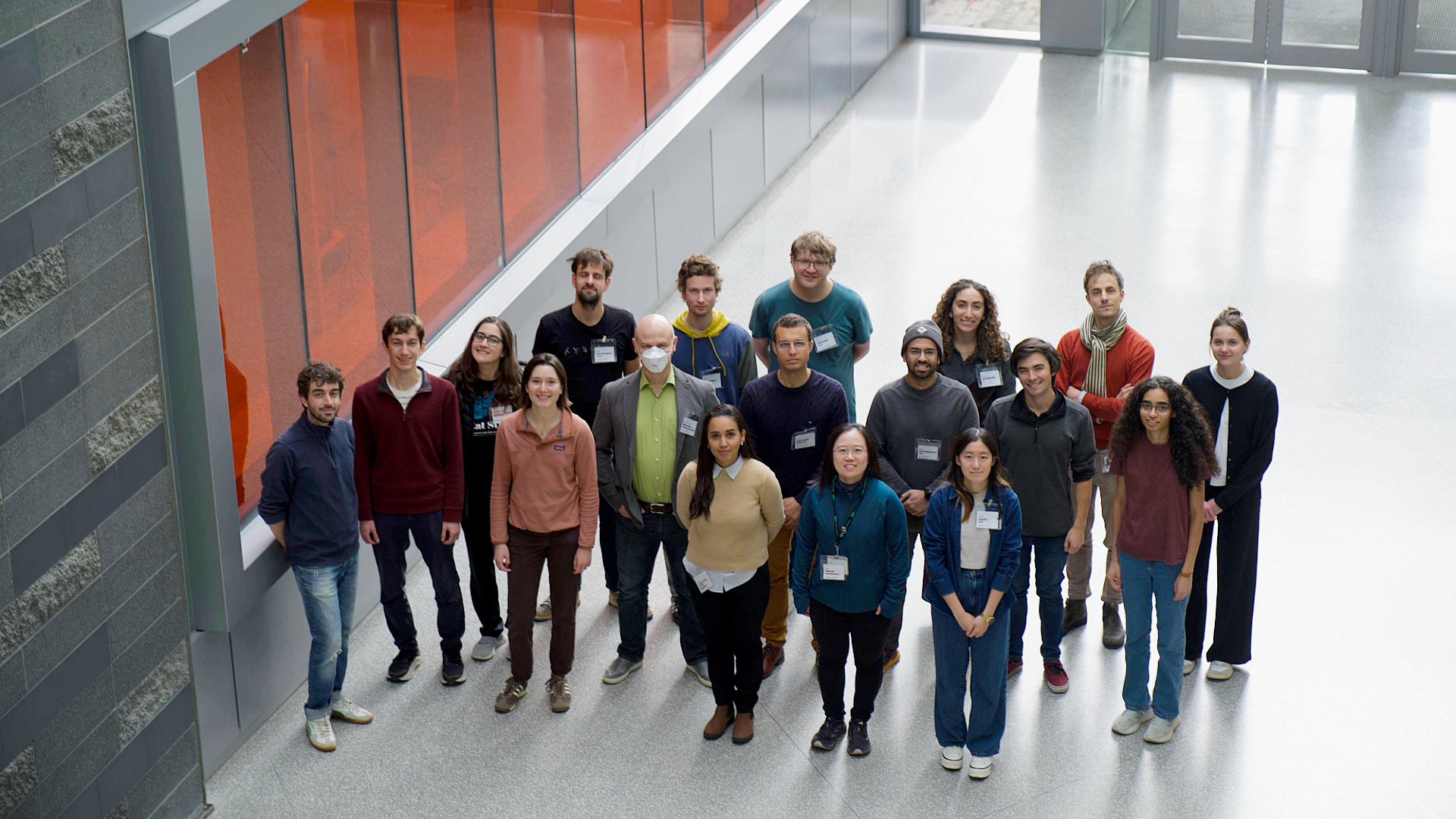
IQC's Quantum Innovators week-long workshop brings together the most promising postdoctoral fellows in quantum information science and technology.

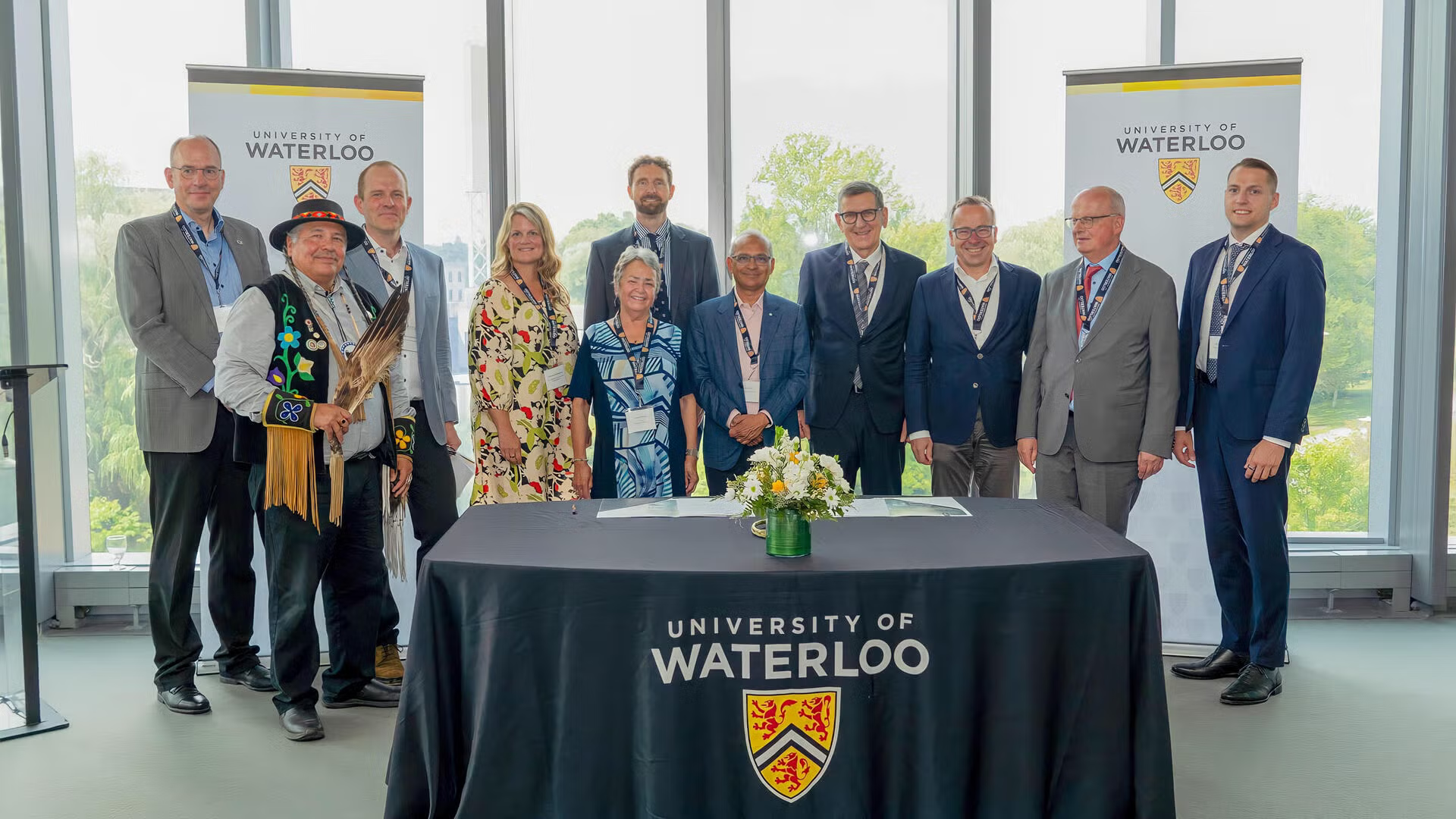
The prominent Dieter Schwarz Foundation in Germany established the chair in Physics of Information and AI at the University of Waterloo, held by Dr. Achim Kempf (back row, centre) a professor of mathematical physics in the Department of Applied Mathematics at Waterloo and IQC member. Leaders from the Foundation toured IQC with representatives from the University of Waterloo and the institute.

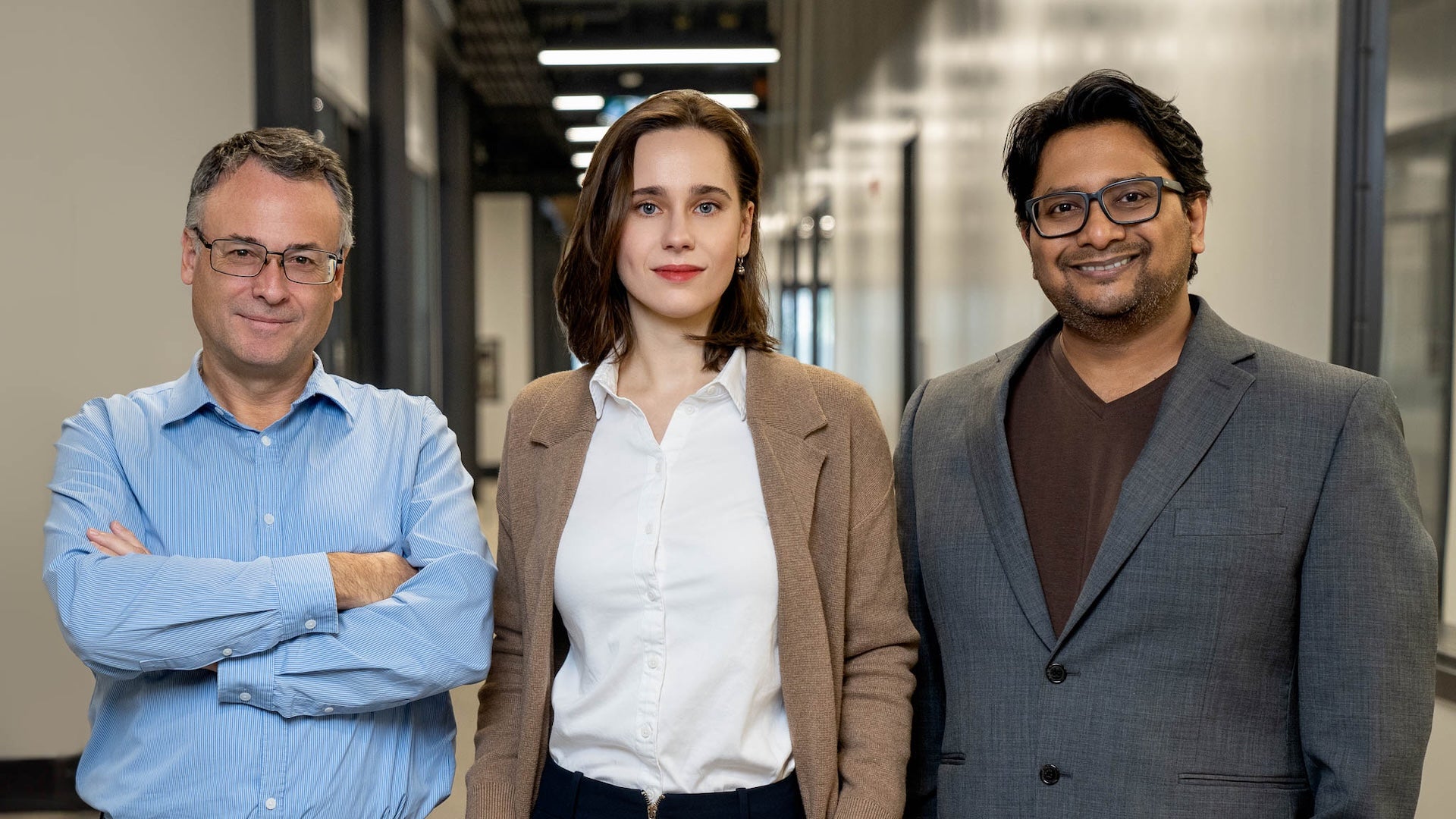
Co-founders of quantum startup Phantom Photonics (L-R): Dr. Thomas Jennewein, Alex Maierean, IQC PhD student, and Dr. Shihan Sajeed. The company is developing quantum sensors that are better at detecting faint signals by using advanced techniques to ignore background noise.

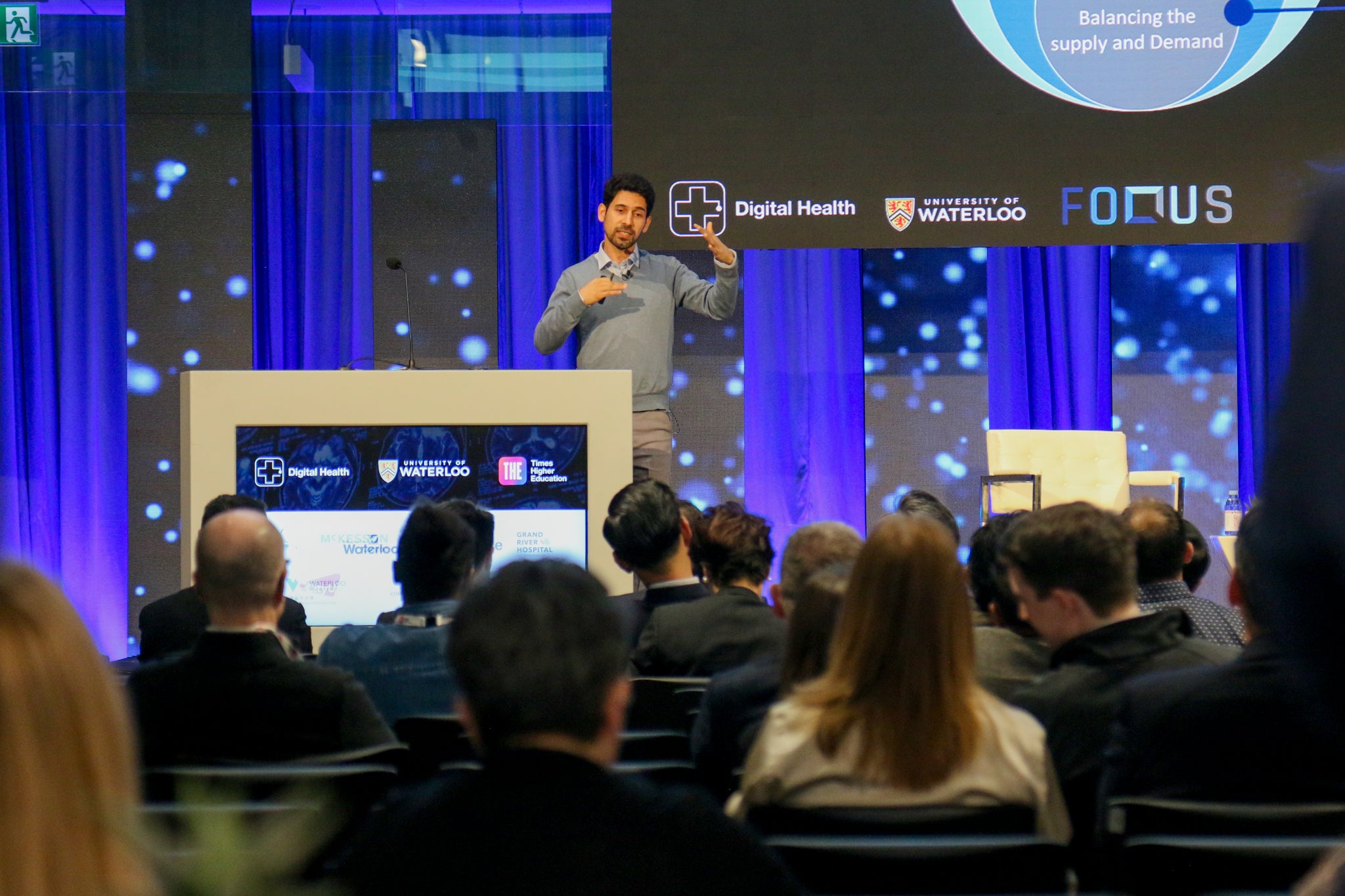
Foqus founder and CEO Sadegh Raeisi at the Times Higher Education Digital Health 2025 summit, hosted by the University of Waterloo. The IQC research spin-off is building a software solution that uses proprietary quantum technologies and Machine Learning algorithms to enhance MRI scans and reduce scan times from ~60 minutes to less than five.



Training

Dr. Shayan Majidy (R) received the W.B. Pearson Medal from the University of Waterloo’s Faculty of Science, recognizing creativity in research presented in students’ theses. He counts Dr. Ray Laflamme and Nicole Yunger Halpern as his mentors. Photo credit Shayan Majidy.

Yawen Peng, a PhD candidate in electrical and computer engineering received the first installment of the new Samit & Reshma Sharma foundation scholarship which supports IQC graduate studies with significant practical impact in quantum information research.

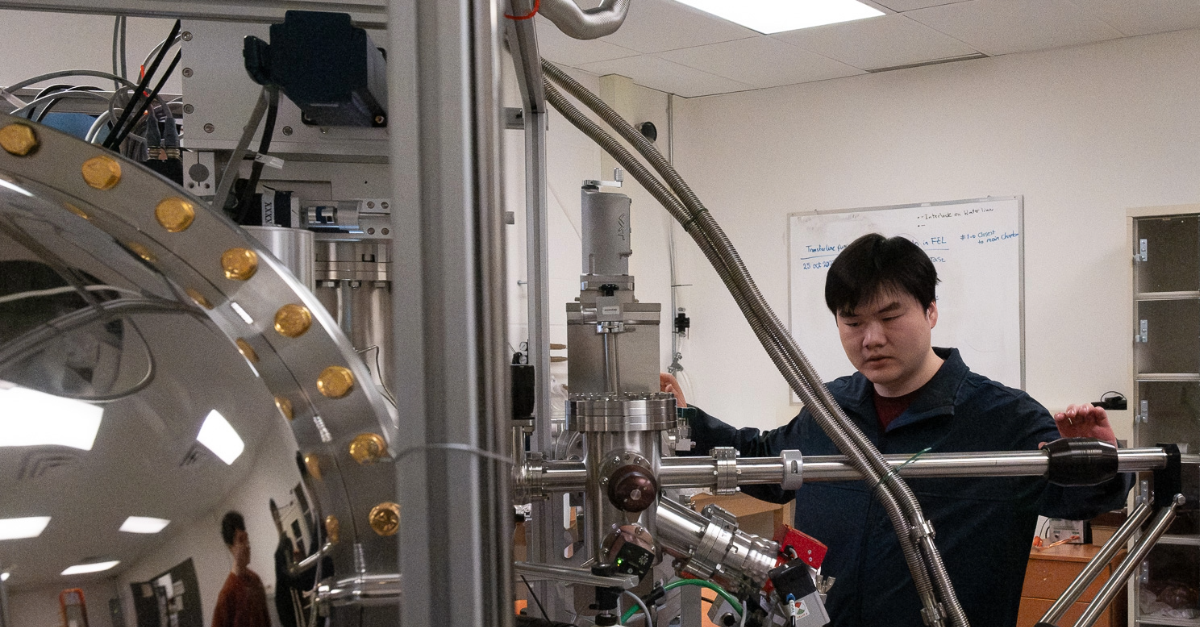
Graduate students working with Dr. Alexandre Cooper-Roy and Dr. Alan Jamison are helping develop and demonstrate next-generation quantum sensors that are more precise and sensitive than current ones.

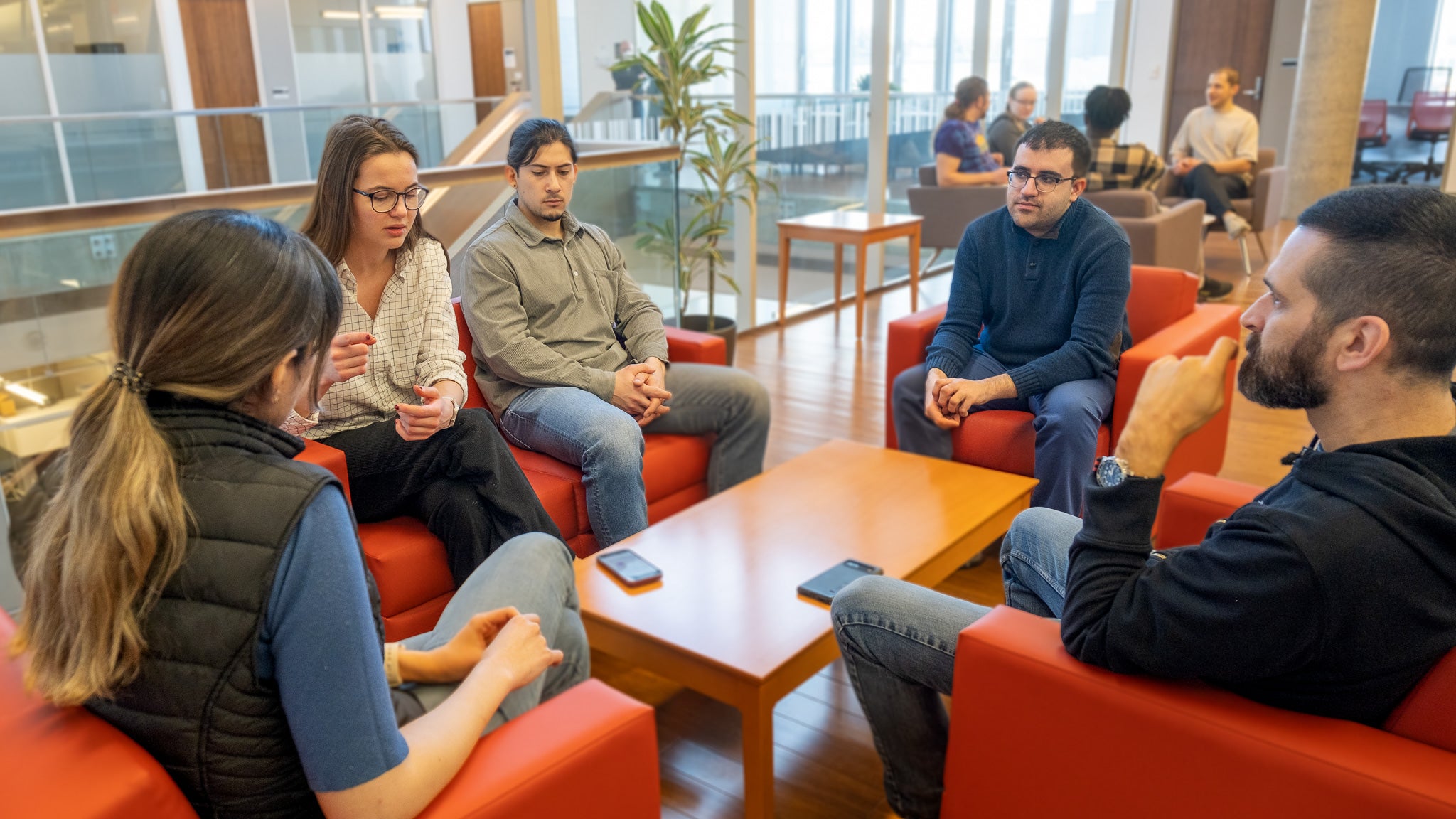
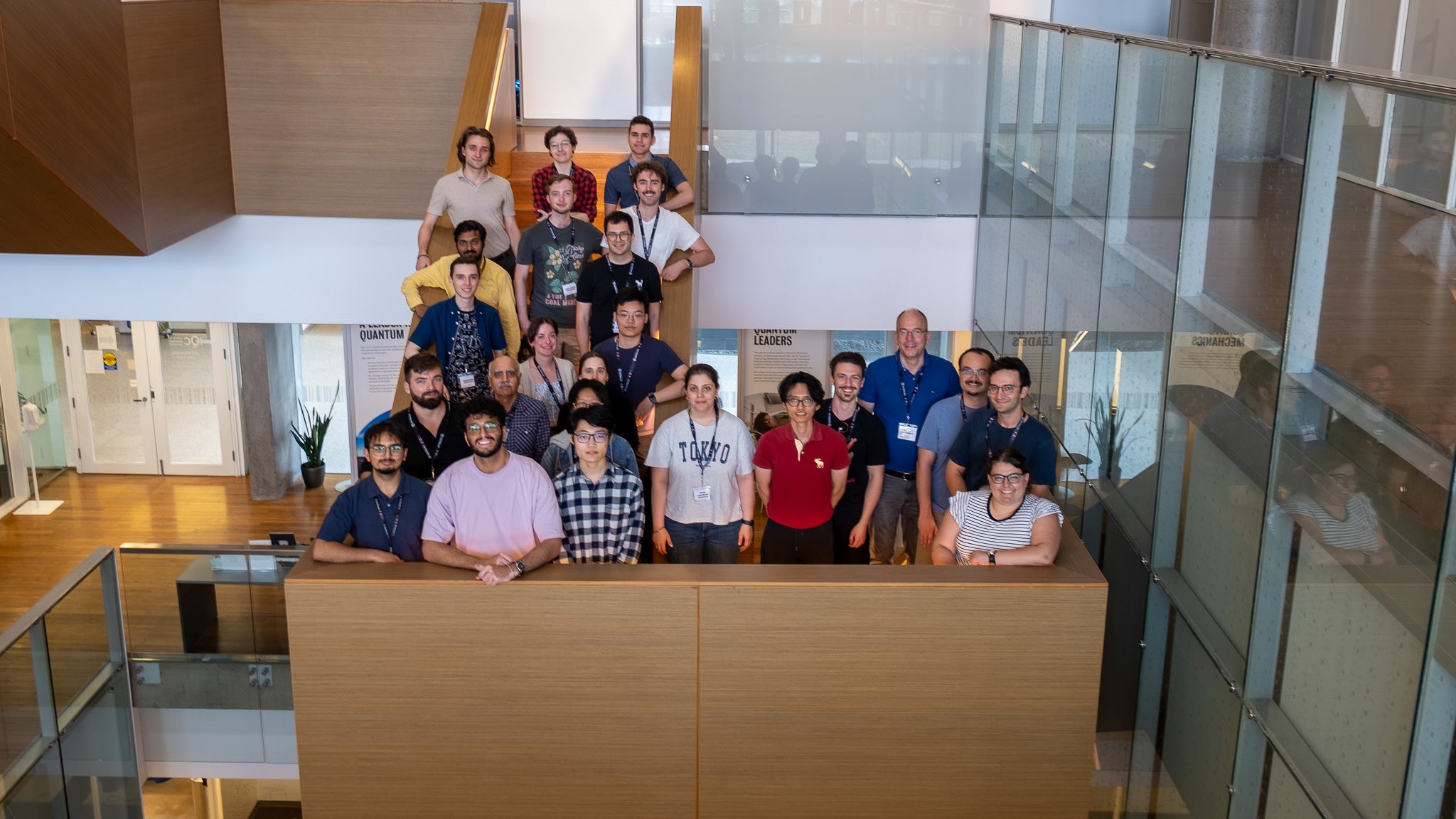
The 2025 Quantum Key Distribution Security Proof Workshop welcomed 32 participants from Waterloo and around the world. The forum sparks collaboration on open problems in QKD.
IQC graduates are the foundation of the institute and continue to be recognized nationally and internationally for their quantum information research.
- Engineering PhD candidate and IQC member Ahmed Shahin received the 2025 Vanier Scholarship, a highly competitive scholarship valued at $50,000 for up to three years.
- Angéline Lafleur, IQC PhD student, received The Order of the White Rose, a $50,000 scholarship aimed at building a community of women leaders in engineering.
- Dr. José Polo-Gómez won the American Physical Society’s (APS) 2026 Irwin Oppenheim Award for his research at IQC. He had just received his PhD in Applied Mathematics, Quantum Information when APS announced the award.
In 2025, IQC welcomed 49 new graduate students to the IQC community. Nine students advanced from master’s to PhD programs. Twenty-five graduates received their University of Waterloo degrees—14 master’s and 11 PhD’s—from Faculties of Engineering, Math and Science.
Outreach
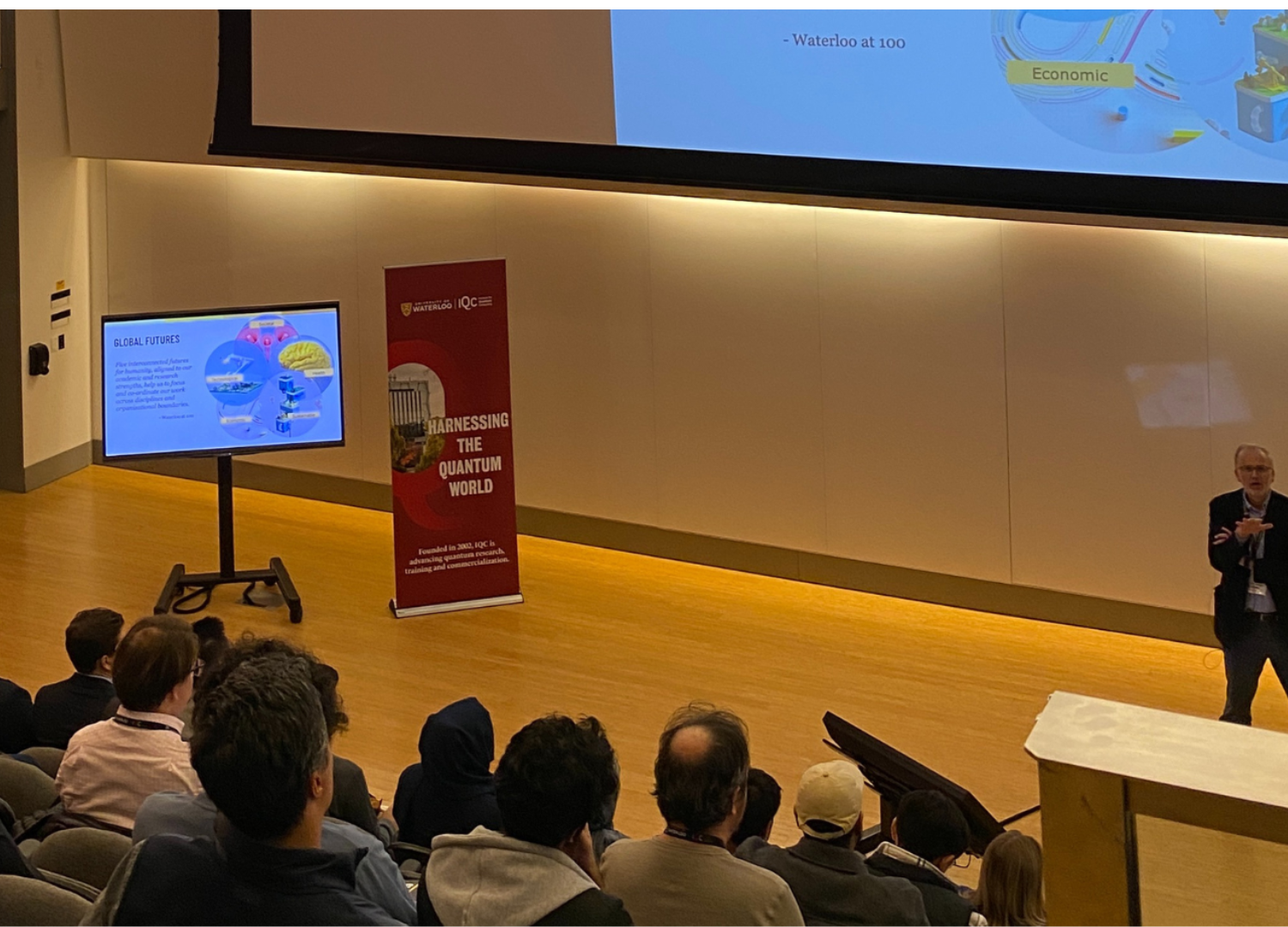
The Waterloo quantum ecosystem shone at the Year of Quantum Across Canada event, co-hosted by IQC and Perimeter Institute of Theoretical Physics, celebrating advances in quantum information science since its initial development a century ago. The four-day symposium strengthened ties with our partners and collaborators and demonstrated why IQC and Waterloo is a hub for quantum science and technology.
IQC's inaugural WaveMakers showcase brought together VCs, quantum startup founders, researchers, and industry partners for a full-house event, building and fostering connections in the quantum ecosystem.
The award-winning outreach initiative QuanTour made its first North American stop at IQC. QuanTour sent a device called a single-photon quantum dot to labs internationally to celebrate the International Year of Quantum 2025. Researchers at the Quantum Photonic Devices Laboratory, led by Dr. Michael Reimer, IQC faculty and professor in the Department of Electical and Computer Engineering, ran experiments on the quantum dot.
IQC ran over 100 outreach events this calendar year reaching over 10,000 people. This included class visits, quantum lab days, and science fairs and festivals.
Overall, outreach efforts engaged over 22,000 Canadians the past fiscal year, including the popular recurring programs Quantum School for Young Students (QSYS), Undergraduate School on Experimental Quantum Information Processing (USEQIP), and Quantum for Educators (QEd).

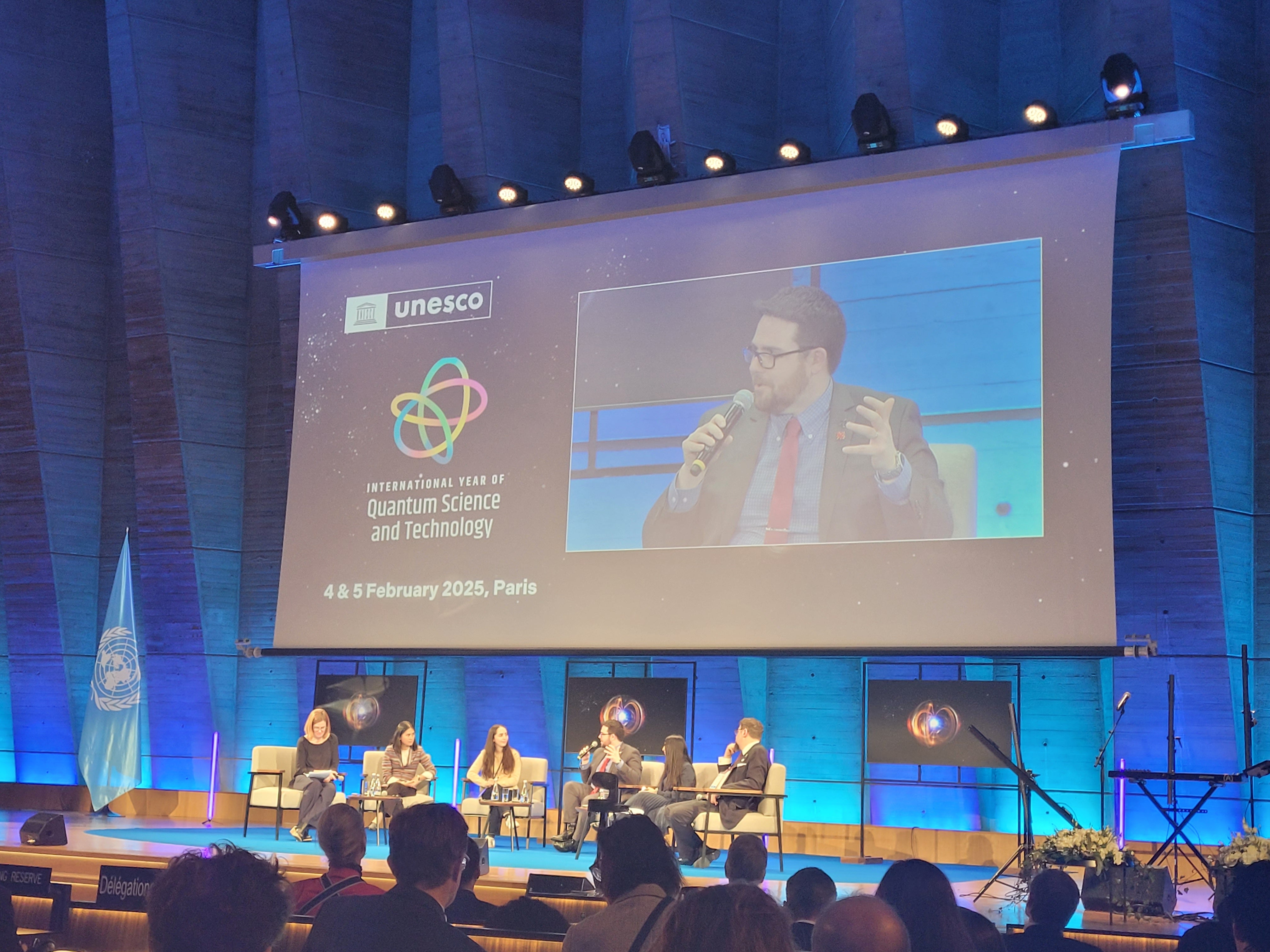
The United Nations Educational, Scientific and Cultural Organization (UNESCO) invited IQC’s senior outreach manager John Donohue to speak about public engagement in quantum science and technology at the International Year of Quantum opening ceremony in Paris, France.

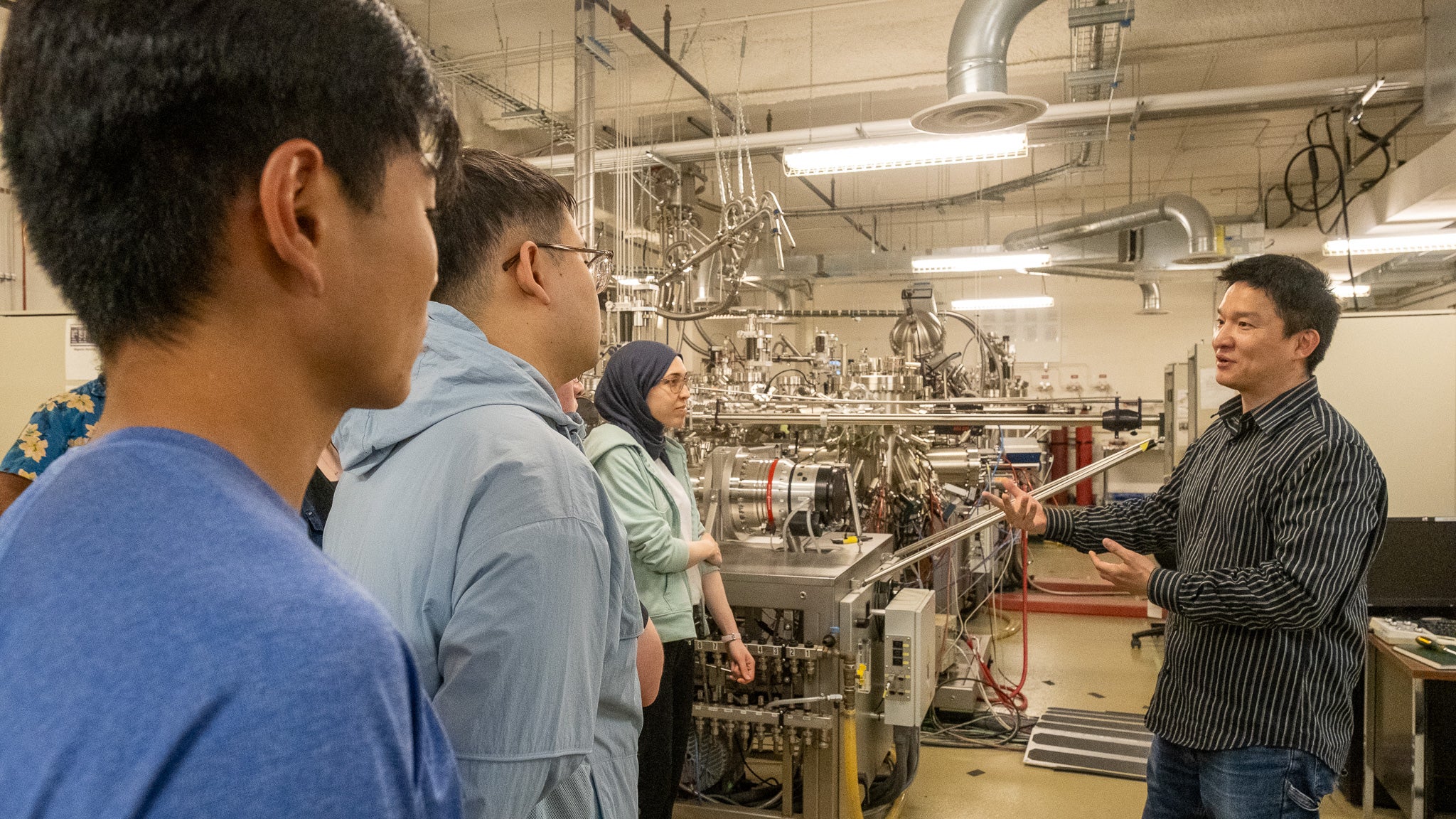
Dr. Guo-Xing Miao, IQC faculty and professor, Department of Electrical and Computer Engineering, speaks to the 2025 group of USEQIP students at his lab in IQC's Research Advancement Centre.

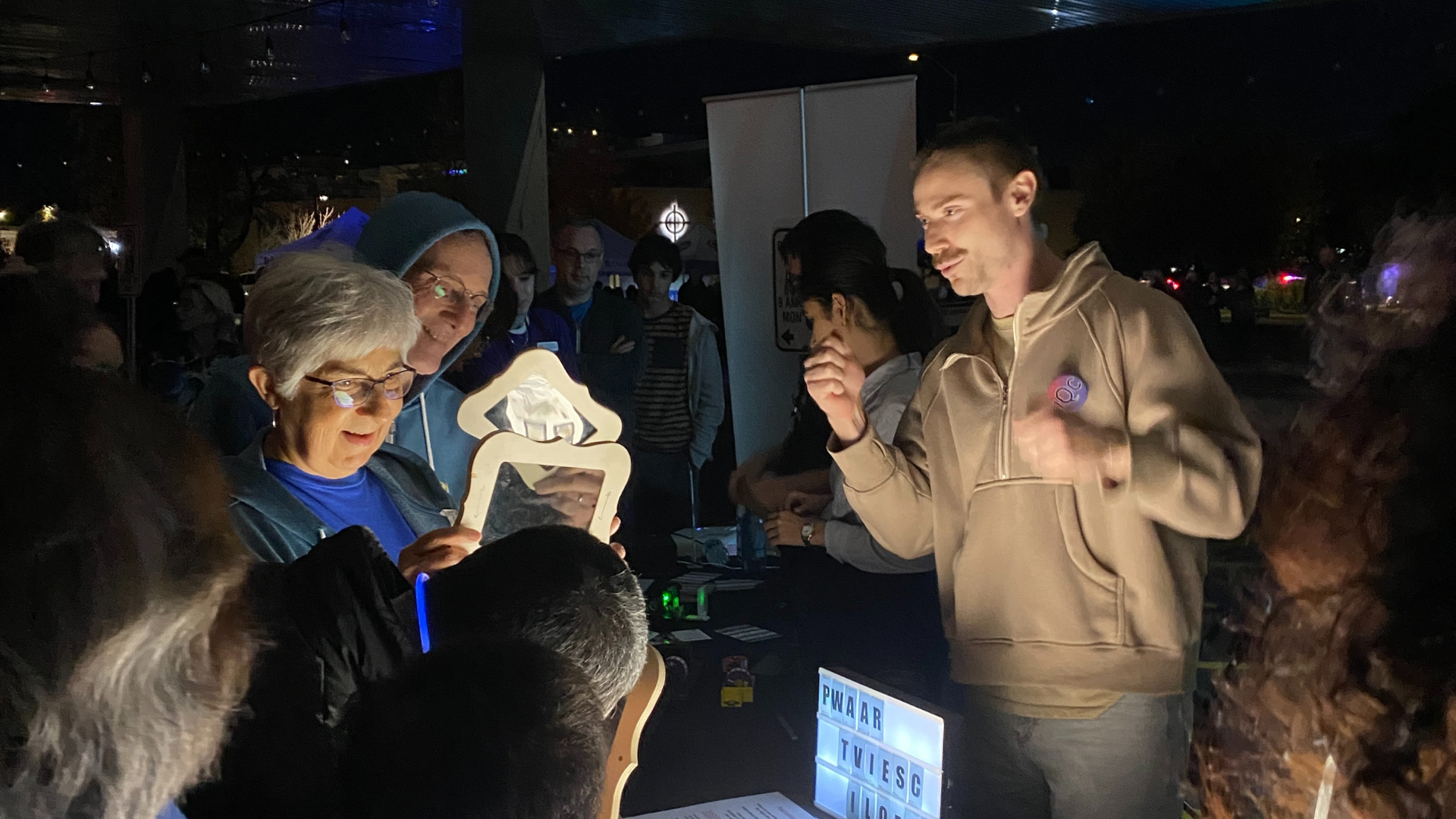
IQC outreach volunteers spoke to over 1,000 attendees at the annual Lumen Festival hosted by the City of Waterloo.

Quantum Photonics Devices lab group gives QuanTour a taste of Canada.

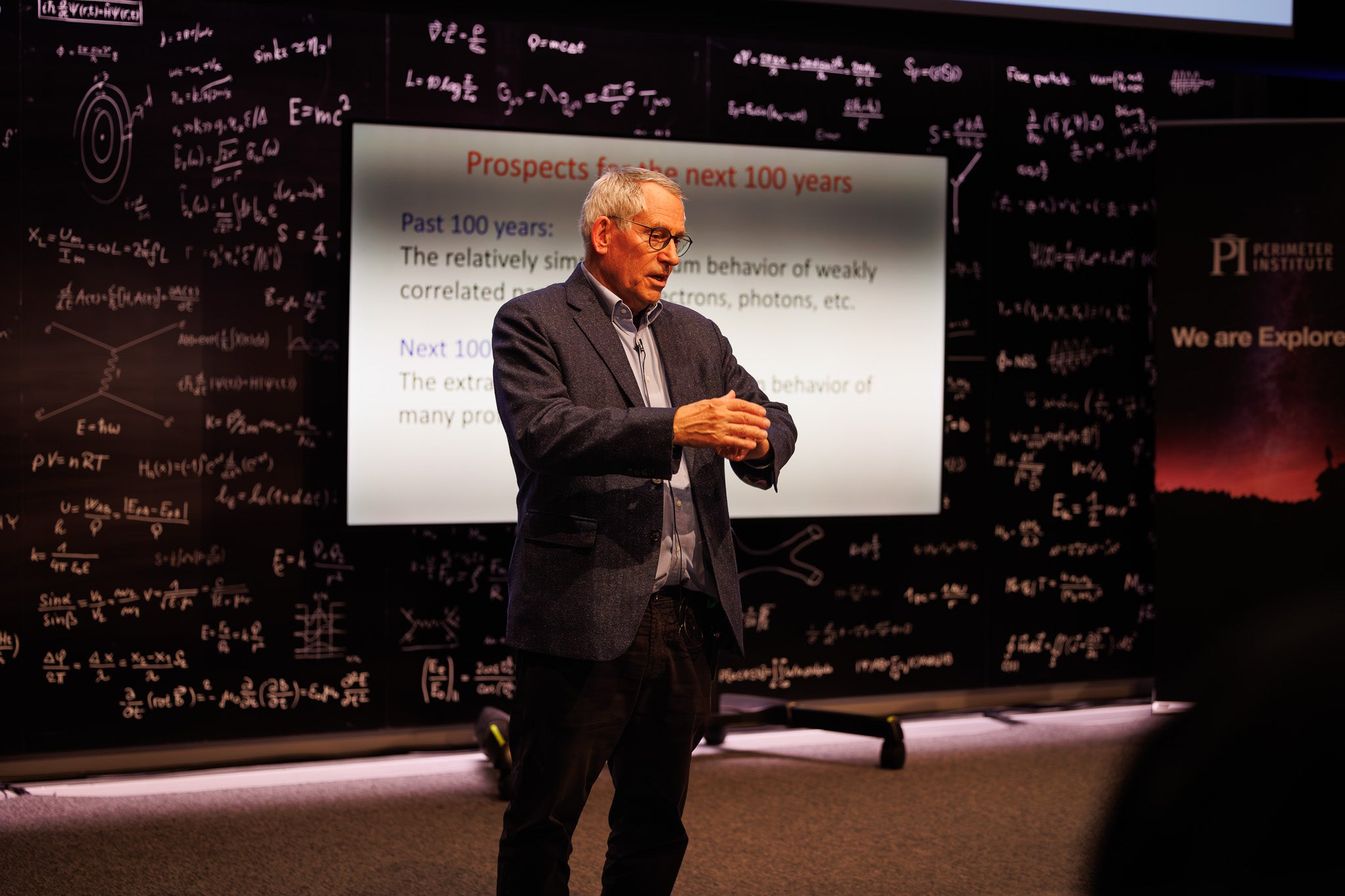
Dr. John Preskill, a theoretical physicist at the California Institute of Technology, presenting on the prospects of quantum for the next 100 years.

Richard Florizone, special advisor to University of Waterloo's president and provost, at WaveMakers.

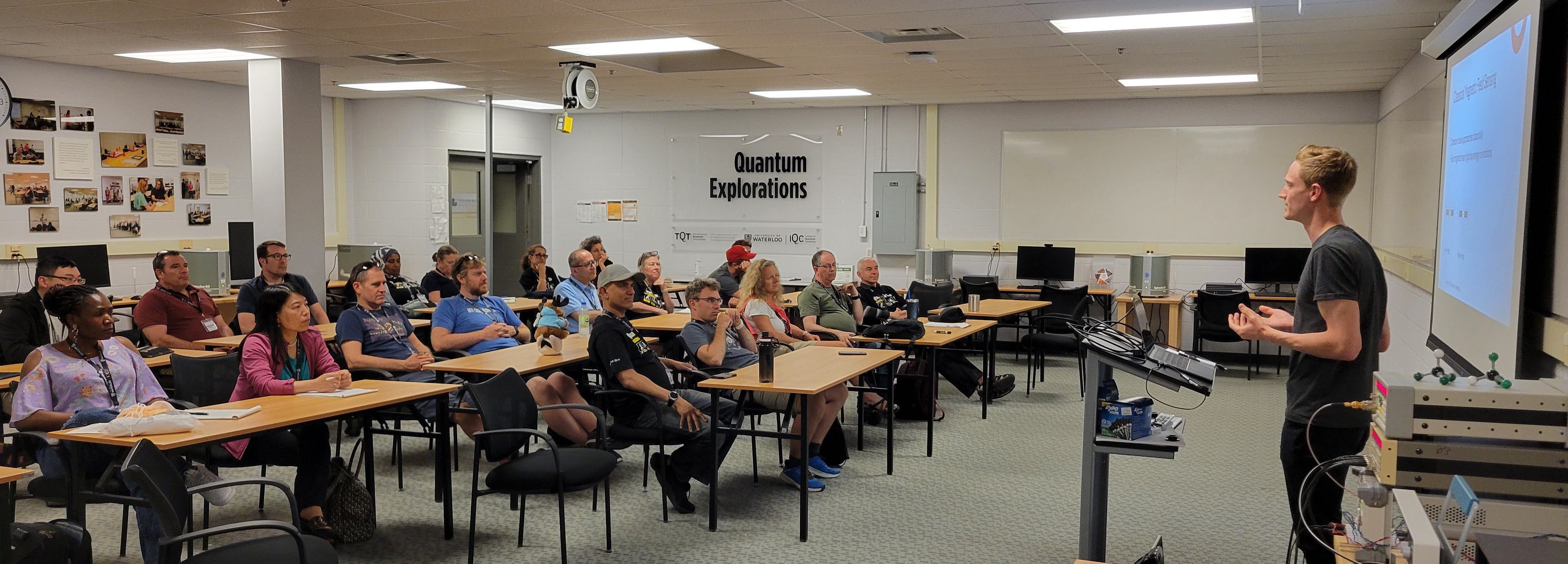
Quantum for Educators (QEd) participants at the 2025 program

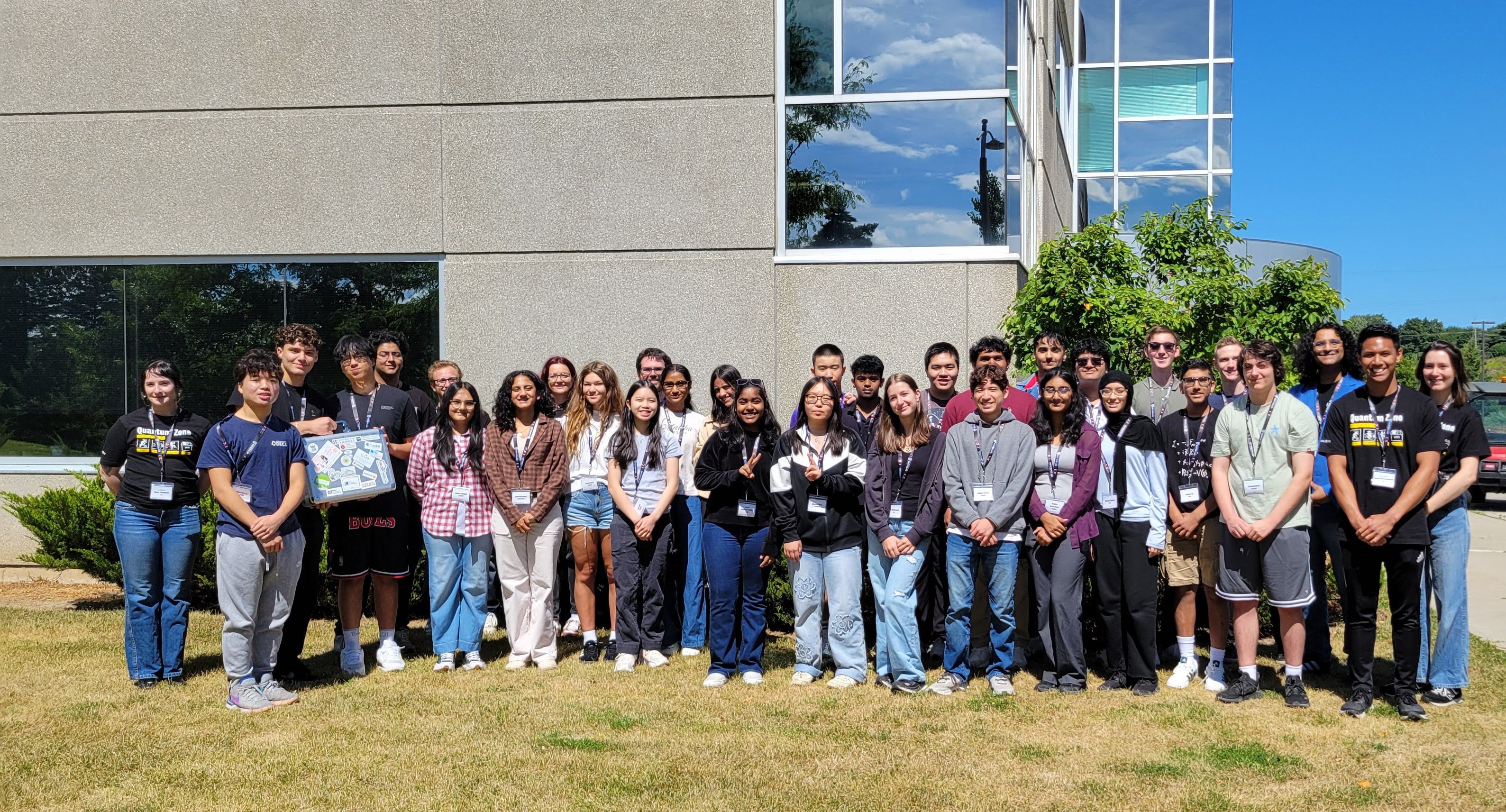
Some of the Quantum School for Young Students (QSYS) 2025 participants at the lab day in RAC

Celebrating the life and legacy of Raymond Laflamme

Raymond Laflamme, a trailblazer in quantum information processing and pioneer of the Institute for Quantum Computing (IQC) at the University of Waterloo, died on June 19, 2025 after a lengthy battle with cancer.
He served as the founding executive director of IQC from 2002 to 2017. Through his leadership, IQC became a world-class research hub, positioning Canada at the forefront of the quantum revolution. In his scientific research, Laflamme pioneered theoretical and experimental approaches to quantum information processing and quantum error correction.
Laflamme, originally from Québec City, Canada, studied physics as an undergraduate at the Université Laval. His curious mind led him to England where he earned his PhD at Cambridge University, under the supervision of Stephen Hawking. He then moved to the Los Alamos National Laboratory, where his interests shifted from Cosmology to quantum computing.
In 2001, he was attracted back to Canada where he joined the Department of Physics and Astronomy at the University of Waterloo, and the Perimeter Institute for Theoretical Physics.
Our top stories


L’Institut d’informatique quantique célèbre une autre année de recherche percutante et de collaboration
Pour l’Institut d’informatique quantique (IQC) et sa communauté de chercheurs dévoués à l’avancement des sciences et technologies quantiques, l’année 2025 en aura été une de percées scientifiques, de formation, de rayonnement et de commercialisation.
L’Année internationale des sciences et technologies quantiques a braqué les projecteurs sur le domaine, ce qui a permis à l’IQC de nouer et de renforcer diverses collaborations au Canada et à l’international. De ce fait, l’établissement a pu contribuer à un dialogue essentiel sur la quantique, notamment sur l’importance de financer la recherche théorique et expérimentale pour ouvrir la voie à des découvertes fondamentales garantes de l’avenir ainsi que sur les façons dont la commercialisation donne lieu à des solutions concrètes qui font croître et briller notre économie.
Merci à notre communauté, à nos partenaires, à nos collègues et à nos autres tenants. L’IQC vous souhaite un doux et joyeux temps des fêtes et a hâte de vous revoir en 2026.
Recherche
Les chercheurs de l’IQC sont reconnus à l’international, et l’établissement continue d’attirer stagiaires postdoctoraux, étudiants des cycles supérieurs, collaborateurs institutionnels et bailleurs de fonds.
Pendant l’exercice 2024-2025, les membres, associés et affiliés de l’IQC ont reçu près de 25 millions de dollars en financement. Au total, ils ont dirigé 209 projets de recherche, qui ont mené à la publication de 158 articles évalués par des pairs. Consultez le carrousel d’images pour en savoir plus sur les grandes réalisations de 2025 de nos professeurs, postdoctorants et étudiants des cycles supérieurs.
Cette année, l’IQC comptait 49 postdoctorants, dont 9 nouveaux et 2 dont le contrat a été renouvelé. Depuis sa fondation en 2002, ses chercheurs ont publié plus de 3 000 articles évalués par des pairs, qui totalisent aujourd’hui plus de 125 000 citations. En outre, à l’occasion de son événement phare annuel Quantum Innovators, l’établissement a accueilli 24 stagiaires postdoctoraux et jeunes professeurs du Canada et d’ailleurs, venus présenter leurs travaux, réseauter et participer à la vie à l’IQC pour la semaine.
L’IQC laisse aussi sa marque dans le secteur privé :
- Ses projets de recherche ont entraîné la fondation de 25 jeunes entreprises.
- Dans les additions récentes, Phantom Photonics et Foqus se démarquent.
- La moitié des chercheurs de l’IQC prennent part à des démarches de commercialisation.
- Au cours du dernier exercice, 50 nouveaux emplois ont été créés au Canada grâce à l’IQC, particulièrement issus des jeunes entreprises susmentionnées, qui comptent pour 10 % de la croissance de l’emploi dans la région de Waterloo.
L’IQC se réjouit d’ailleurs de l’investissement fédéral consenti au budget 2025 pour faire avancer la quantique au pays, soit 334,3 millions de dollars sur cinq ans. Le gouvernement envoie un message clair : le Canada compte demeurer à l’avant-scène des avancées mondiales en sciences et technologies quantiques.
Formation
Les diplômés font la fierté de l’IQC et continuent de se démarquer par leur recherche en quantique sur les scènes nationale et internationale.
- Ahmed Shahin, candidat au doctorat en ingénierie et membre de l’IQC, a reçu la bourse d’études Vanier 2025, une bourse hautement compétitive s’élevant à 50 000 $ par année pendant un maximum de trois ans.
- Angéline Lafleur, doctorante à l’IQC, a obtenu une bourse d’études de 50 000 $ de l’Ordre de la rose blanche. Cette distinction vise à soutenir les femmes à la pointe de l’ingénierie.
- José Polo-Gómez a remporté le prix Irwin-Oppenheim 2026 de l’American Physical Society pour sa recherche réalisée à l’IQC. Cette distinction suit de près l’obtention de son doctorat en mathématiques appliquées et information quantique.
En 2025, l’IQC a accueilli 49 nouveaux étudiants des cycles supérieurs. Neuf étudiants ont aussi terminé leur maîtrise et entamé un doctorat, et 25 membres ont reçu un diplôme de l’Université de Waterloo – 14 maîtrises et 11 doctorats –, en génie, en mathématiques et en sciences.
Rayonnement
L’écosystème quantique de Waterloo a brillé de mille feux à l’événement The Year of Quantum Across Canada, coorganisé par l’IQC et l’Institut Périmètre de physique théorique pour célébrer les avancées de la science de l’information quantique depuis sa découverte il y a maintenant 100 ans. Le symposium de quatre jours a permis à l’IQC de renforcer ses relations avec ses partenaires et collaborateurs et d’illustrer ce qui fait de l’établissement et de Waterloo un carrefour mondial en sciences et technologies quantiques.
L’IQC a également lancé une nouvelle vitrine quantique, WaveMakers, qui a réuni des recteurs, des fondateurs d’entreprises, des chercheurs et des partenaires du secteur privé en un grand événement de réseautage pour l’écosystème quantique.
N’oublions pas l’initiative primée QuanTour, qui a fait de l’IQC sa première destination en Amérique du Nord. L’initiative consiste à envoyer un dispositif appelé un point quantique à photons uniques dans différents laboratoires du monde pour célébrer l’Année internationale des sciences et technologies quantiques en 2025. Les chercheurs du laboratoire de dispositifs photoniques quantiques, sous la direction de Michael Reimer, professeur à l’IQC et au Département de génie électrique et informatique, ont fait des tests avec ce dispositif.
Cette année, l’IQC a rejoint plus de 10 000 personnes à travers plus de 100 événements de rayonnement, dont des visites en classe, des journées en laboratoire quantique, des expositions scientifiques et des festivals.
Au total, sur l’exercice financier, les initiatives de rayonnement de l’établissement ont touché plus de 22 000 Canadiens, notamment grâce à trois programmes populaires : l’École de quantique pour les jeunes (QSYS), l’École de premier cycle sur le traitement quantique expérimental de l’information (USEQIP) et Quantum for Educators (QEd).
Célébration de la vie et du legs de Raymond Laflamme
Raymond Laflamme, pionnier du traitement de l’information quantique et de l’Institut d’informatique quantique (IQC) de l’Université de Waterloo, est décédé le 19 juin 2025 des suites d’un long combat contre le cancer.
Fondateur de l’IQC, il en a été le directeur général de 2002 à 2017. C’est grâce à son leadership que l’IQC a pu devenir un centre de recherche de classe mondiale et positionner le Canada à l’avant-garde de la révolution quantique. Ses recherches scientifiques ont ouvert la voie à des approches théoriques et expérimentales du traitement de l’information quantique et de la correction d’erreurs quantiques.
Originaire de Québec, au Canada, où il a étudié la physique au premier cycle à l’Université Laval, il s’est laissé porter par son esprit curieux jusqu’en Angleterre. Il y a décroché un doctorat de l’Université de Cambridge sous la direction de Stephen Hawking, avant de déménager aux États-Unis pour travailler au laboratoire national de Los Alamos, où il a délaissé la cosmologie pour se tourner vers l’informatique quantique.
En 2001, Raymond Laflamme est revenu au Canada, où il s’est joint au Département de physique et d’astronomie de l’Université de Waterloo et à l’Institut Périmètre de physique théorique.