


The Waterloo Institute for Nanotechnology (WIN) is a global leader in discovering and developing smart and functional materials, connected devices, next generation energy systems, and therapeutics and theranostics. These discoveries by our scientists and engineers are fundamentally changing our world and helping solve some of humanity's most pressing issues. Our 285, 000 square foot, state-of-the-art facility meets the highest scientific standards for the control of vibration, electromagnetic radiation, temperature, and humidity, making it a global centre of excellence for nanotechnology and its applications.
Why is nanotechnology important? It is about creating new materials and improving ways of manufacturing products. To be more efficient, better, stronger and cheaper. Also improving the economy, environment and society. To achieve societal impact and a sustainable future, WIN has now mapped its thematic areas with the United Nations Sustainable Development Goals.


Events
Waterloo Institute for Nanotechnology (WIN) Day
The Waterloo Institute for Nanotechnology (WIN) cordially invites you to attend WIN Day on Friday, May 1, 2026, from 8:30 AM to 3:00 PM in QNC 1501.

WIN-ChE Joint Seminar : Andrew Fix
The Waterloo Institute for Nanotechnology (WIN) and Department of Chemical Engineering are pleased to present Andrew Fix for a joint, collaborative seminar titled "Selective Membrane Air Dehumidification: Bridging the Gap Between Materials, Components, and HVAC System Design”

WIN Distinguished Lecture with Arben Merkoçi
The Waterloo Institute for Nanotechnology (WIN) is pleased to present a Distinguished Lecture by Arben Merkoçi, Arben Merkoçi, ICREA Research Professor, Head of Nanobioelectronics & Biosensors Group, Institut Català de Nanociència i Nanotecnologia. Please join us on Tuesday, May 12, at 11:00 a.m. to hear Arben Merkoçi's lecture titled "Coupling Nanomaterials with Sustainable Platforms for Next-Generation Point-of-Care Nanobiosensors."
News

Waterloo Institute for Nanotechnology and Concordia University’s Volt-Age Research Group Formalize Collaboration Through New Memorandum of Understanding
The Waterloo Institute for Nanotechnology (WIN) and Concordia University’s Volt‑Age Research Group have signed a Memorandum of Understanding to formalize a growing collaboration in advanced energy and nanotechnology research. Building on the momentum of Professor Karim Zaghib’s WIN Distinguished Lecture, the agreement establishes a framework for joint research focused on carbon‑neutral energy technologies, including next‑generation batteries and sustainable energy systems. The partnership also emphasizes graduate training through shared workshops, research exchanges, and access to specialized facilities, while encouraging joint national and international funding initiatives. Together, the collaboration reflects a shared commitment to accelerating innovation, developing highly trained researchers, and advancing nanotechnology‑driven solutions for a low‑carbon future.
WIN Announcement : Renewal of MOU with NIMS & Upcoming ICGP Call
WIN and NIMS (Japan) have renewed their partnership, ensuring continued eligibility for researchers to apply for the International Cooperative Graduate Program (ICGP) this September.
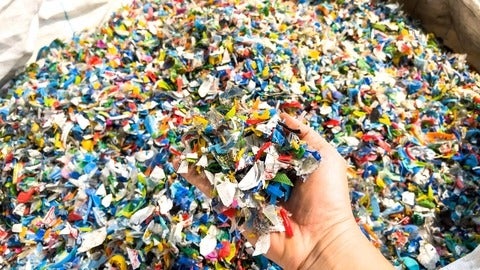
WIN Seed Funding Fuels Breakthrough Research in Sustainable Materials
WIN is spotlighting Dr. Yimin A. Wu’s seed‑funded research, which uses nanotechnology to break down and repurpose plastic waste, advancing Waterloo’s sustainability goals through the Global Futures Initiative.