News

Filter by:

Limit to news where the title matches:
Limit to items where the date of the news item:
Date range
Limit to news items tagged with one or more of:
Limit to news items where the audience is one or more of:

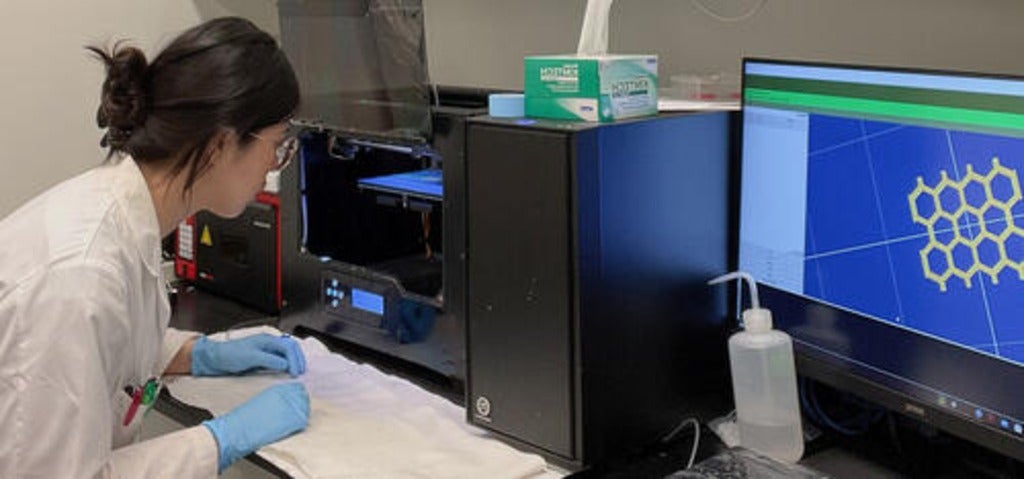
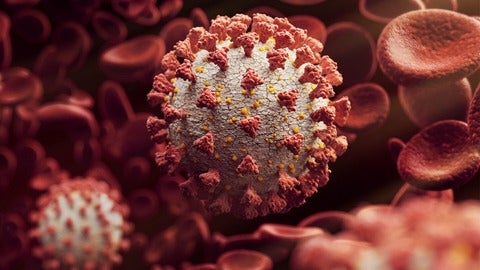
As the first doses of the Pfizer COVID-19 vaccine arrive and are administered in Ontario, researchers in Waterloo Region are trying to design a needle-free option.

The work is still in the pre-clinical stage and their efforts are highlighting the University of Waterloo's dedication to fighting the pandemic.

Thursday, November 26, 2020

Turning a new artificial leaf

When Yimin Wu set his sights on finding a solution that would impact both sustainable energy and climate change, he turned to nature for his inspiration.

“Green house gases and CO2 are a big problem that lead to climate change,” says Wu. “I looked at how we could mimic plants and nature. Plants absorb CO2 and water and use sunlight to convert them to glucose — fuel for the plant. I wanted to look at the possibility of using a catalyst with CO2 and water to convert into a useful fuel for human use.

Aiping Yu, a professor of chemical engineering, is one of six nation-wide recipients of 2020 E.W.R. Steacie Memorial Fellowships for highly promising researchers. Her selection was announced today by the Natural Sciences and Engineering Research Council of Canada. A virtual awards ceremony is scheduled for this afternoon.

The prestigious fellowships include $250,000 in research grants, and up to $90,000 a year to universities to free winners from teaching and administrative duties so they can concentrate on research full-time.

Yimin Wu
Yimin Wu joined the University of Waterloo in July 2019 as Assistant Professor in the Department of Mechanical and Mechatronics Engineering and WIN welcomed him as a member in August that year. His research focus is advanced microscopy and imaging techniques, thin film and transition metal oxides, and 2D materials for energy.

The common belief is that electron microscopy (EM) can only be used on dry samples because of the vacuum inside the microscope’s column. This is no longer the case, as researchers can now visualize fully solvated nanoscale objects in liquids such as water from cryogenic to room temperature conditions. Room temperature in-liquid observations are achieved by squeezing the sample into a nanofluidic chip with a very narrow with a very narrow gap (down to 50nm) between two ultrathin membranes, so that the electron beam can get through the “sandwich” and reach the image detector.