News

Filter by:

Limit to news where the title matches:
Limit to items where the date of the news item:
Date range
Limit to news items tagged with one or more of:
Limit to news items where the audience is one or more of:

WIN Day 2026 was particularly impactful as it combined the WIN Research Celebration with the main event, uniting recognition and research sharing into a single platform. A key highlight was the presentation of the WIN Research Leader Awards, honoring seven outstanding researchers—Travis Craddock, Emmanuel Ho, Milad Kamkar, Kevin Musselman, Hamed Shahsavan, Roderick Slavcev, and Yimin A. Wu—for their excellence and contributions to advancing research.

The Waterloo Institute for Nanotechnology (WIN) and Concordia University’s Volt‑Age Research Group have signed a Memorandum of Understanding to formalize a growing collaboration in advanced energy and nanotechnology research. Building on the momentum of Professor Karim Zaghib’s WIN Distinguished Lecture, the agreement establishes a framework for joint research focused on carbon‑neutral energy technologies, including next‑generation batteries and sustainable energy systems. The partnership also emphasizes graduate training through shared workshops, research exchanges, and access to specialized facilities, while encouraging joint national and international funding initiatives. Together, the collaboration reflects a shared commitment to accelerating innovation, developing highly trained researchers, and advancing nanotechnology‑driven solutions for a low‑carbon future.

Congratulations to the recipients of the Joint CityUHK–UW Seed Fund. Launched this term by WIN, the Faculty of Health at the University of Waterloo, and the City University of Hong Kong (CityUHK), the program supports early-stage collaborative research in health and life sciences. Funded projects focus on innovative solutions for Alzheimer’s disease and advanced tissue engineering, highlighting the strength of international partnerships and high-impact research collaboration.

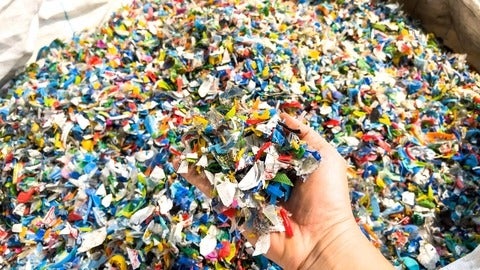
WIN is spotlighting Dr. Yimin A. Wu’s seed‑funded research, which uses nanotechnology to break down and repurpose plastic waste, advancing Waterloo’s sustainability goals through the Global Futures Initiative.

Building on the momentum of the NRC–Waterloo Quantum and Nanotechnologies Workshop, the NRC has opened a new call under its Quantum Internetworking (QUIN) Challenge Program. WIN researchers are invited to submit EOIs for collaborative projects focused on advancing networked quantum devices in Canada.

At Nano Tech 2026 in Tokyo, Tangho Green Canada, Yamagata University, and the University of Waterloo will present the first public demonstration of a dynamic printed force sensor on compostable NanoPaper. The interactive “electronic skin” demonstrates real-time touch sensing, marking the first commercial availability of Tangho NanoPaper as a sustainable substrate for printed electronics.

The WIN–ICN2 Joint Seed Funding Programme has been expanded to include two additional projects, enabled by increased funding from both institutions in recognition of the high quality of proposals received. The newly funded projects—MYHEAL, focused on 3D-printed antimicrobial bandages for chronic wounds, and SHINE, which develops sustainable organic electronic transistors—were the next highest-ranked submissions. This expansion strengthens collaboration between WIN and ICN2 and supports the programme’s goal of building foundations for future international funding, including Horizon Europe.

The University of Waterloo continues to be recognized among the top universities in Canada and globally according to the 2025 Academic Ranking of World Universities subject rankings by Shanghai Ranking Consultancy. Five programs rank first in Canada while thirteen programs rank top 50 globally.