Michael Pope receives $1.65M commitment from NSERC
Article from Brian Caldwell, Faculty of Engineering (see original article)
Eight University of Waterloo researchers, including WIN member Anna Klinkova, have received Early Researcher Awards worth $1.12 million. The program, administered through the province of Ontario, assists recently appointed researchers to build their research teams. Each researcher will receive $140,000 over five years plus an additional $50,000 from the University.
Congratulations to WIN Member, Professor Anna Klinkova for being awarded the 2022 Faculty of Science Excellence in Science Research Awards!
The Water Institute (WI) and the Waterloo Institute for Nanotechnology (WIN) are pleased to announce that four research teams have been awarded funding in their inaugural joint seed grant competition.
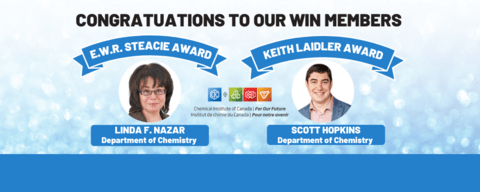
WIN member Linda F. Nazar, a professor in the department of Chemistry, is this year’s E.W.R. Steacie Award. The award is presented to a scientist who has made a distinguished contribution to chemistry while working in Canada.
In the quest for the perfect battery, scientists have two primary goals: create a device that can store a great deal of energy and do it safely. Many batteries contain liquid electrolytes, which are potentially flammable.
The University of Waterloo’s Waterloo Institute for Nanotechnology (WIN) is, with a number of its international partners, leading action on ways in which nanotechnology expertise in higher education can advance the United Nations Sustainable Development Goals (UN SDGs). These actions have been primarily identified as the development of talent, the advancement of research for global impact, and the promotion of sustainable and diverse communities.
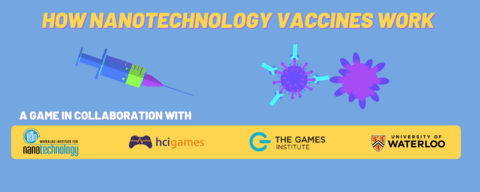
The Waterloo Insitute partnered with the Games Institute and Human Computer Interaction (HCI) Games group to create a game to explain how nanotechnology vaccines work.
This game explains how the Covid 19 virus is transmitted and how vaccines that have been created work to combat the SARS-CoV-2 virus that causes Covid 19.
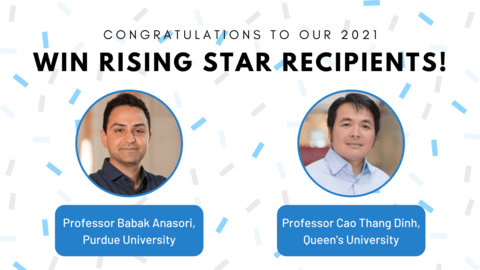
As Canada’s largest nanotechnology institute, committed to United Nation’s Sustainable Development Goals (UN SDGs), the Waterloo Institute for Nanotechnology (WIN) actively celebrates emerging leaders in the field of nanoscience and nanotechnology. These individuals from across the globe whose research aligns with one or more of our thematic areas and the UN SDGs are eligible for the WIN Rising Star Award in Nanoscience and Nanotechnology.
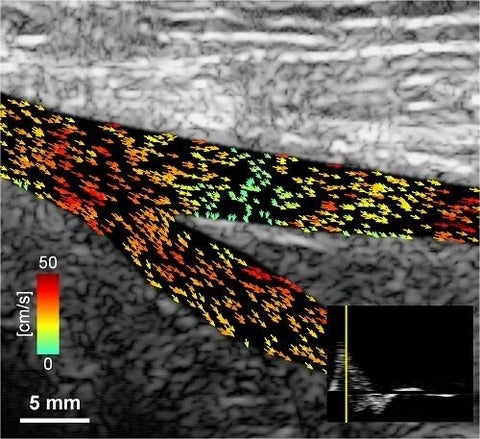
For now, Alfred Yu is focused on two distinct lines of research as he works to develop the next generation of ultrasound technology – one involving diagnosis and the other involving therapy.
But when he looks ahead, the University of Waterloo biomedical engineer can see a day when the two converge in a single, powerful tool to guide and deliver medical treatment at the same time.