From accidental to intelligent: easy-to-build complex chemical systems that sense proteins, tissue samples, and illicit drugs
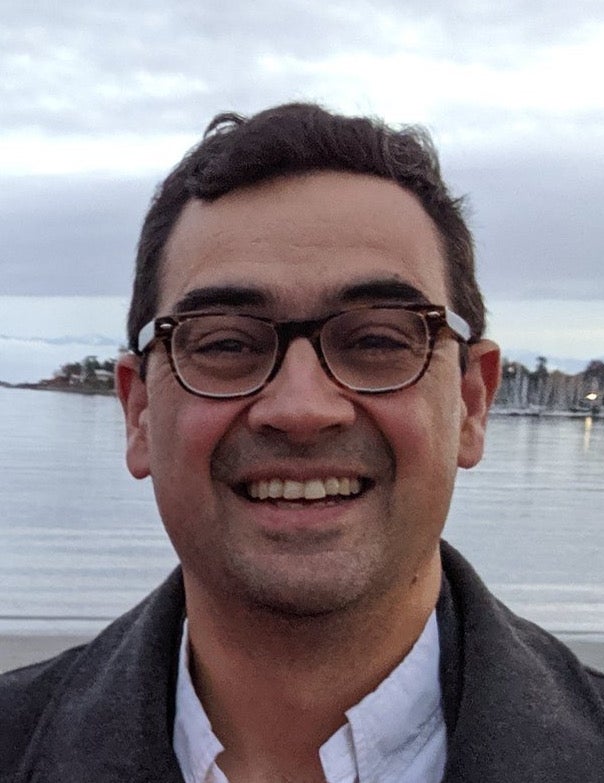
Fraser Hof
Department of Chemistry
University of Victoria
Tuesday, March 10, 2026
11 a.m.
In-person: C2-361
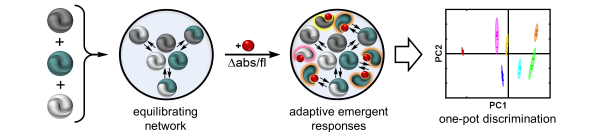
Abstract: Macrocyclic hosts have long suffered from diminished function when dissolved in the medium of life – warm, salty water. This story starts with the accidental discovery of a new family of calixarenes that overcome this limitation, which we subsequently modify to impart the new functions that underpin all of the subsequent aspects of this presentation. Macrocyclic hosts are also inherently bad at achieving antibody-like levels of specificity. But when used intelligently, their cross-reactivity can be a virtue that confers the ability to detect and discriminate among many different, highly complex samples. We’ll report on one such approach, in which we deploy multiple hosts as an array of sensors that operate independently and that generate sample-specific fingerprints. We will also report results that arise from one-pot sensing systems that we build by the simple combination of a few homo- and/or hetero-assembling components. These systems are easy to make, but chemically complex in that they intentionally contain many poorly defined, aggregated sensing elements. Their promiscuous binding behaviour means that they are hard to characterize mechanistically, but also imparts a broad reactivity to many different kinds of analytes. These approaches are generalizable, and variously involve multiple classes of macrocycle such as calixarenes, cucurbiturils, and pillararenes. We will report examples that we have used to characterize analytes as varied as pharmaceuticals, proteins, fish, fungi, and complex real-world drug mixtures from BC’s toxic drug overdose crisis.
Fraser Hof was raised in Medicine Hat, Alberta, child of a 12th-generation French-Canadian settler parent and a post-war Dutch immigrant parent. He received his B.Sc. in Chemistry from the University of Alberta in 1998. He received his Ph.D. in supramolecular chemistry from The Scripps Research Institute while working with Julius Rebek, Jr. He studied medicinal chemistry as a post-doctoral fellow with François Diederich at ETH-Zurich, and has been a professor at the University of Victoria since 2005.
Fraser has an unhealthy obsession with the subtleties of molecular recognition in water. He is passionate about creating chemical tools that drive biology and medicine in new directions. He also loves to open doors for students to explore new walks of life and expand into new areas of science. Fraser takes his greatest pleasures from family, students, writing, strong coffee, and soccer.