Gatekeepers and Bypasses: From Nucleoside Transporter Biology to Novel Approaches in Drug Delivery
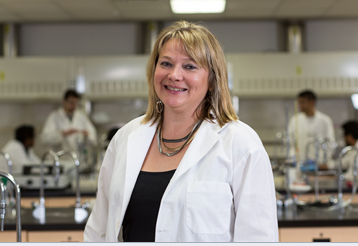
Prof. Imogen Coe
Professor of Chemistry and Biology
Toronto Metropolitan University
Wednesday, March 25, 2026
3:00 p.m.
In-person: C2-361 (Reading Room)
Abstract: For a broad class of anti-cancer, anti-viral, and anti-parasitic drugs known as the nucleoside analogs, efficacy depends almost entirely on whether the drug can get into the cell. That entry is largely controlled by two families of membrane proteins known as the Nucleoside Transporters: the SLC28 and SLC29 families. We have been studying members of the SLC29 family, the Equilibrative Nucleoside Transporters (ENTs), for over two decades, characterizing them and determining their role in various physiological settings, including their role in drug uptake and therapeutic response across multiple disease contexts. However, despite significant advances in our understanding of drug uptake generally, the clinical problem of drug resistance remains stubbornly intractable. Understanding the gatekeeper with increasing precision, it turns out, is not the same as solving the problem of entry. So, we shifted to a fundamentally different question: what if we bypass the transporter entirely? Using novel biophysical approaches, including ultrasound-stimulated micro/nano-bubbles, we have explored ways to enhance nucleoside analog drug efficacy by leaving the gatekeepers behind and focusing on the bypasses.
Bio:
Dr. Imogen R. Coe is a professor of Chemistry and Biology at Toronto Metropolitan University (TMU) and an affiliate scientist at St. Michael’s Hospital in Toronto. She is an active researcher and former academic leader, being the founding dean of the Faculty of Science at TMU. Dr. Coe is also an award-winning scholar-activist in Canada with respect to the integration of principles of inclusion, diversity, equity and accessibility (IDEA) into research cultures in science.