Soapbox Science 2026

Event Details
Soapbox Science Kitchener-Waterloo will take place on Sunday, June 7th, 2026 in Victoria Park, Kitchener from noon to 3:00pm with a rotating cast of speakers. The event’s mission: to help eliminate gender inequality in science by raising the profile, and challenging the public’s view, of women and non-binary people in science. These interactive, engaging talks encourage everyone to learn more about science- questions are welcome! We will be alongside paths near the playground and water park.
The event is free, no registration required.
Speakers
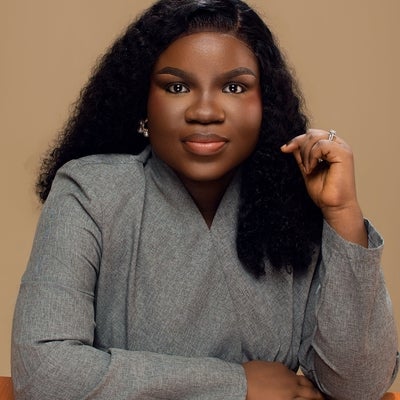
Dr. Adebola Adeleye, internationally trained physician and Master of Public Health student, University of Waterloo.
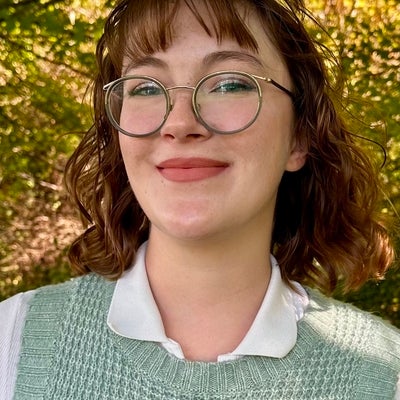
Cicely Henderson, PhD candidate, University of Waterloo. "The Mathematics of Party Planning"
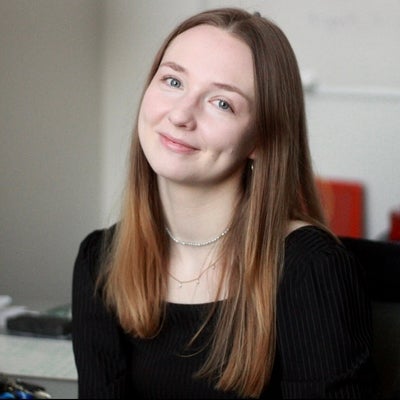
Emily Wedde, PhD candidate, Chemistry-Nanotechnology, University of Waterloo. "Exploring the Invisible: The Power of Nanoscience"
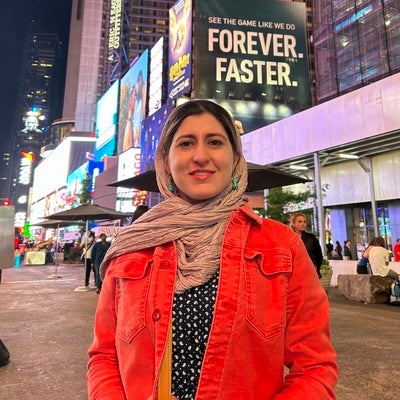
Fatemeh Kayvani, PhD candidate, Biomedical Engineering, University of Waterloo. "The Smart Band-Aid: How "Mini-Detectives" Save Lives"
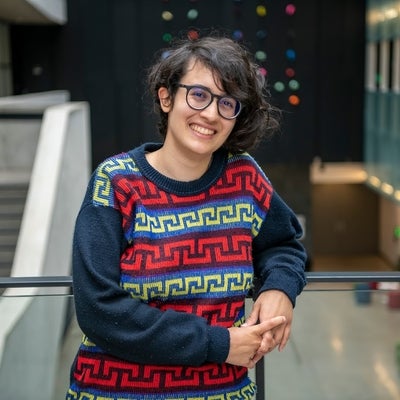
Marina Maciel Ansanelli, PhD Candidate, Perimeter Institute for Theoretical Physics. "Investigating Causality"
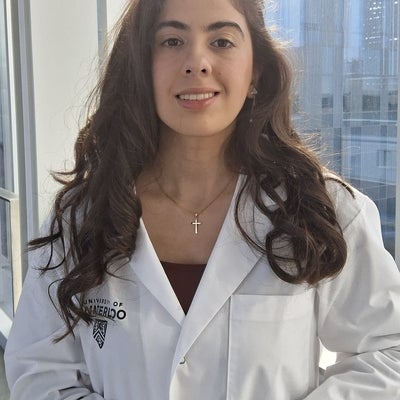
Melanie Hajjar, PhD Candidate, Chemical/Microbial Engineering. University of Waterloo. "Engineering microbes to clean the past and build the future"
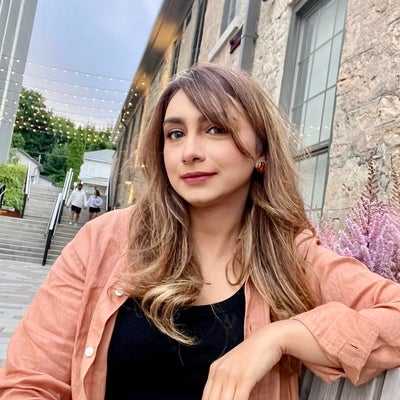
Dr. Neha Saini, Post-doctoral research scholar, Biochemistry, University of Waterloo. "Enzymes to the rescue: Nature's solution to fight climate change"
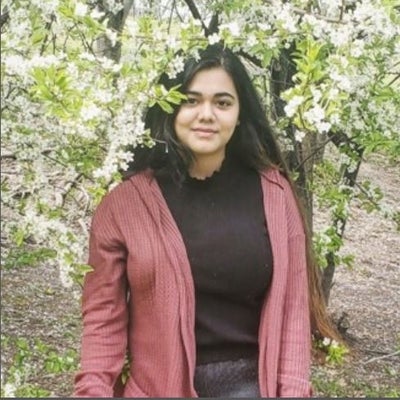
Nowreen Sarwar, PhD Candidate, Public Health Sciences, University of Waterloo. "From field to factory: How ultra-processed foods are replacing the way we eat"

Savannah Bindas, PhD Candidate, Environmental Engineering, University of Waterloo. "Air Quality and Climate Impacts Associated with Net Zero Strategies in Ontario"
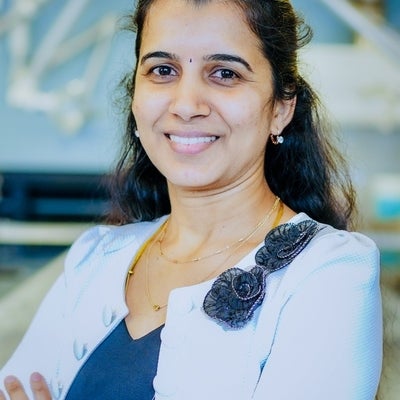
Dr. Subha Kalyaanamoorthy, Assistant Professor, Chemistry, University of Waterloo. "Proteins: Nature’s Cleanup Crew"
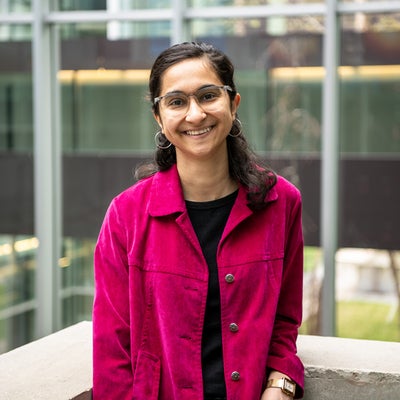
Dr. Suroor Gandhi, Postdoctoral Fellow, Perimeter Institute for Theoretical Physics. "Why did our galaxy form?"
Speakers' Discussion Topics
Dr. Adebola Adeleye, internationally trained physician and Master of Public Health student, University of Waterloo. "Superbugs: When Antibiotics Stop Working" Antibiotics have saved millions of lives, but resistance is increasing. Adebola explains how antibiotic resistance develops, why it is a global threat, and how responsible use can help preserve these medications.
Cicely Henderson, PhD candidate, University of Waterloo. "The Mathematics of Party Planning" We're planning a very fancy dinner party for nine gummy bears, where each table fits three bears. As expert party planners, we know that guests get bored when they are stuck talking only to those seated next to them. By switching places after each of the four courses, partygoers get more chances to chat. We’ll use math to model this scenario to make the best party ever.
Emily Wedde, PhD candidate, Chemistry-Nanotechnology, University of Waterloo. "Exploring the Invisible: The Power of Nanoscience" Emily will help you understand just how small nano-scale materials are. Learn how materials change their behaviour when we make them very small and how they are applied in our everyday lives in LEDs, ferrofluids, and targeted drug delivery.
Fatemeh Kayvani, PhD candidate, Biomedical Engineering, University of Waterloo. "The Smart Band-Aid: How "Mini-Detectives" Save Lives" Imagine a "smart bandage" that can listen to your body and talk to your doctor in real-time. This talk explores how tiny, wearable sensors use engineering to detect infections like sepsis instantly, helping save lives in the hospital without waiting hours for lab results.
Marina Ansanelli, PhD Candidate, Perimeter Institute for Theoretical Physics. "Investigating Causality" Just because two variables are correlated (their values are consistently related to each other in statistical data), this does not necessarily mean that one variable causes the other. Sometimes, however, it is possible to find the true underlying causal explanation to our data. I will go through some day-to-day examples of causal reasoning, which is important for all areas of science including my field of quantum physics.
Melanie Hajjar, PhD Candidate, Chemical/Microbial Engineering. University of Waterloo. "Engineering microbes to clean the past and build the future" What if today's waste can become tomorrow 's packaging? Discover how C. necator, a microbial hero, can transform chemically treated plastic waste and CO2 into a sustainable bio-based alternative. A solution to clean the past and build the future.
Dr. Neha Saini, Post-doctoral research scholar, Biochemistry, University of Waterloo. "Enzymes to the rescue: Nature's solution to fight climate change" As carbon dioxide levels rise and drive climate change, scientists are exploring ways to capture it before it builds up in the atmosphere. This talk will show how tiny natural enzymes can rapidly convert CO₂ into useful substances, offering a promising, nature-inspired solution for cleaner air.
Nowreen Sarwar, PhD Candidate, Public Health Sciences, University of Waterloo. "From field to factory: How ultra-processed foods are replacing the way we eat" Nowreen explores how traditional, local food systems across Canada and globally are being displaced by ultra-processed foods and what that shift means for our health, culture, and communities. She'll unpack why this transition is happening, who is most affected, and what the science tells us about what we can do.
Savannah Bindas, PhD Candidate, Environmental Engineering, University of Waterloo. "Air Quality and Climate Impacts Associated with Net Zero Strategies in Ontario" We all have reason to be very interested in air quality and climate impacts. Savannah will discuss two net zero policies, biogas and remanufacturing, explaining how they work and how they impact emissions.
Dr. Subha Kalyaanamoorthy, Assistant Professor, Chemistry, University of Waterloo. "Proteins: Nature’s Cleanup Crew" Who wants to eat plastic? Proteins do! Subha explains how we can use computers and chemistry to design proteins to devour our plastic waste.
Dr. Suroor Gandhi, Postdoctoral Fellow, Perimeter Institute for Theoretical Physics. "Why did our galaxy form?" A middle schooler once asked Suroor -"why did our galaxy form?"-and she didn't have a good answer at the time. She will discuss what we do and do not know of the answer to that question and how even if, one day, we perfectly understood the story of our galaxy's formation, we might never fully answer the "why".