
Undergraduate researchers from across the province gathered at the University of Toronto Mississauga for the 54th Southern Ontario Undergraduate Student Chemistry Conference (SOUSCC). The conference showcases excellence in research, with 177 abstracts submitted and students delivering oral and poster presentations spanning a wide range of research areas within the field of chemistry.
Among the participants were three standout students from the Faculty of Science at the University of Waterloo who earned oral presentation awards for their exceptional work. Congratulations to Percy Luk, Grace DelMistro, and Daniel Wang on their achievements! Their success highlights the strength of undergraduate research at Waterloo.
“Our students truly distinguished themselves at the 54th annual SOUSCC. Representing Waterloo, twenty-five chemistry students showcased their independent research, each rising to the conference’s high standards. It was especially inspiring to see Daniel, Grace, and Percy recognized with awards for their outstanding oral presentations.”
- John Corrigan, Professor and Chair, Department of Chemistry
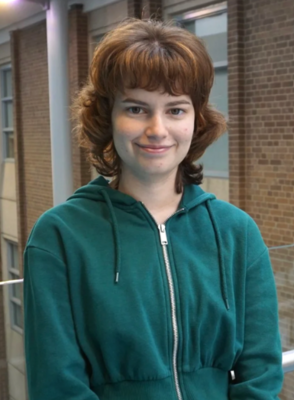
Grace DelMistro (Biochemistry)
Q1: Tell us about your research project and why it’s important
Antimicrobial resistance is a global health crisis caused by bacteria developing resistance to current antibiotics, rendering them ineffective over time. To learn about bacteria, I developed a tool to capture what is binding to their cell wall component (peptidoglycan, PG), which is a conserved antibiotic target. I isolated native PG fragments and attached them to a light-sensitive probe. This way, the cell wall is used as “bait” to find PG-binding partners, while the probe will capture the interaction. With this, we can identify novel PG-binding partners that can be used as potential antibiotic targets which bacteria won’t have resistance to!
Q2: What was the most rewarding part of presenting your research at SOUSCC?
Though I’ve presented my research at conferences in the form of flash-talks and posters, SOUSCC was the first conference where I did a proper oral presentation. This was really rewarding because I’d never done it before and I don’t think I would’ve had the confidence to do it without the passion and genuine excitement I had for my project. It was nice to see what my peers did in their research and celebrate all our theses as a group. I’m glad to see my efforts paid off!
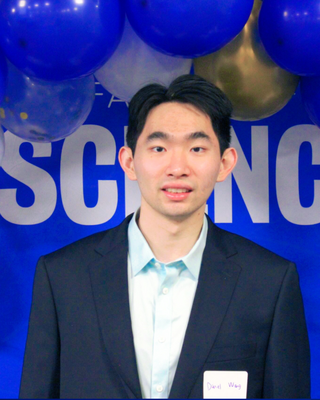
Daniel Wang (Materials and Nanosciences)
Q1: Tell us about your research project and why it’s important
My research project focuses on seeking an energy-efficient and selective catalyst for the electrochemical reduction of CO2. We probed an Au-Cu nanoparticle chain catalyst and found it had excellent effectiveness compared to other non-copper or copper-based catalysts. We also investigated how the oxidation state of copper affects CO₂ reduction, and we characterized our catalysts to identify the conditions that give the best catalytic performance.
Q2: What was the most rewarding part of presenting your research at SOUSCC?
The successful SOUSCC experience served as valuable preparation for my Chem 494 seminar the following week; I approached it as a trial run, and it proved to be excellent practice. Presenting in a small classroom allowed me to engage directly with the audience and reply to their questions with greater ease. In addition to improving my presentation skills, I had the opportunity to connect with students from other universities who were conducting similar research, and I gained new insights from those interactions. Overall, the experience was deeply rewarding, broadening my perspective and introducing me to new paths to explore.

Percy Luk (Biochemistry)
Q1: Tell us about your research project and why it’s important
For my research project, I aimed to investigate the antibacterial activity of Kawaguchipeptin A, with a focus on developing a synthesis of the cyclic peptide and its uncommon amino acid building block, L-prenyl-tryptophan. However, due to time constraints, only the latter was achieved. In this synthesis, I deviated from the literature procedure to develop a more efficient and less toxic route. Ultimately, this project highlights the importance of discovering new antibiotics in response to the rise of antibiotic resistance.
Q2: What was the most rewarding part of presenting your research at SOUSCC?
The most rewarding part of presenting my research at SOUSCC was bringing smiles and laughter to the audience despite this synthesis-heavy project. Additionally, discussing different approaches and challenges related to my project with other students was very worthwhile.