
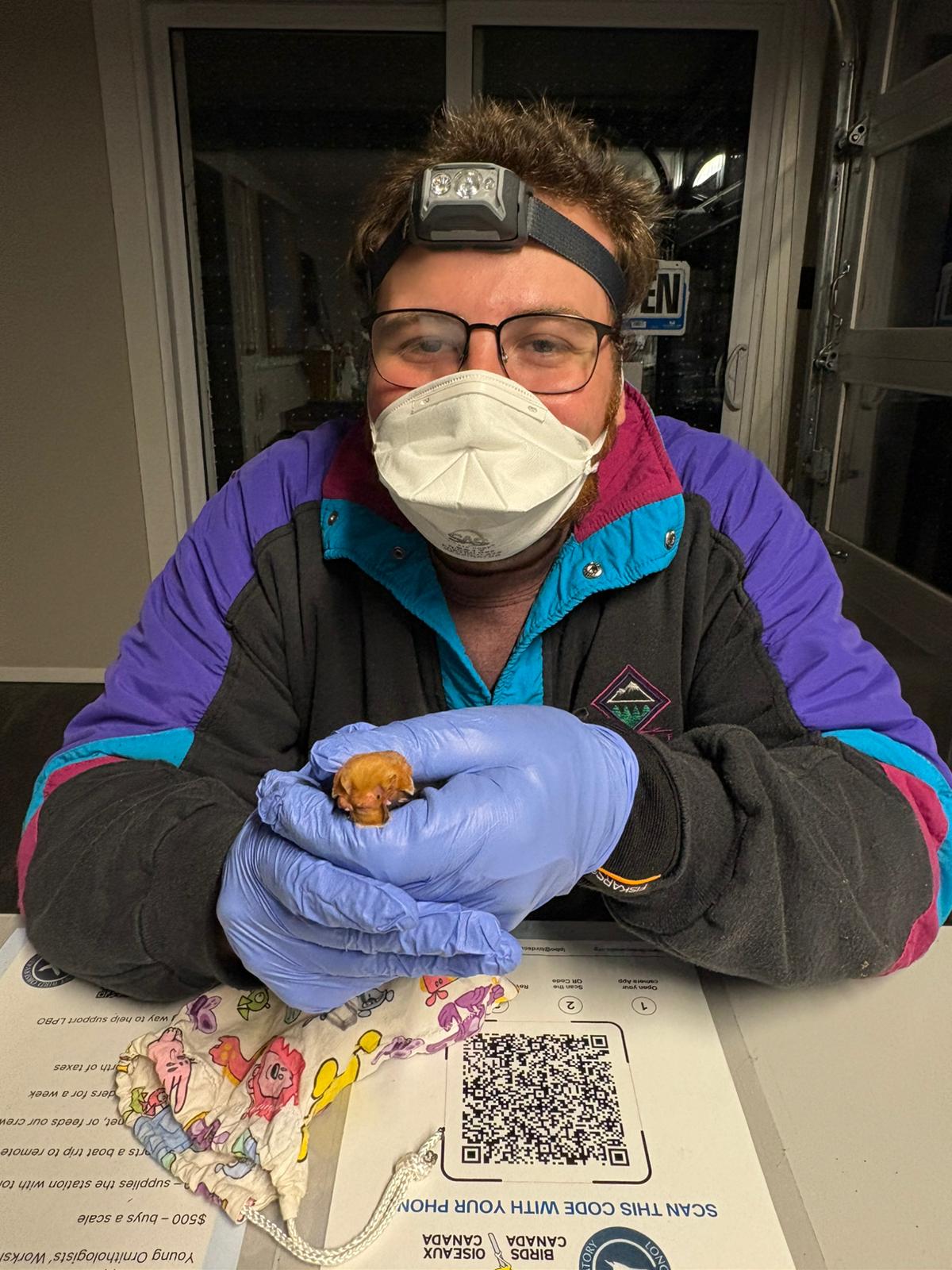
For Science alum Thomas Pianta (BSc ’25), spending a month living at a research station on Lake Erie and staying up until sunrise was a dream come true. These small hours of the night were anything but quiet, because he was there during bat migration season. Thomas and his fellow researchers spent the nights catching bats and gathering data about each bat’s stress and personality responses.
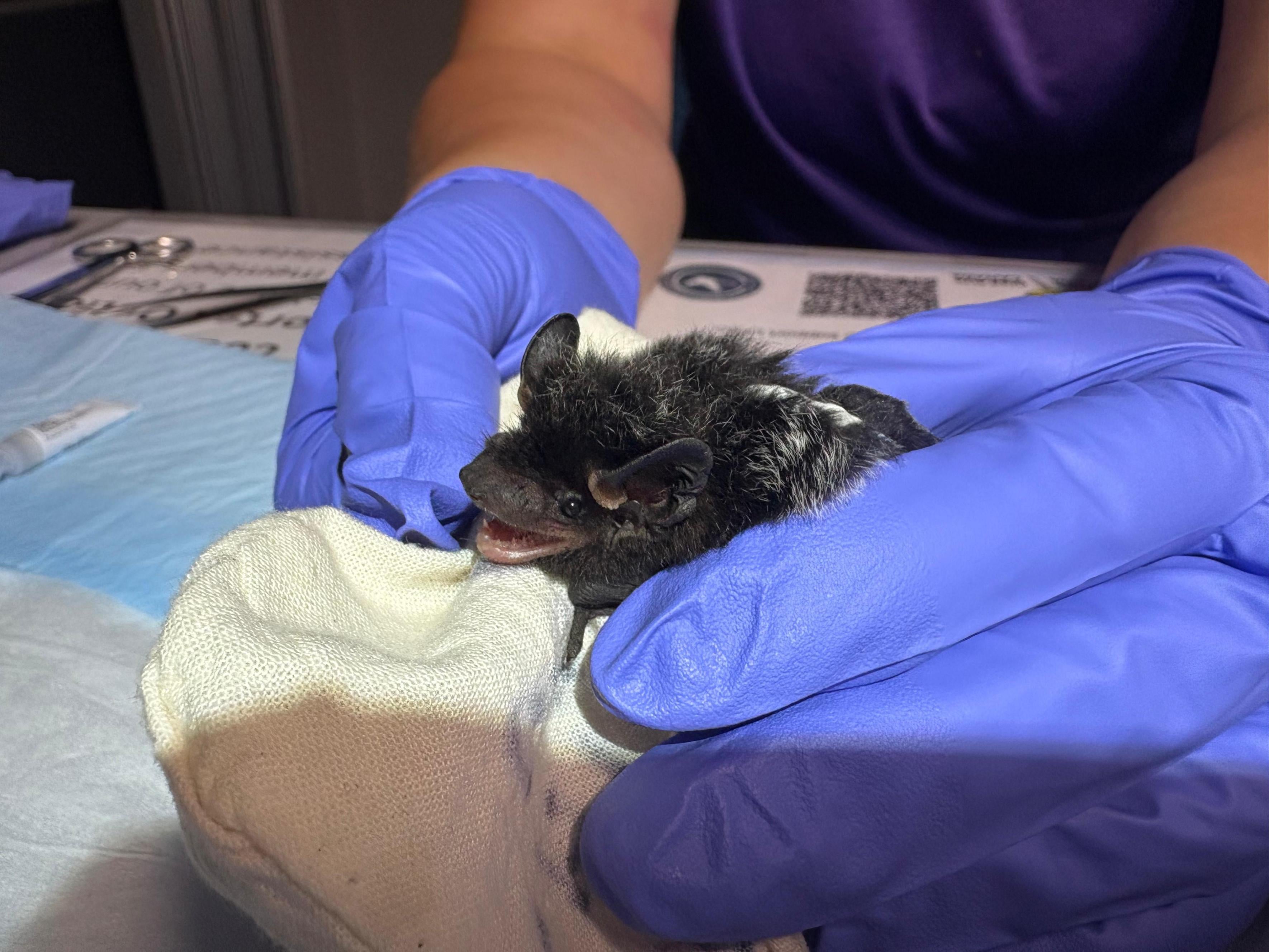
Each year, endangered silver-haired, red, and hoary bats fill the late summer night skies of Southern Ontario for their annual winter migration. With a long journey ahead of them, one of the largest risks they face is wind turbines, which kill a large number of bats each year. Researchers from the University of Waterloo, including Thomas, are working hard to find ways to help these remarkable creatures.
As an undergraduate student, Thomas completed his fourth-year research project in Dr. Liam McGuire’s lab. Following his graduation from biology’s animal science specialization, he chose to stay and pursue his master’s degree with McGuire studying ecology, conservation and sustainability.
“My project studies bat migration: Why they do it; where they’re going; what factors impact how they migrate; and how we can protect them when they do,” said Thomas. “The bats I study are vulnerable to wind turbines during migration, so we are hoping to better understand their migration patterns and protect their migration routes.”
Thomas has been studying the pre-migratory stress levels of the three bat species using cortisol from their hair; an extension of the research he completed during his undergrad. He also assessed each bat’s personality using a standard hole-board test, which provides insights into how curious and exploratory each individual bat is. Then just before releasing the bat, Thomas attached a small radio tracker to follow the bat’s migration.
“I’m looking at how likely the bats are to explore their environment and asking how this reflects their choices when it comes to migration. We know that some bats will fly South over Lake Erie, while others will fly around the lake. We’re trying to explain these variations in behaviour in relation to the stress they experienced during development.”
Thomas became interested in conservation and sustainability research after taking a couple courses taught by McGuire. He then began volunteering in the McGuire lab reviewing literature on bat stress physiology for the Global Union of Bat Diversity Networks, a collaboration of bat research and conservation organizations across the globe. This led to a co-op term where he organized the biology museum specimen collection, his fourth-year research project and volunteering at the same Long Point research station he now uses in his graduate research.
“Through his time at Waterloo as both an undergrad and grad student, Thomas has been involved in a wide variety of research experiences. He dives into everything with curiosity, skill and hard work, bringing a great perspective and focus to this important work,” says McGuire. “Thomas’ work is really helping us to understand what these endangered bats do, how they work and how we can protect them.”
During his undergraduate degree, Thomas followed his curiosity and, through persistence, carved out a place for himself within McGuire’s research lab. His research is evolving to make long-term impacts on the interweaving tapestry of stress and migration patterns, which can then be applied to other migratory species such as birds. Overall, his research compliments and strengthens humanity’s understanding of the world around us and contributes to conservation and sustainability efforts.
For those inspired to contribute to the crucial work of sustainability and conservation research, or provide opportunities for Science’s exemplary students, we invite you to connect with Meaghan Middleton, Director of Science Advancement to learn how your generosity can make a meaningful impact. Philanthropic support is transformative in advancing scientific research and supporting students as they make the most of their university experience.
Photo credit for image of bat: Dr. Liam McGuire