
Researchers in the Faculty of Science receive support from the John R. Evans Leaders Fund
Four members of the Faculty of Science are among the 26 Waterloo researchers awarded $4.3 million in funding as part of the latest John R. Evans Leaders Fund (JELF) competitions. The announcement was made Friday, October 10 at Polytechnique Montréal.
The JELF supports institutions in recruiting and retaining outstanding researchers. It’s offered through the Canadian Foundation for Innovation, a non-profit with a mandate to increase the capability of Canada’s universities, colleges, research hospitals, and non-profit research organizations to carry out high-quality research.
Learn more about the innovative researchers and projects funded by this award.
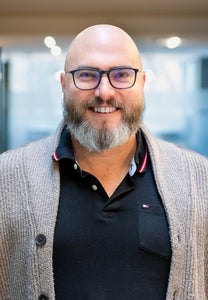
Travis Craddock | Understanding the basic biophysical mechanisms by which neuroinflammation leads to neurodegeneration
Dr. Travis Craddock, Biology, is a Tier 1 Canada Research Chair in Quantum Neurobiology and studies neuroinflammation in the brain through a quantum lens. With this project, he aims to better understand the fundamental molecular mechanisms underlying illnesses like Alzheimer’s disease (AD) and Parkinson’s disease (PD), which has the significant potential to provide new therapeutic targets for diseases that are already major public health burdens. In Canada alone, nearly 600,000 people live with AD or dementia, and 100,000 live with PD, statistics that are projected to triple by 2050. With this funding, Craddock will study the damage caused by chronic neuroinflammation and the disintegration of key intracellular protein structures leading to brain cell death.
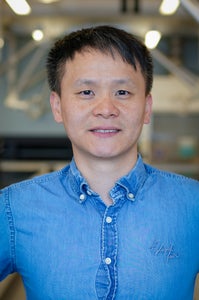
Yangju Lin | Mechanically crosslinked networks: Structure-property relationships and applications in batteries
Dr. Yangju Lin, Chemistry, specializes in polymer research and aims to leverage polymer design for sustainability solutions. His project is focused on developing new, high-performance polymer materials for next generation battery technologies. Innovation in clean and renewable energy is necessary to address the global impact of climate change, and batteries are critical to clean, renewable energy. While some gains have been made by re-engineering existing polymer materials, this strategy is limited. Polymer networks crosslinked by mechanical bonds, also known as mechanically crosslinked networks (MCNs), is an emerging category of polymer materials that can help address the limitations of existing battery technology.
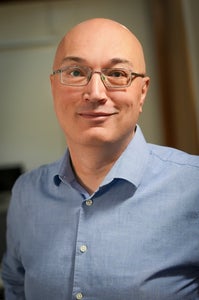
Adrian Lupascu | Platform for advanced experiments with superconducting quantum devices
Dr. Adrian Lupascu, Physics and Astronomy, is an experimental physicist interested in the quantum dynamic of various types of physical systems and the application of quantum effects to build new types of detectors and quantum information processors. He works with superconducting quantum devices (SQDs), an important technology for quantum information. With these funds, he will purchase a modern, state-of-the-art dilution refrigerator (DR), a key component of the infrastructure required for his research. This new DR will allow Lupascu to continue his groundbreaking research into SQDs, in areas including improving the building blocks of quantum computers and fundamental tests of relativistic quantum information.
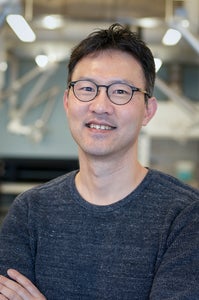
Jung-Ho Yu | Raman Spectroscopy for Multidimensional and Ultrasensitive Chemical Analysis of Live Biological Subjects
Dr. Jung-Ho Yu, Chemistry, innovates multiplexed bioanalytical platforms to measure numerous molecular signals in complex live biological systems, with the goal of deepening our understanding of disease and enabling personalized health solutions. Yu’s project will address challengesin bioanalytical chemistry by innovating multidimensional and ultrasensitive molecular analysis platforms that allow the measurement of multiple biological components across diverse live biological environments. To do this, he requires access to Raman spectroscopy, which provides the crucial foundation to build a multidimensional and ultrasensitive molecular analysis platform. The developed platforms will be used to gain better knowledge of the human body and disease.