
When breastfeeding mothers need medication, they are often forced to make health decisions without all the information they need. Despite the well-known benefits of breastfeeding, guidance exists for only five per cent of FDA-approved medications, leaving many mothers unsure of whether to continue breastfeeding while undergoing treatment, delay treatment, or forgo it altogether. Shirley Wang, a PhD student in the School of Pharmacy, is helping fill that knowledge gap by building computer models of virtual infants that predict how much medication passes from breast milk to infant. Wang’s innovative approach combines anatomical, physiological and chemical data to simulate how a drug will be absorbed, processed, and cleared—all without exposing vulnerable infants to clinical trials.

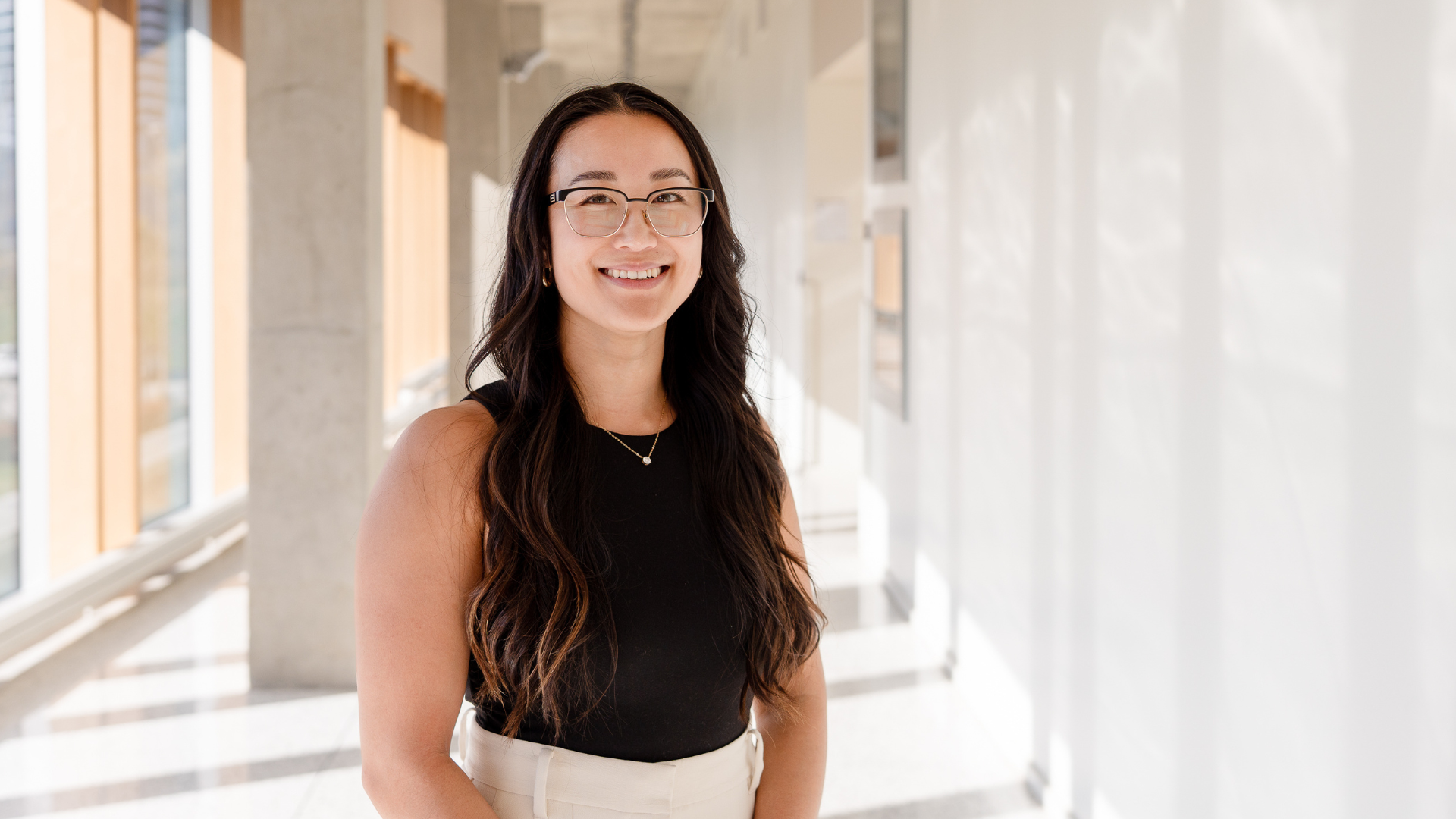
Shirley Wang (she/her), PhD Candidate in Pharmacy

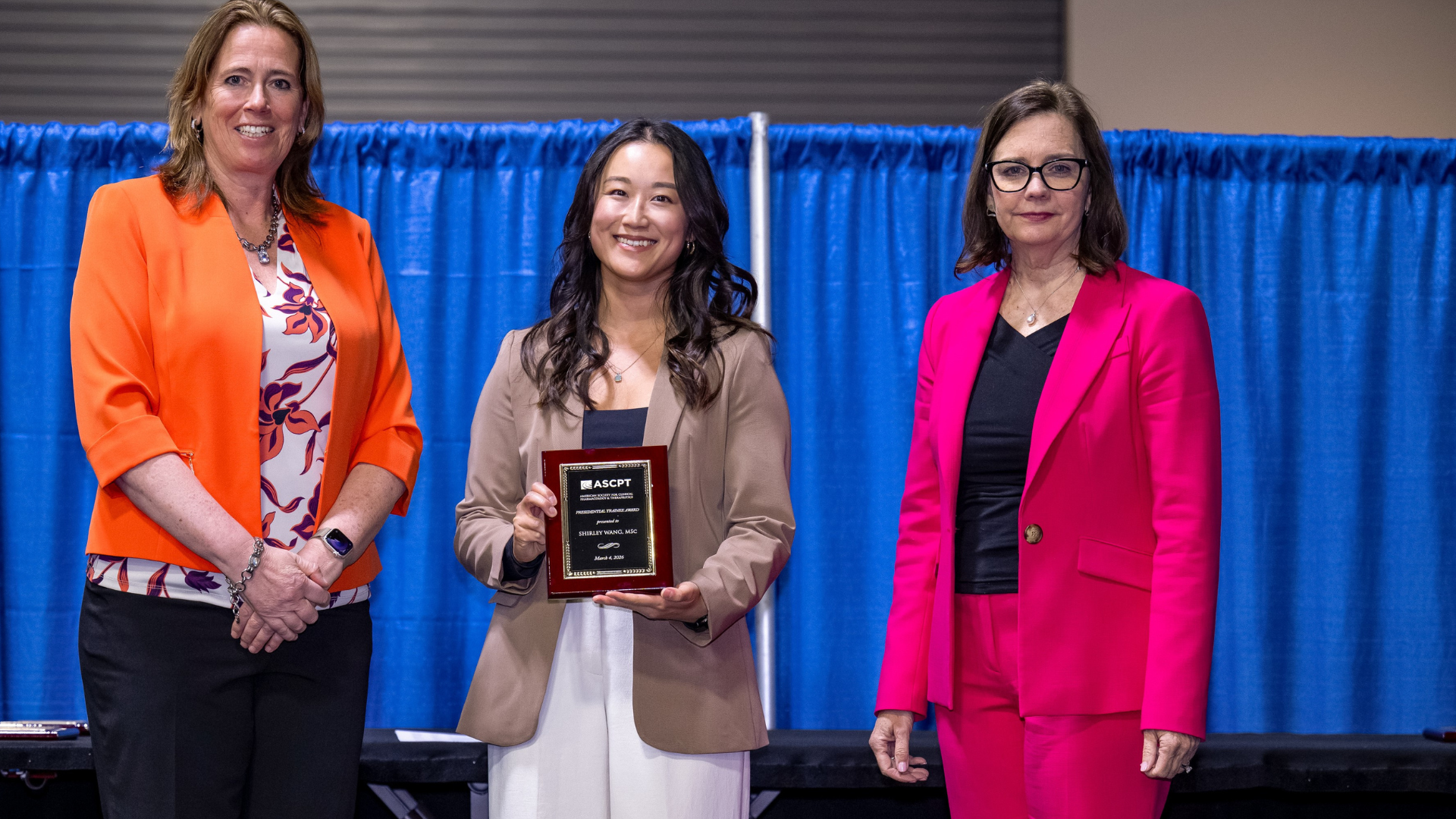
Shirley Wang (she/her), PhD Candidate in Pharmacy receiving the Presidential Trainee Award from The American Society for Clinical Pharmacology and Therapeutics (ASCPT)

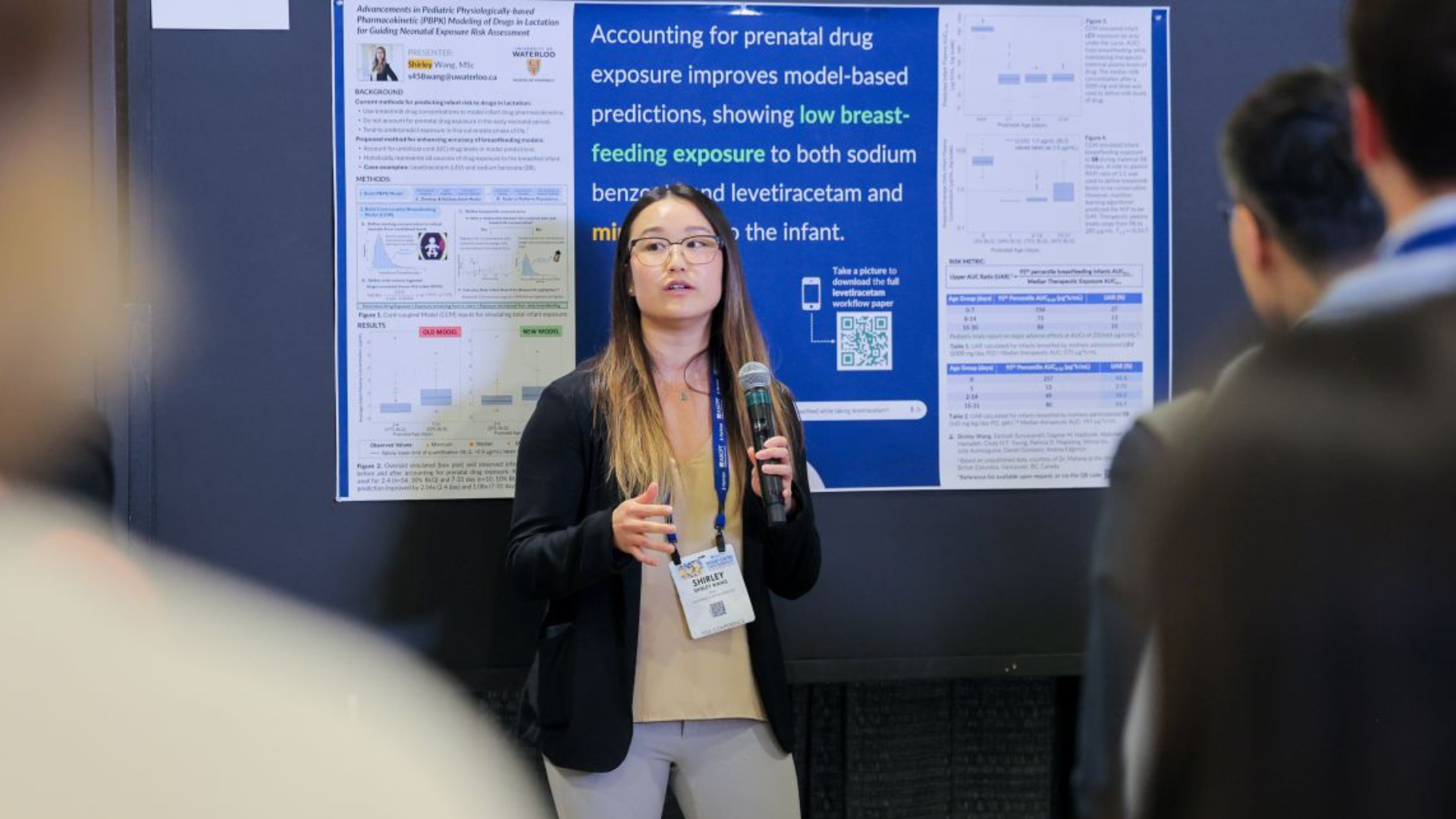
Shirley Wang (she/her), PhD Candidate in Pharmacy presenting at a conference

Shirley Wang, PhD Candidate in Pharmacy and Dr. Andrea Edginton

Shirley Wang (she/her), PhD Candidate in Pharmacy at a conference


The findings address critical gaps in drug labeling and allow doctors to create patient-specific dosing regimens that account for potential short- or long-term risks of breastfed infant drug exposure. By equipping clinicians with this model-informed evidence, Wang’s research will guide safer treatment decisions for breastfeeding mothers that balance maternal health needs with infant safety. The work is especially meaningful to Wang because it directly serves a population that has historically been underrepresented in clinical research.
That commitment to improving drug safety and effectiveness has been a recurring theme throughout her career. Wang began her academic journey at Waterloo studying biochemistry in the co-op program, which eventually led to her role as a lead research associate at the startup Avro Life Science. Here, she established the company’s analytical chemistry laboratory to enable drug quantification in biological fluids and trained more than 30 interns. Over the years, her research contributions helped yield a patented product that enabled transdermal drug delivery of molecules traditionally limited to intravenous injection.
While the work was intellectually rewarding, Wang yearned for a deeper understanding of the full drug development process and what it takes to bring a molecule from bench to bedside. This desire led her to enrol in the Master of Science in Pharmacy program part-time while continuing her industry role. The combination proved invaluable as she was able to directly compare what her textbook outlined with what they were doing in the lab.
Her chemistry expertise continued to shape her research during her master’s degree. For her thesis, Wang developed novel compounds derived from the black pepper plant that targeted peptides linked to Alzheimer's disease neurodegeneration. The research earned the Dean of Science Award for outstanding performance and the Memorial Poster Award from the Canadian Society for Pharmaceutical Sciences for its significant contributions to the field.
Yet it was during this period that Wang discovered the area that would ultimately define her research career. In a drug development course, she was introduced to pharmacokinetic modeling, the use of mathematical principles to describe how drugs move through the body. After learning about her instructor’s career in clinical pharmacology, Wang realized that modeling offered a unique opportunity to influence patient care more directly than traditional wet lab research. That realization led her to pursue a PhD in Pharmacy with the Pharmacokinetics Research Group, where she now combines her foundations in chemistry, pharmaceutical sciences and drug development to answer clinically important questions for patients who have long been overlooked.
“Pursuing a PhD in the Pharmacokinetics Research Group has been the most fulfilling step of my career. I have collaborated with clinicians, statisticians and scientists from international universities and hospitals to build impactful models that solve real-world clinical problems.” — Shirley Wang, PhD Candidate in Pharmacy
We spoke with Shirley about her experience as a graduate student and her goals for the future.
What is the working relationship like with your supervisor, Dr. Andrea Edginton?
It has been an incredible and transformative experience. Dr. Edginton strikes the perfect balance between giving me the freedom to pursue my own ideas and providing guidance when I need it most. Her mentorship has helped me grow as a scientist, present internationally, publish my work, and earn a prestigious Canada Graduate Research Scholarship.
She has also introduced me to valuable academic and industry networks and encouraged me to develop skills beyond the lab, including freelance consulting and self-advocacy.
What are you looking forward to in the near future regarding your studies?
This fall, I'll be joining Health Canada as a pharmacometrician. I'm excited to gain regulatory experience and apply my modeling expertise to assess new drug applications, helping support the safe use of medications.
I am also excited to wrap up my final PhD projects and present my findings at the 2027 American Society for Clinical Pharmacology and Therapeutics annual meeting.
How do you like to spend your time outside your studies?
I stay active by playing volleyball and training at a calisthenics gym in Kitchener. It's a great way to recharge outside of research. I also enjoy Waterloo Region's strong sense of community, especially exploring the local food scene and supporting neighborhood businesses.
Interested in conducting research in graduate school?
Browse master's and PhD programs offered
Read about available research project opportunities