
You can find the Blackstripe Topminnow fish in single river systems across Southwestern Ontario, gliding at the water’s surface while dining on terrestrial insects. These small freshwater fish, that average three to seven centimetres in length with a flat head and black horizontal stripe, have been designated of Special Concern under the Species at Risk Act (SARA). Under SARA, species of Special Concern are wildlife in Canada that could become threatened or endangered because of biological characteristics and identified threats. The research that Emily Dodsworth, a Master of Science in Biology student at the University of Waterloo is undertaking can directly inform conservationists and support future SARA management plans to maintain and enhance existing populations.

Emily Dodsworth (she/her), Master of Biology student

Emily Dodsworth (she/her), Master of Biology student

Blackstripe Topminnow (Fundulus notatus)

Emily Dodsworth (she/her), Master of Biology student

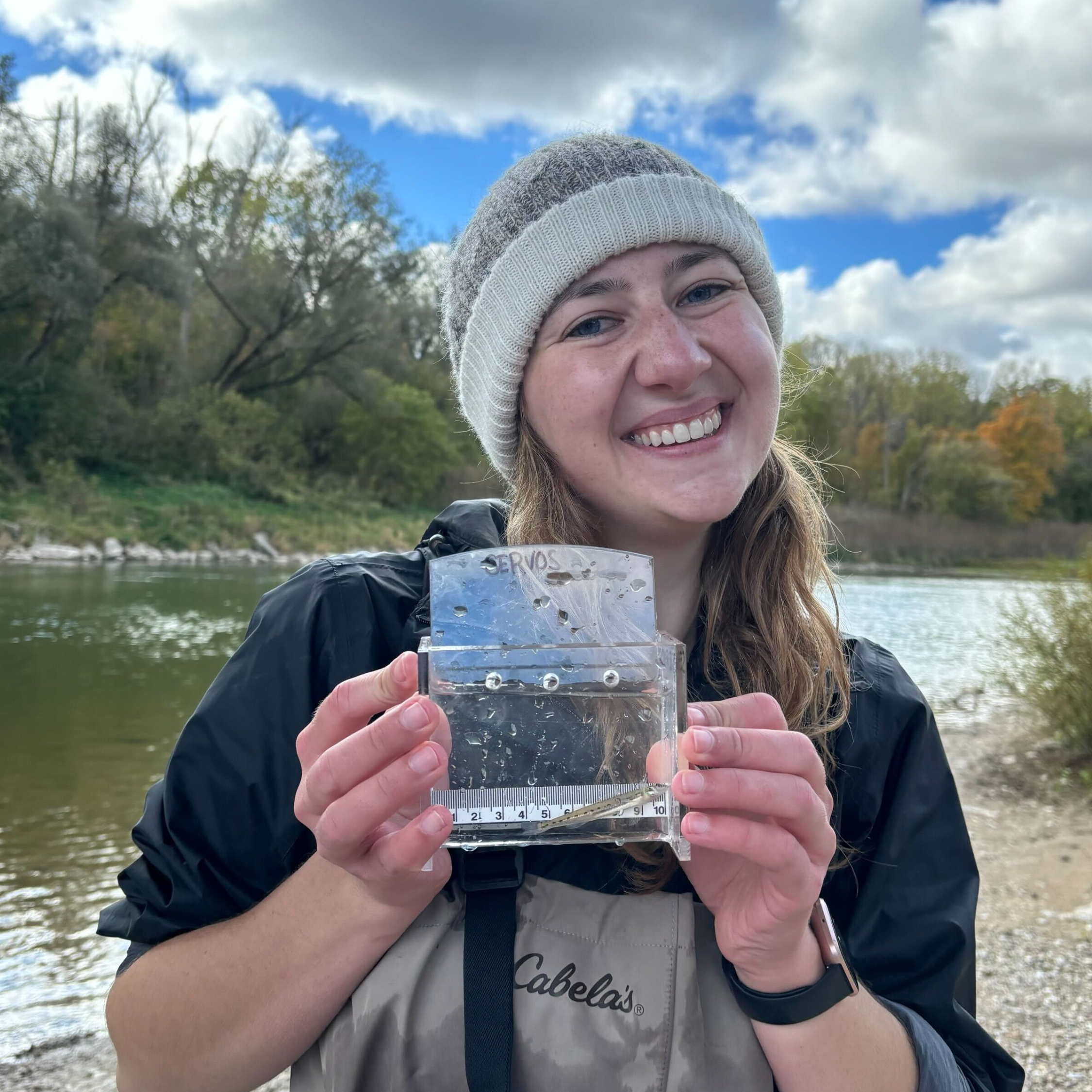
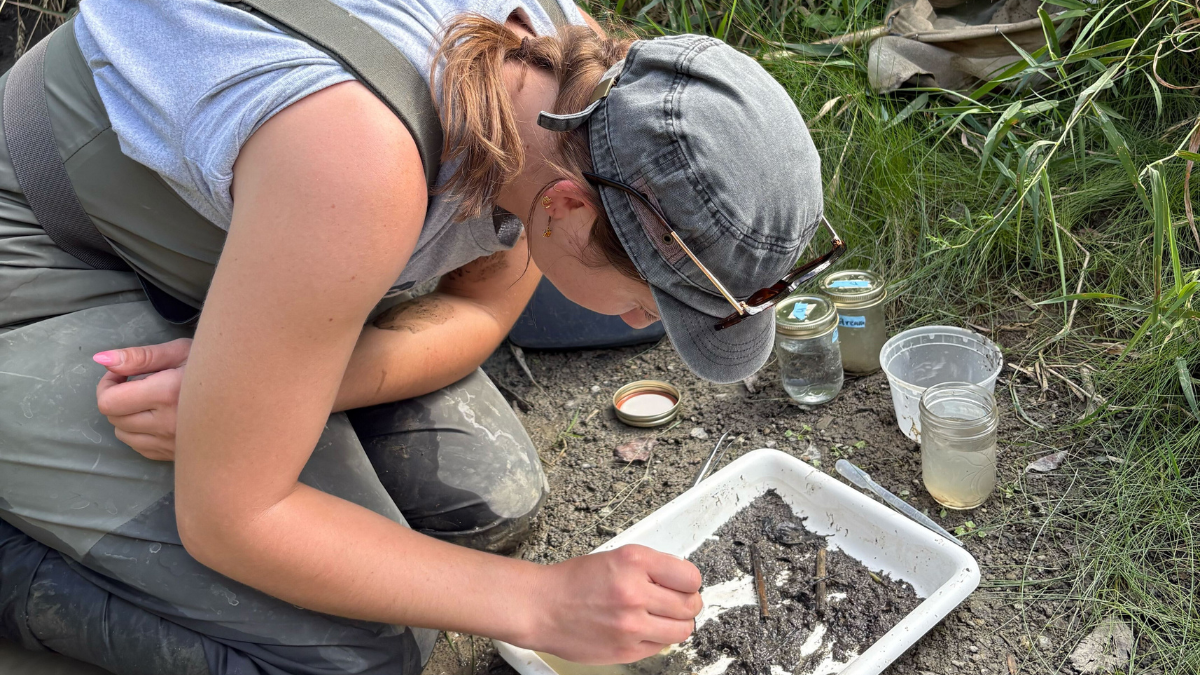
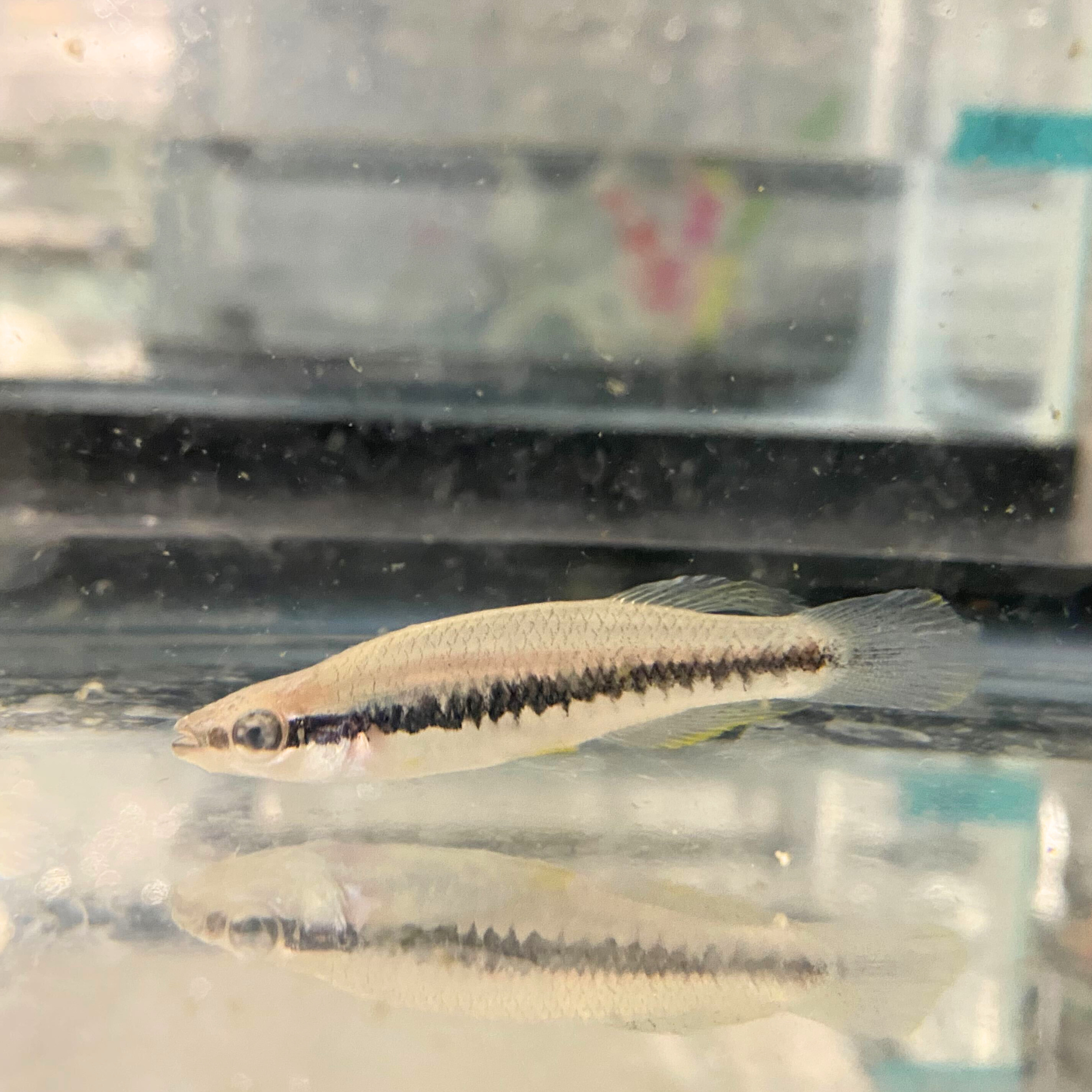
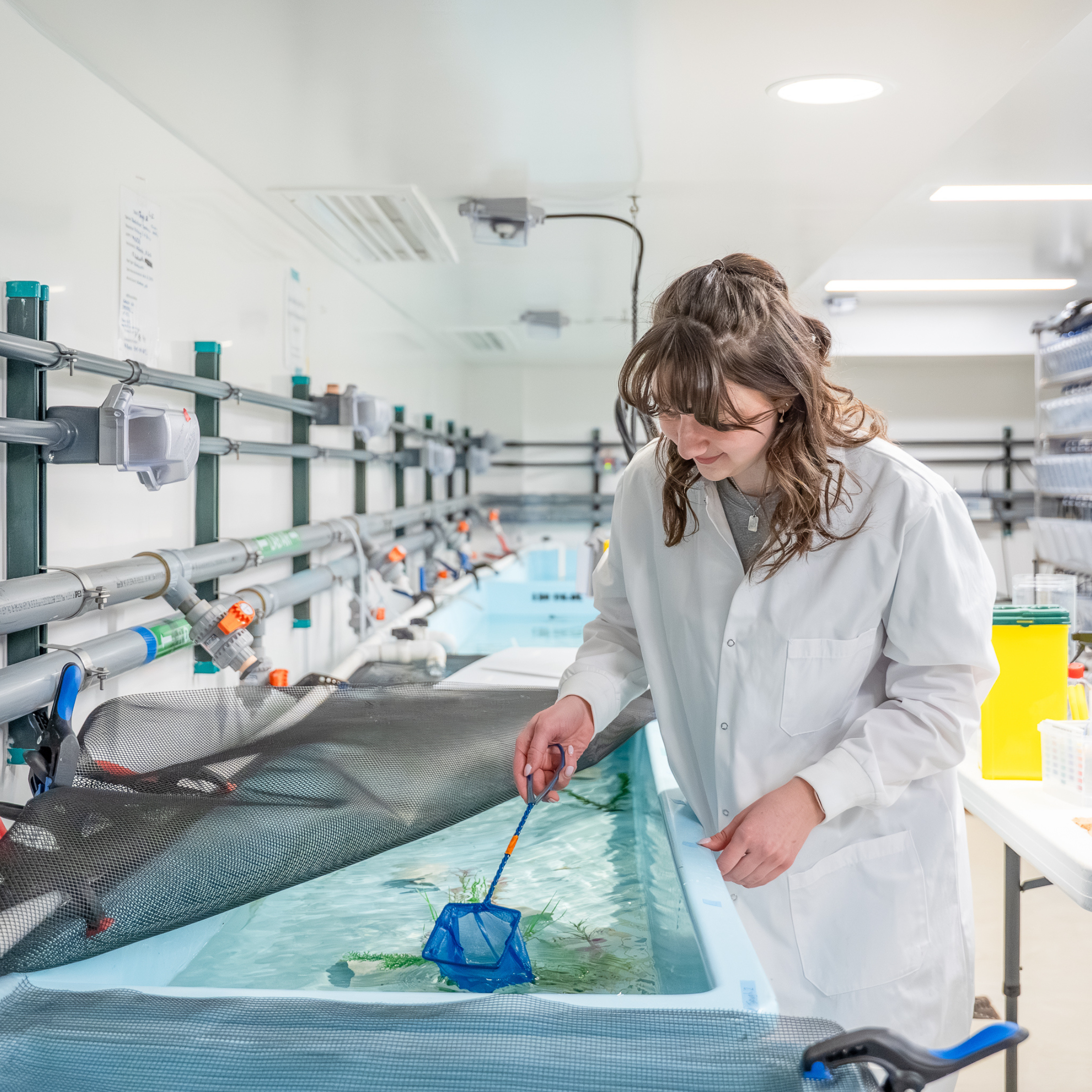
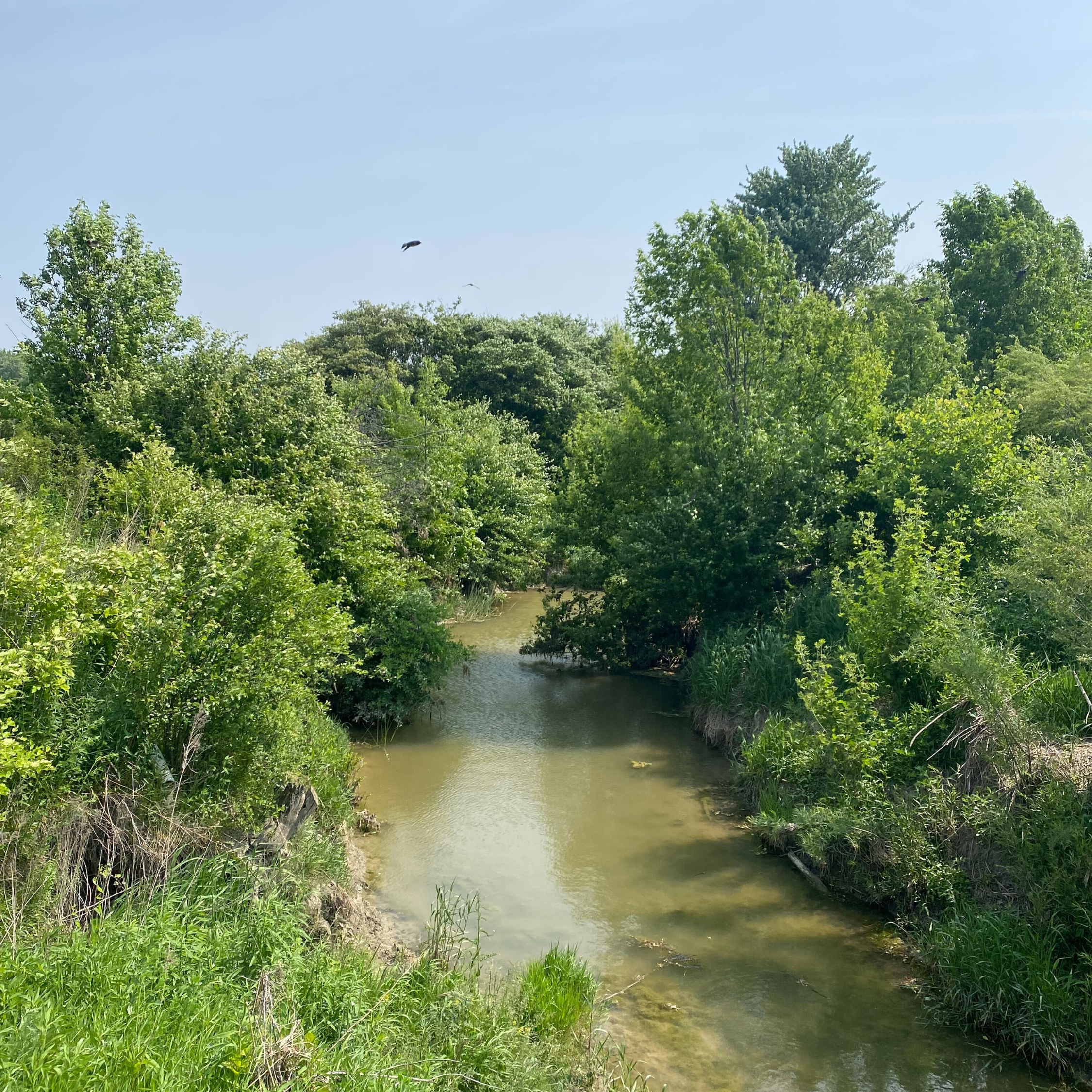
The Blackstripe Topminnow (Fundulus notatus) thrives in rivers with plentiful aquatic and streamside vegetation. The trees, shrubs, and grasses that grow along the water’s edge are important because they trap sediment, serve as a food reservoir and act as protective cover from avian predators like herons. The most serious identified threat to these fish is habitat degradation due to urbanization, industrialization, and intensive agricultural activity. Dodsworth’s research focuses on imitating the Blackstripe Topminnow’s natural environment in the lab to figure out what its optimal and lethal temperatures are, and its optimal level of suspended sediment. Their gills will be examined pre- and post- sediment exposure to see if they change—indicating if they are tolerant to high levels of sediment or not.
Her findings will provide insight into how the species may respond to increasing temperatures due to climate change, human activities, and the release of suspended sediment into streams from farm fields. Dodsworth’s long-standing passion for wildlife conservation inspired her to complete her undergraduate degree at Waterloo in environmental biology, and now, through her master’s, she is eager to make a substantial impact on the outlook of a tiny fish. After graduation, she aims to continue working in wildlife conservation either in industry or with the government.
What drew you to studying in the Master of Biology program at Waterloo?
I completed my undergraduate degree in environmental biology at Waterloo and had such a fulfilling experience that I wanted to continue in the same field. I am passionate about animals, enjoy spending time outside, and love understanding how the world works, so I chose a program that let me study and experience all those things.
I am very interested in wildlife conservation and my master’s research project gives me direct experience of that. I am really enjoying my program and my research.
What is the working relationship like with your supervisor?
My supervisor, Dr. Paul Craig, is great and has been super supportive throughout my master’s program. He provides me with lots of guidance, the freedom to alter the project how I see fit and has given me many opportunities to share my work with the public and at conferences.
How do you like to spend your time outside your studies?
Outside of my studies I have started competitive Latin dancing in Waterloo Region, and it has been the best way to spend my free time!
I’ve found Waterloo to be a great, welcoming, and ever-changing city! In Uptown Waterloo there are always fun activities and events to get involved with and an amazing selection of food choices. And if you are a nature lover, the local Grand River provides lots of opportunities to explore.
Interested in conducting research in graduate school? Read about the available research project opportunities and graduate programs in the Faculty of Science at the University of Waterloo.