
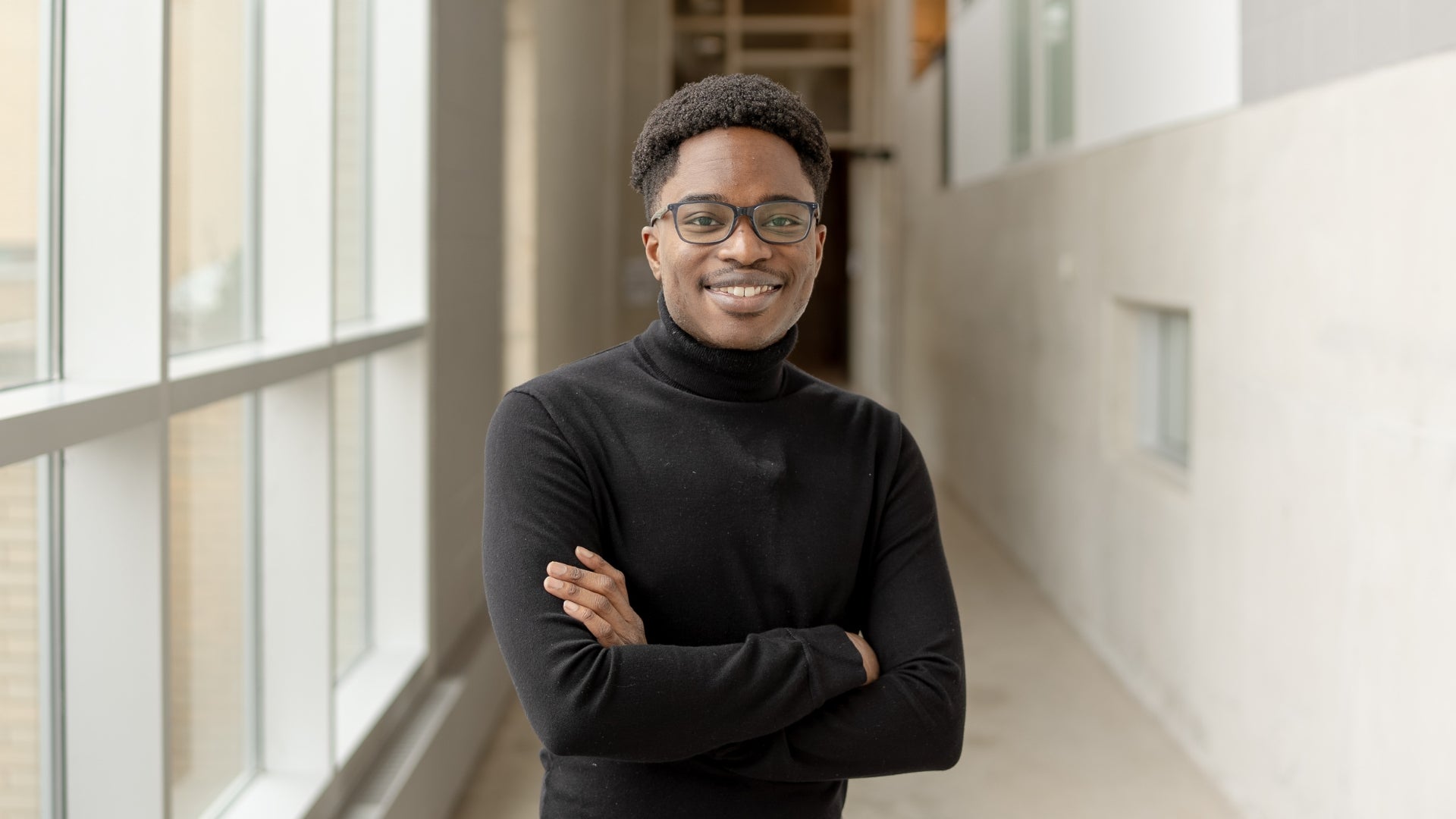
The protein ESRP1 plays a critical role in maintaining all epithelial cells throughout the body. When disease occurs, the expression of this protein becomes dysregulated. One study found that in patients with inflammatory bowel disease, ESPR1 expression is decreased. Yet despite its importance, scientists still don’t fully understand what ESRP1 does in the intestine. To better understand ESRP1, researchers first need to understand how this protein behaves under normal conditions. That became the purpose of Jordan Francis’s (MSc ’26) thesis: studying ESRP1’s role in maintaining intestinal homeostasis—essentially, how it helps the intestine do its job.

Jordan Francis (he/him), (MSc ’26)

Jordan Francis (he/him), (MSc ’26)
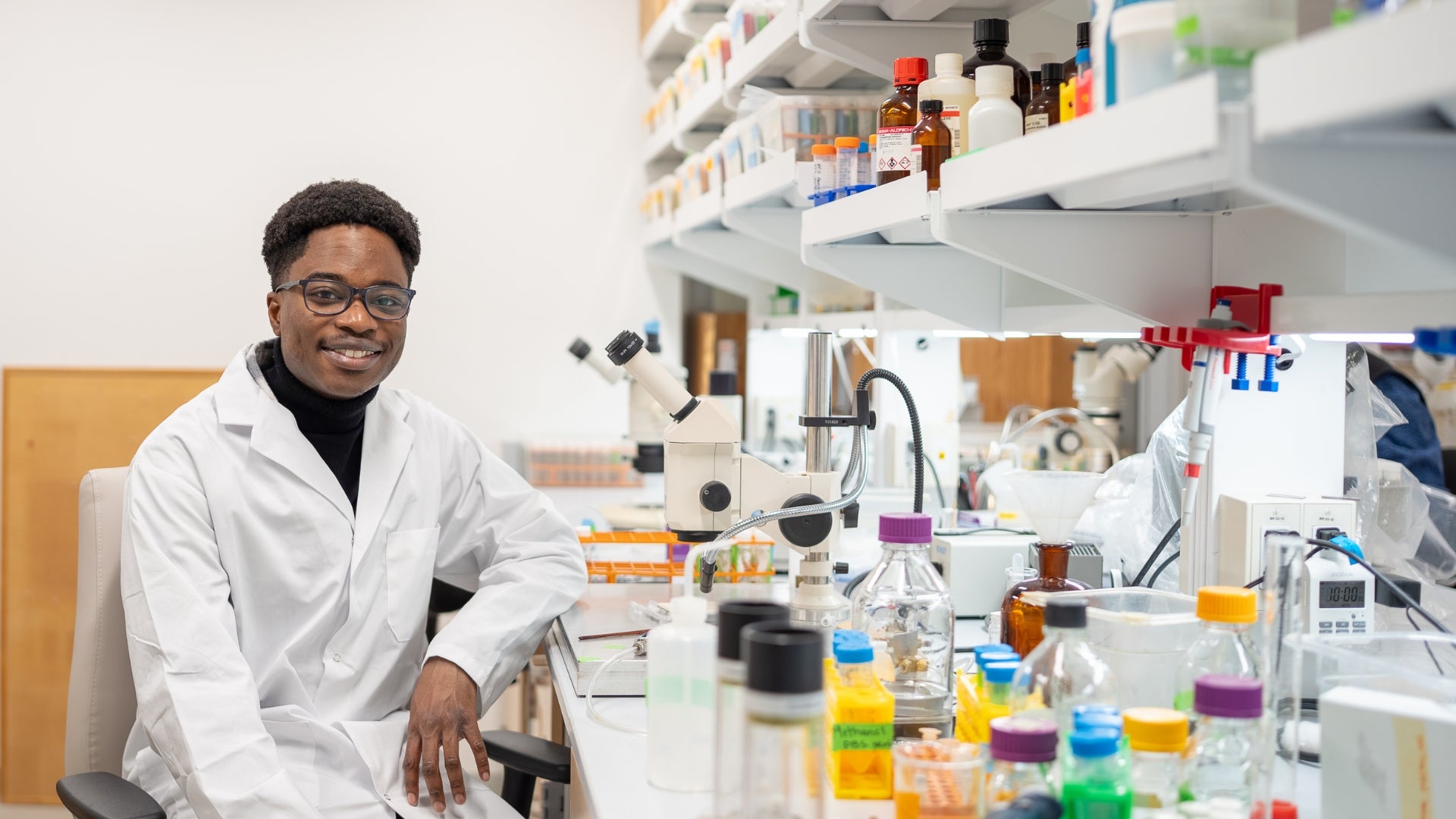
Francis first met his supervisor, Dr. Natoya Peart, at a Canadian Black Scientists Network event. He was immediately drawn to her research using mouse colon organoids to study ESRP1’s function in the intestine. Organoids are miniature 3D versions of the colon grown from stem cells. They mimic the structure, function, and complexity of the human organ, which makes them a powerful tool for scientific discovery.
After enrolling inthe Master of Science in Biology program at the University of Waterloo, Francis was thrilled to work with organoids—an experience he describes as “unforgettable.” Although culturing them proved challenging, this quickly became his favourite part of the research project.
Jordan’s path to graduate research began earlier, during his undergraduate studies at McGill University in a developmental biology lab. There, he spent four months studying Tmed2, a protein involved in transporting other proteins from the Endoplasmic Reticulum to the Golgi apparatus. By the end of the project, lab techniques such as polymerase chain reactions (PCRs) felt like second nature. That eye-opening experience cemented his desire to pursue a scientific career and continue to graduate school.
What was the working relationship like with your supervisor, Dr. Natoya Peart?
The support Dr. Peart gave me was invaluable. I would regularly share my progress on experiments with her, and she would give helpful troubleshooting advice. If I changed a step during an experiment, I would explain the thought process to her. She has been supportive of my career goals and has done her best to help facilitate them.
How did you spend your time outside your studies? What did you enjoy about living in Waterloo Region?
I would often take walks, especially during the summer, and work out at the gym. I liked visiting the St. Jacobs Farmers’ Market or the Kitchener Market, which has lots of produce and food vendors. I often went to Biology Graduate Student Association (BGSA) events; they served as a good social outlet. I officially joined the BGSA as a social media manager during the summer of 2025. I would recommend that any biology graduate student participates in BGSA events. It’s a good way to meet fellow students, who you may not see often since we’re all so busy.
Congratulations on successfully defending your thesis early this year! What is next for you?
I’m excited to take the next step in my career. I hope to work for a few years and then pursue a PhD in a lab focused on translational cancer research. After that, I may do a postdoc or move into industry research.
Interested in conducting research in graduate school? Read about the available research project opportunities and graduate programs in the Faculty of Science at the University of Waterloo.