
Two researchers in the Faculty of Science have been awarded funding through the New Frontiers in Research Fund (NFRF) 2025 Exploration Competition.
Exploration grants through the NFRF are intended to support high-risk, high-reward research. They support projects that push boundaries into new and exciting areas by bringing disciplines together and exploring new concepts that, while bold, have potential for significant impact.
Dr. Travis Craddock and Dr. Will Percival have both been awarded grants for their cutting-edge research. Learn more about their innovative projects.
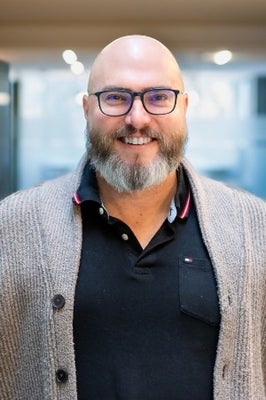
Travis Craddock, Biology
$250,000
Alzheimer’s disease (AD) affects 60 million people worldwide, costs billions annually, and has no cure. With cases predicted to triple by 2050, finding new treatments is urgent. Craddock’s project tests a novel quantum brain mechanism poised to transform neuroscience, enable novel AD therapies, and advance AI.
It has been shown that weak magnetic fields can improve memory, but classical physics and biology can’t explain why, preventing translation into therapeutic use. These effects can be explained using quantum spin dynamics, which directly link memory to subatomic processes below the level of neurons. This explanation challenges current models of both brain function and physics. Demonstrating that quantum processes can influence neural function and cognition would transform our understanding and treatment of the brain. It could also inspire quantum brain-based models to advance artificial intelligence (AI).
Microtubules (MTs) are dynamic protein filaments that support neuron structure and are critical to synaptic plasticity and memory-related processes. Craddock’s team has shown that weak magnetic fields alter MT growth consistent with a radical pair mechanism. They hypothesize that MT dynamics are regulated by spin-sensitive radical pair reactions, which respond to external magnetic fields to modulate MT growth, neuroplasticity, and memory. To test this, they will use electron spin resonance spectroscopy and quantum-inspired computational models to examine how magnetic fields affect MT dynamics, neuron structure, memory, and neural coordination.
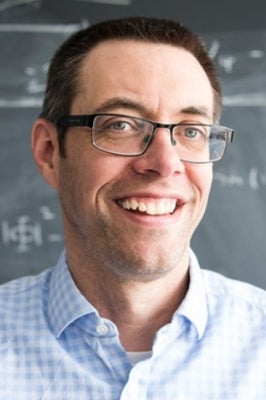
Will Percival, Physics and Astronomy
$250,000
The study of Dark Energy — the name given to the unknown phenomenon driving the accelerated expansion of the universe — is an exciting and evolving field of physics. Over the last year, experimental results from the Dark Energy Spectroscopic Instrument (DESI) have revolutionized the field, suggesting that dark energy is not constant as previously believed, but dynamic, with a density weakening over time.
This exciting discovery of dynamical dark energy has the potential of being confirmed or refuted by the careful matching of future empirical data to existing physical models. Over the next two years, Percival and his interdisciplinary team will adapt methodological expertise from the fields of biostatistics and computational statistics and apply these tools to cosmological data. Biostatistics and cosmology are both tasked with drawing robust conclusions from limited available data, and computational statistics handles the fitting of the complex statistical models required to achieve this.
Bringing together experts in these disparate fields, therefore, offers a chance to critically look at the new cosmological data from a novel viewpoint and confirm — or overturn – the discovery of dynamical dark energy. The ultimate aim of this project is to understand what we truly know from the new data about the physics of dark energy.