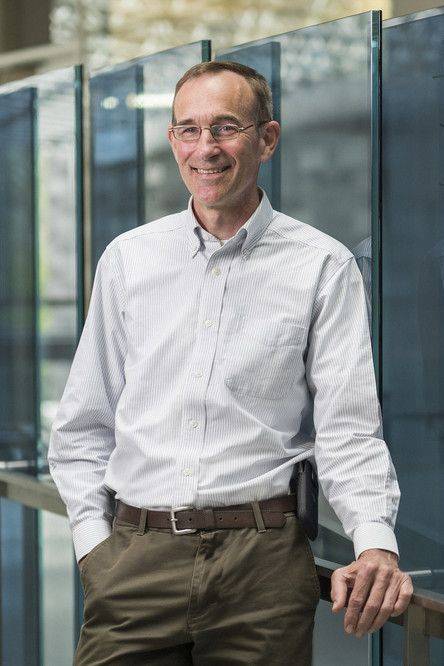
When Raymond Laflamme was diagnosed with stage 3B lung cancer, he turned something tragic into a new research avenue.
Radiation treatment specifically interested the quantum physicist. Here was this big machine that emits radiation and spot targets tumours. How did it work? During his daily sessions, he couldn’t stop asking the technician questions: What is the frequency? How does it calibrate? Can I see the instruction manual?
Finally, the Grand River Hospital introduced him to the staff medical physicist, Ernest Osei, who is also an adjunct professor at the University of Waterloo.
The two discovered an instant kinship. Laflamme wanted to know: could quantum technologies help better cancer research and treatment? They hired a postdoctoral fellow and set out to find out.
“This research is driven by curiosity and exploration,” Laflamme says. “We don’t have answers or solutions yet.”
While this research is still in the early stages, it’s a reminder to Laflamme that his curiosity as a researcher, inspired by some challenging personal experiences, is helping him uncover new potential impacts of quantum technologies to support future cancer patients in living healthy and meaningful lives.
Now in remission, Laflamme still heads down to Osei’s basement office after his regular checkups. This time, it’s to talk about future quantum discoveries.
Laflamme is a Professor in the Deparment of Physics and Astronomy and at the Institute for Quantum Computing. He holds the Mike and Ophelia Lazaridis John von Neumann Chair in Quantum Information and Canada Research Chair in Quantum Computing.
Related content:
-
Conversations at the Perimeter Podcast -Raymond Laflamme on the life-changing power of curiosity