Waterloo Releases 2015 Environmental Sustainability Report
Today, the University of Waterloo released its 2015 Environmental Sustainability Report. This year's report focuses on case studies and progress in academics, operations, and engagement.
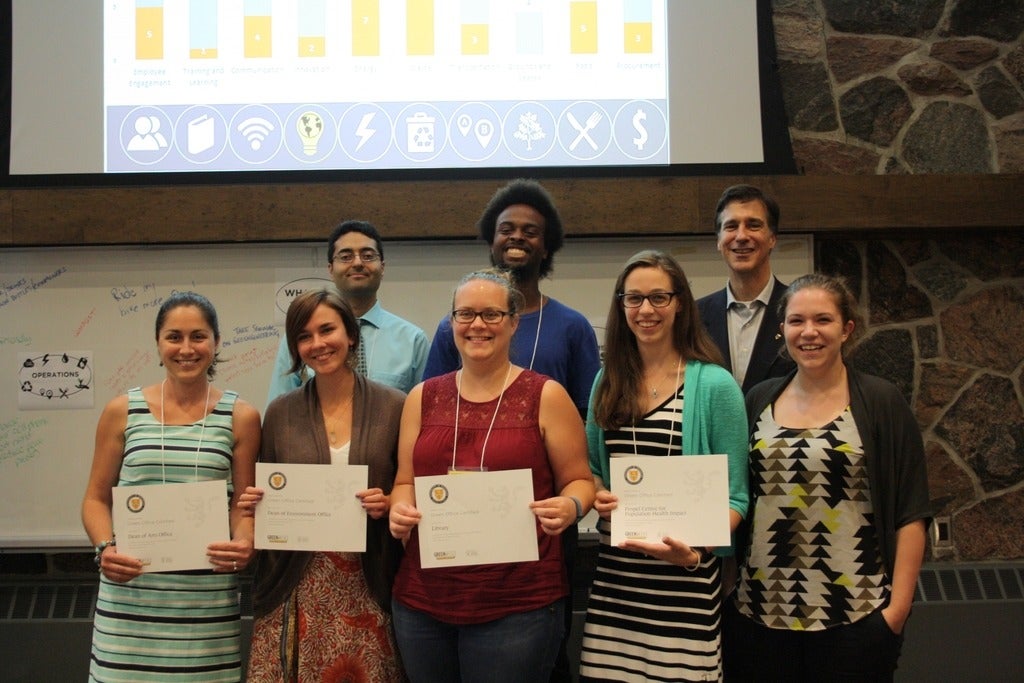
Over the last year, the University has been piloting a Green Office program to help departments inject a little green into their black and gold.
Organizations across Waterloo Region promoted cycling to work throughout June as part of a region-wide #BikeWR Campaign. With over 2,200 tracked cycling trips, the University of Waterloo employee and student networks topped the local leaderboard!
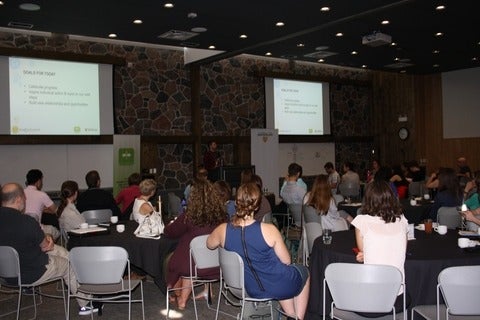
What do Brexit, community gardens, and climate change have in common? Attendees at Waterloo’s third annual Eco-Summit learned about the global, local, and University networks that are building a sustainable future, as well as the tensions within and between those networks.
Jean Andrey, Dean of Environment, has issued the #1000GreenUW campus-wide challenge to the University of Waterloo community in the lead up to Earth Day (April 22nd).
The David Johnston Research + Technology Park (R+T Park) University of Waterloo and its tenants have committed to a Greenhouse Gas Reduction Target through Sustainable Waterloo Region’s Regional Carbon Initiative (RCI).
On Thursday, November 12th, The University of Waterloo was the recipient of the Stormwater Management Community Engagement award, presented by REEP Green Solutions.
The University of Waterloo has released its 2014 Environmental Sustainability Report, which tracks the campus' progress across academic, operations, and engagement indicators between 2010 and 2014.
The Council of Ontario Universities (COU) has released its 2015 "Going Greener" sustainability report, which tracks the progress that Ontario Universities are making on campus sustainability. These include food sustainability, conservation efforts, development of academic curricula, and community engagement.
It was a cold and rainy day that saw the arrival of Campus Compost's second "compost cow", a 55 cubic foot tumbler that gobbles up food waste from the University of Waterloo. The weather, however, did not dampen any spirits for the volunteers who operate the system.