Table of Content
7. Laboratory Safety Practices
Laboratory research in Chemical Engineering relies on an environment where hazards are recognized, risks are controlled, and safe work habits are consistently practiced. This section outlines the core expectations, behaviours, and operational standards that support a safe and productive research culture across all departmental laboratories. These practices apply to all researchers, faculty, staff, graduate researchers, co‑op students, and visitors, and are intended to complement the University of Waterloo’s overarching health and safety policies and regulatory requirements.
Effective laboratory safety is built on three pillars: awareness, preparedness, and professional conduct. Researchers must understand the hazards associated with their work, from chemical and biological agents to equipment, energy sources, and environmental conditions. They must also be prepared to respond appropriately through proper use of personal protective equipment, adherence to established procedures, and familiarity with emergency protocols. Just as importantly, safe laboratory practice requires a culture of accountability, where individuals take responsibility for their own actions, look out for one another, and promptly report unsafe conditions or incidents.
This chapter provides practical guidance for day‑to‑day laboratory operations, including expectations for housekeeping, PPE, chemical handling and storage, and lab equipment use. By following these practices, all members of the department contribute to a research environment that protects people, preserves facilities, and upholds the high standards of safety and professionalism expected within the Department of Chemical Engineering.
Laboratory Safety Practices
7.1. Working Alone
7.2. Personal Protective Equipment (PPE)
7.2. Personal Protective Equipment (PPE)
Working in a research laboratory often involves dealing with hazardous chemicals, biological material, and high-energy equipment. If not properly managed, these hazards can result in serious injuries, such as chemical burns, biological infections, or mechanical injuries. Personal protective equipment (PPE) is a key barrier, protecting researchers from direct exposure and reducing the risk of accidents or contamination. Although proper lab design, engineering controls, and procedural protocols form the foundation of a safe environment, PPE adds a personal layer of protection, tailored to specific tasks and settings.
Supervisors and PIs are responsible for assessing PPE requirements for the labs under their responsibility. This assessment is completed before the work starts, as part of the Safety Report, and when new hazards are introduced to the laboratory. Supervisors are also responsible for providing the appropriate PPE, and ensuring that employees have received the necessary training.
Researchers are responsible for following the PPE requirements.
- Completing PPE-specific training sessions;
- Wearing PPE as required;
- Cleaning and maintaining PPE as trained;
- Informing the supervisor of the need to repair or replace PPE.
Typical Laboratory PPE
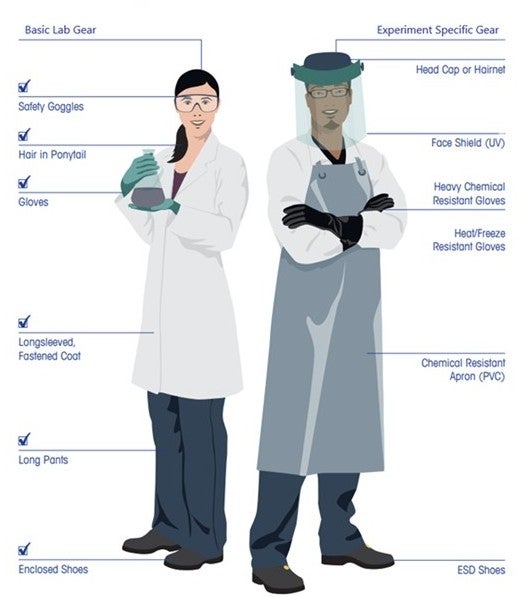
Lab Coats: Lab coats provide a protective barrier against spills, splashes, and contamination. They must be worn whenever hazardous materials are handled. Lab coats should be properly fastened and removed before leaving the laboratory.
Eye Protection: Safety glasses must be worn at all times in areas designated as requiring eye protection, including all laboratories where hazardous materials are stored or used. Safety glasses protect against chemical splashes, flying debris, and particulate hazards. Additional protection, such as chemical splash goggles or a face shield, may be required when handling concentrated corrosives or performing procedures with an elevated risk of splashing or projectiles.
Footwear and Clothing: Closed‑toe, slip‑resistant footwear is required in all laboratories. Open‑toe shoes, sandals, and mesh footwear are not permitted. Clothing must cover the legs to provide basic protection from spills and splashes.
Hair, Clothing, and Accessories: Long hair, beards, loose clothing, scarves, neckties, and dangling jewelry must be secured. These items can become entangled in rotating equipment or come into contact with flames, chemicals, or other hazards.
Disposable Gloves: Disposable nitrile gloves protect the hands from incidental chemical contact. They are not suitable for immersion or prolonged exposure to chemicals. Gloves must be removed immediately after contamination and must never be worn outside the laboratory or when touching common surfaces such as door handles or keyboards.
Activity Specific PPE
Chemical Splash Protection: Rubber or PVC splash apron must be worn when handling larger volumes of corrosive materials.
Flame‑Resistant Lab Coats: Flame‑resistant (FR) lab coats must be worn when working with open flames larger than a Bunsen burner, when sparks may be generated, or when handling pyrophoric, water‑reactive, or air‑reactive materials.
Enhanced Eye and Face Protection: Chemical splash goggles or a face shield are required when working with concentrated acids and bases or when performing operations with a high risk of splashing or flying particles.
Chemical‑Resistant Gloves: Use heavy‑duty chemical‑resistant gloves (e.g., neoprene, butyl, Viton, thick nitrile and PVC) when handling corrosives, solvents, oxidizers, or any chemical that can permeate disposable nitrile gloves. Selection must follow manufacturer compatibility charts.
Thermal‑Protection Gloves: Wear heat‑resistant gloves when handling hot equipment, glassware, or materials above 60 °C, including ovens, furnaces, steam lines, and heated reaction vessels.
Cryogenic Gloves: Cryogloves are required when handling liquid nitrogen, dry ice, or other cryogenic materials. Gloves must be loose‑fitting to allow quick removal in case of a spill.
Cut‑ or Impact‑Resistant Gloves: Use cut‑resistant or impact‑resistant gloves when working with sharp tools, metal edges, broken glass, or equipment that poses crush or pinch hazards.
General Notes: Gloves must be selected based on the specific hazard, removed immediately if contaminated, and never worn outside the laboratory or on common surfaces.
Lab PPE can be purchased on Campus from Chem Stores or from one of the regular lab equipment suppliers such as VWR, Fischer Scientific.
7.3 Laboratory Housekeeping
7.3 Laboratory Housekeeping
Laboratory housekeeping refers to the ongoing practice of keeping research spaces clean, organized, and free from hazards. It is a proactive approach that supports safety, efficiency, and regulatory compliance. Effective housekeeping includes controlling clutter, maintaining clear work areas, ensuring proper storage and labelling of chemicals and equipment, disposing of waste regularly, and keeping emergency equipment stocked and accessible.
Good housekeeping reduces the risk of incidents such as spills, fires, chemical exposures, and injuries caused by slips or falling objects. It also ensures unobstructed access to emergency equipment, supports efficient work by making tools and materials easy to locate, and helps maintain research integrity by minimizing contamination.
Housekeeping is a shared responsibility. While the Supervisor/PI is accountable for overall laboratory conditions, all lab members are expected to maintain tidy work areas and participate in routine cleaning and maintenance.
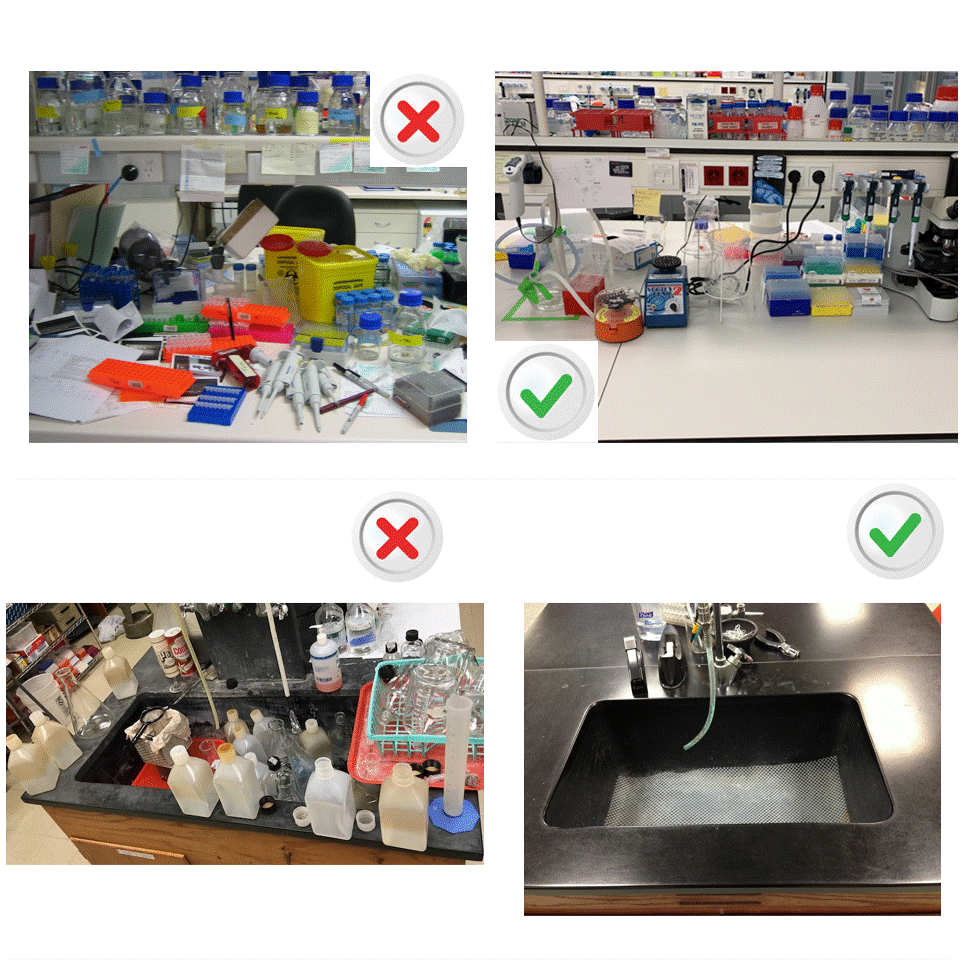
Laboratory spaces must be kept free of clutter, trash, unused equipment, and empty or outdated chemical containers. This applies to benches, fume hoods, refrigerators, cabinets, chemical storage areas, sinks, and waste receptacles. All chemical spills must be cleaned up immediately, regardless of the substance. When cleaning a spill, check surrounding surfaces, such as equipment, cabinets, doors, and countertops, for splashes. Refer to section 6.4. Hazardous Materials Spills for detailed guidance.
7.3.1. Laboratory Housekeeping Guidelines.
- All work areas, walkways and aisles must be kept clean and free of obstructions. Maintain clear, unobstructed aisles and pathways (minimum of 1.1 m wide) to allow for safe movement and emergency egress.
- Keep areas around emergency equipment and devices clean, free of clutter, and obstacles. This includes items such as eyewash/emergency showers, exits, electric power panels, fire extinguishers, and spill cleanup supplies.
- Keep work surfaces (benches, fume hoods, balance areas) clear of unnecessary items. Only have materials needed for the immediate task present. Chemicals and equipment should be returned to their proper storage location immediately after use.
- Assign specific locations for all chemicals, equipment, and supplies. Ensure all containers, shelves, and storage areas are clearly labelled. "A place for everything, and everything in its place."
- Use shelving and cabinets efficiently, placing heavier items on lower shelves and lighter items overhead, ensuring shelves are secured and not overloaded.
- Establish a schedule for wiping down of work surfaces and periodic deep cleaning of the entire lab, including less-frequently accessed areas and equipment. Clean up all spills immediately, regardless if the chemical is hazardous or not. When cleaning up a chemical spill, look for any splashes that may have resulted on nearby equipment, cabinets, doors, etc.
- Chemicals should always be segregated and stored according to their chemical hazardous classification. Storage of chemicals and equipment in the fume hoods and on bench tops should be kept to a minimum. Consult the Chemical Storage and Segregation section for more information.
- Dispose of waste and hazardous waste regularly. Equipment and materials no longer being used must be disposed of following proper waste removal procedures. Consult the Waste Disposal section for more information.
7.4. Fume Hoods and Laboratory Ventilation
7.4. Fume Hoods and Laboratory Ventilation
A fume hood is an essential engineering control in a research lab, primarily used to protect researchers from exposure to hazardous airborne contaminants. A fume hood should be used whenever there is a possibility of generating or releasing substances that could pose a health or safety risk if inhaled or released into the lab environment.
The fume hood draws air away from the user and into the hood using a powerful exhaust system. The transparent sash, usually made of safety glass, acts as a shield between the user and the experiment. It helps protect against chemical splashes, fires, and minor explosions. The contaminated air is vented outside the building to remove hazardous substances. This ensures that toxic or flammable vapours are not recirculated into the laboratory environment.
Here are the key situations and types of materials that necessitate fume hood use:
1. Hazardous Vapours, Fumes, Gases, and Particulates:
Volatile Toxic Chemicals: Any chemical with significant vapour pressure that is toxic or harmful if inhaled. This includes many organic solvents, acids, and bases.
Corrosive Materials: Strong acids (e.g., concentrated hydrochloric acid, nitric acid) and bases that can release corrosive vapours (e.g., ammonium hydroxide).
Asphyxiating Gases: Gases that can displace oxygen and lead to asphyxiation.
Fine Particulates/Dusts: Operations that generate fine powders or dusts that can become airborne and inhaled.
Noxious Odours: Chemicals with strong or unpleasant odours, even if not highly toxic, should be handled in a fume hood to prevent nuisance and maintain a comfortable lab environment.
2. Processes that Generate Contaminants:
Transfers of Volatile Liquids: Pouring or transferring significant quantities of volatile or hazardous liquids from one container to another.
Reactions that Produce Gases: Any chemical reaction that is expected to release gaseous products or volatile byproducts.
Distillations or Evaporations: Processes that concentrate volatile compounds, increasing their vapour pressure and potential for release.
Digestion Procedures: Especially those involving strong acids or heat.
3. Physical Hazards:
The fume hood sash provides a physical barrier and can offer protection from splashes, splatters, or minor explosions in case of an unexpected reaction. Use it as a shield by keeping the sash as low as possible during experiments. If an explosion hazard exists, anchored barriers, shields or enclosures of sufficient strength to deflect or contain the explosion should be installed.
4. When Safety Data Sheets (SDS) Indicate Need:
Always consult the SDS for any chemical you plan to use. If the SDS has warnings such as "Toxic by inhalation," "Do not breathe dust, fumes or vapours," or recommends "use in a well-ventilated area/fume hood," then a fume hood is required.
Fume Hood Work Practices
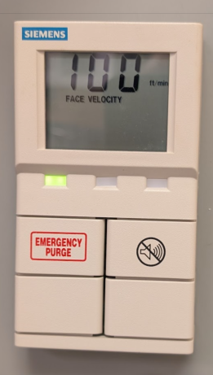
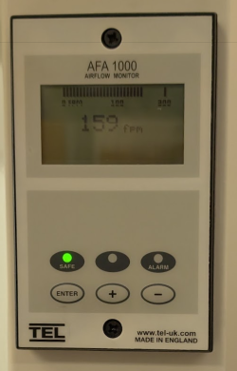
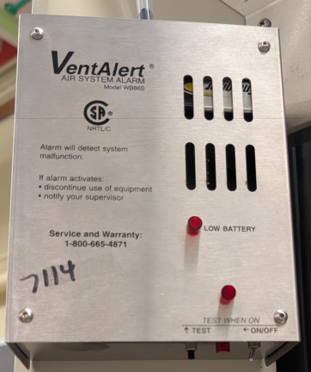
Verify Operation: Before starting any work, always ensure the fume hood is operating correctly. Fume hoods in the Department of Chemical Engineering are equipped with airflow indicators or alarms that alert users if the hood is not functioning properly, ensuring continuous protection. In case the fume hood is not working properly, please contact pltops.maintenance@uwaterloo.ca to request maintenance.
| Building | E6 | QNC | DWE |
|---|---|---|---|
|
Airflow Indicator/ Alarm |
 |
 |
 |
| Normal Operation |
Green light is ON. Face velocity > 100 ft/min. |
Green light is ON. Face velocity > 100 ft/min. |
Power switch is in the ON position (bottom right). |
| Testing | Open the sash above the mark to trigger the alarm. | Open the sash above the mark to trigger the alarm. | Press “TEST” button to trigger the alarm. |
| Notes |
Sash height determines damper opening to maintain face velocity > 100 ft/min. EMERGENCY PURGE (EEE) activates emergency mode, fully opening the damper |
Sash height determines damper opening to maintain face velocity > 100 ft/min. |
No damper control. Exhaust is either ON or OFF. Always test before using. Some fume hoods require manual restart after power failure. |
Sash Management: Remember that the sash acts as a physical barrier. Keep it as low as possible during experiments, and completely lowered when the experiment is unattended or when the hood is not in use. This protects from splashes and projectiles, and helps conserve energy. Extend only hands and arms into the hood and avoid leaning against it. Never allow your head to enter the plane of the hood opening.
Proper Placement of Materials and Equipment: Always conduct experiments and place all chemicals and equipment at least 6 inches (15 cm) behind the plane of the sash (the front edge of the hood). This ensures proper containment.
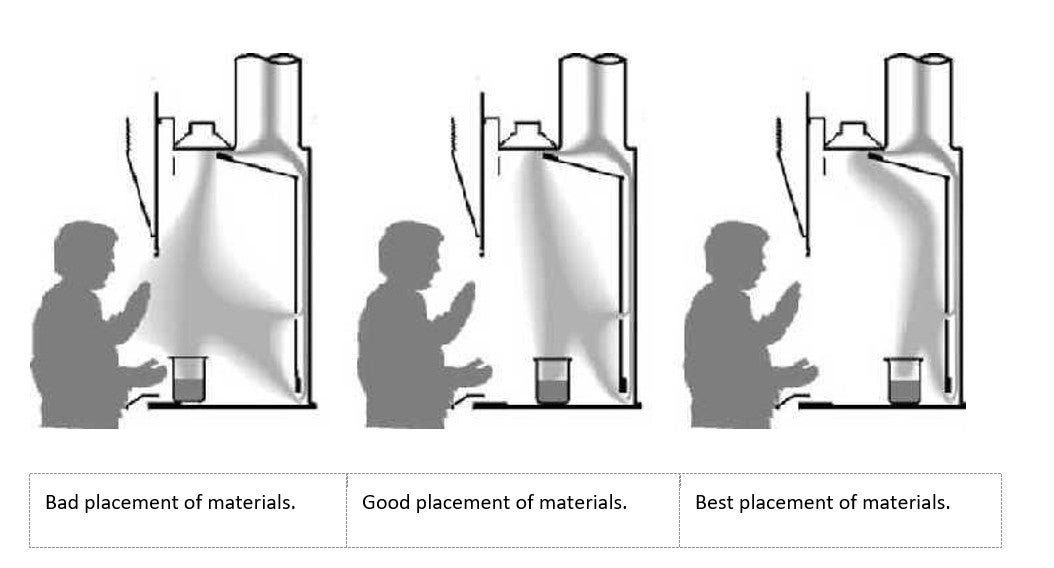
Do Not Obstruct Airflow: Keep the baffles (openings at the top and rear of the hood) and airfoil (front bottom edge) clear of obstructions. Do not block the slots and avoid overcrowding the hood. Only place materials and equipment necessary for the immediate experiment. Place large equipment on blocks or risers (approximately 2 inches or 5 cm) to allow air to flow underneath and around it, maintaining smooth airflow.
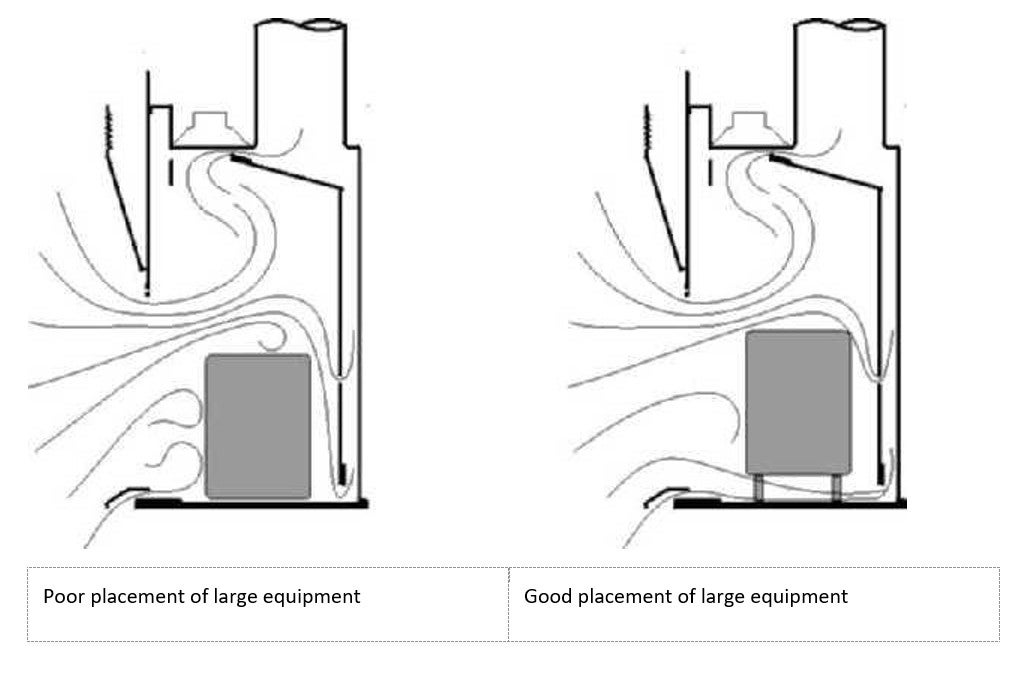
Storage of materials in the Fume Hood: Minimize material storage in the fume hood, as it can adversely affect the air flow and containment provided. In addition, the fume hood is often used for the most hazardous activities in the laboratory, and the presence of stored flammables or highly toxic materials can worsen explosions or fire in the hood and may spill during emergency response.
Materials requiring ventilated storage (e.g., volatile and highly toxic, or odorous substances) may be stored in a hood if they are properly segregated and the hood is not used for experimental work.
Know Your Hood's Limits: Standard chemical fume hoods are designed for controlling chemical fumes and vapours. They must not be used for biological materials (use a biological safety cabinet), for handling nanomaterials (use a HEPA‑filtered glove box), or for specialized reactions requiring dedicated infrastructure. For example, perchloric acid heated above room temperature requires a perchloric‑acid‑rated hood with wash‑down capability.
Fume hoods are not designed to contain high‑velocity releases. Gases or vapours escaping from pressurized systems may exit the hood before being captured. Because a typical fume hood exhausts directly outdoors, equipment and processes must include appropriate condensers, traps, or scrubbers to prevent the release of hazardous substances into the environment.
Other Laboratory Exhaust Systems
Snorkels
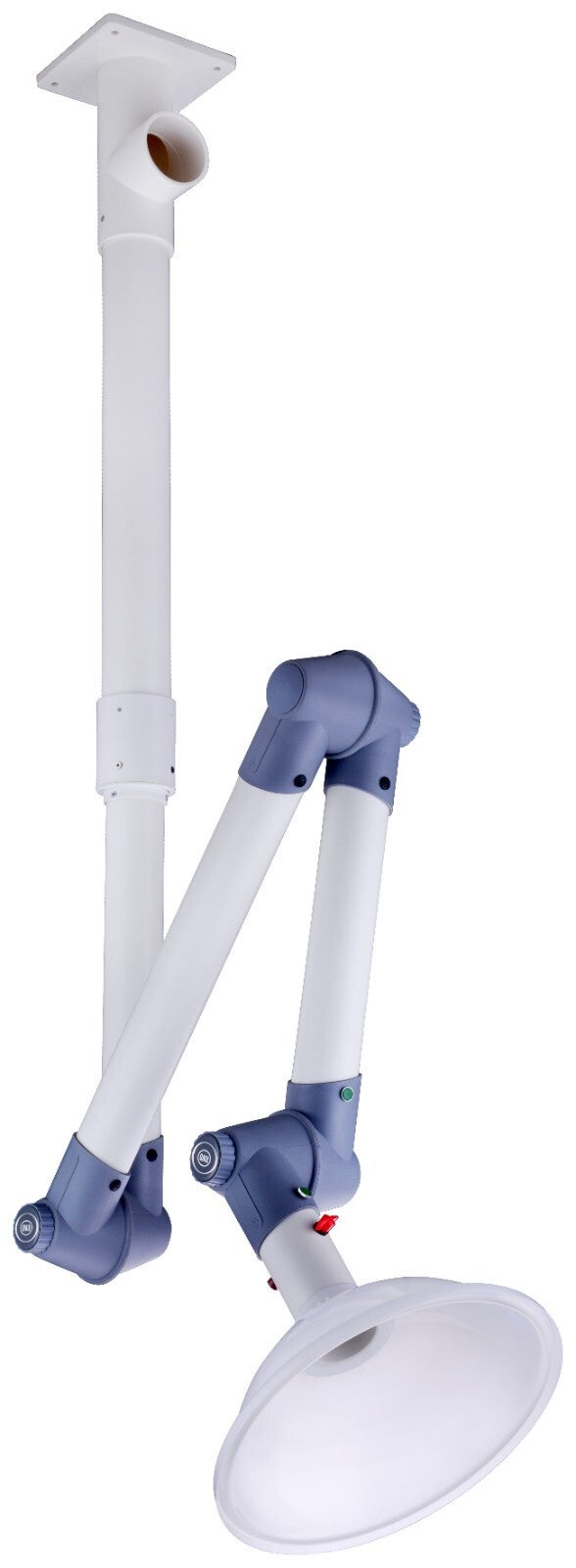
Snorkel exhaust systems or canopy hoods are used in research labs when localized ventilation is needed to capture fumes, vapours, dust, or heat directly at the source. They’re not ideal for high-hazard materials, as their capture efficiency depends heavily on proper positioning, but they’re especially useful when:
Working with small-scale chemical processes that emit nuisance vapours or low-hazard contaminants.
Using equipment like gas chromatographs or the end of equipment tubing that releases fumes at specific points.
Performing tasks that don’t require a full fume hood, but still need targeted exhaust, such as soldering, gluing, or working with volatile non-hazardous solvents.
Venting heat, steam, or non-toxic vapours from large or open equipment that can’t be enclosed in a traditional fume hood (e.g. autoclaves).
Glove Boxes
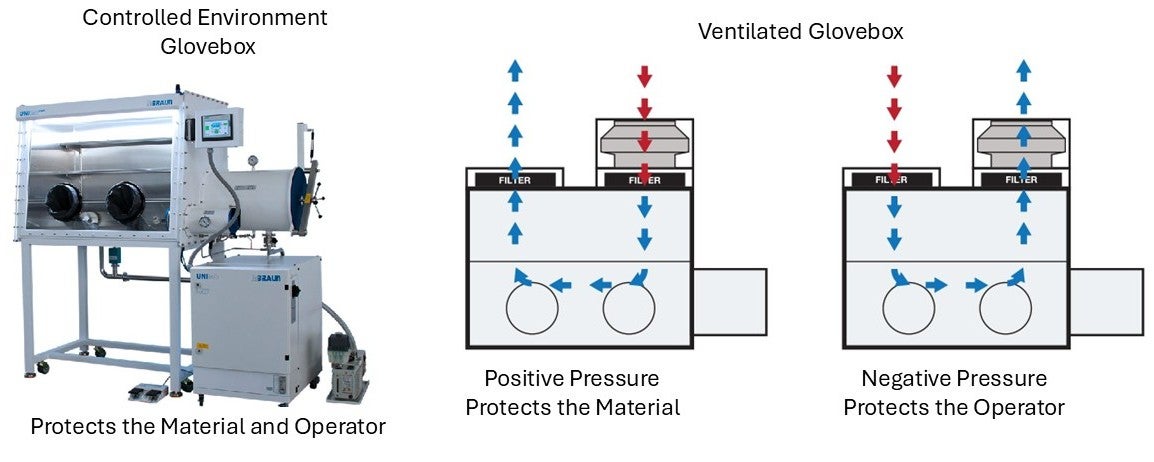
Glove boxes are sealed enclosures that are designed to protect the user, the process or both, by providing total isolation of the contents from the outside environment. They are usually equipped with at least one pair of gloves attached to the enclosure. The user manipulates the materials inside using the gloves. Typically, a glove box has an antechamber that is used to take materials in and out of the box. Negative pressure models prevent contaminants from escaping, protecting the user, while positive pressure versions protect sensitive materials from external contamination.
A controlled environment glove box (dry glove box) is a sealed enclosure designed to maintain low levels of moisture and oxygen, creating a stable, inert atmosphere for sensitive work. These glove boxes are typically purged with dry inert gases like nitrogen, argon, or helium, and are used when even trace amounts of air or humidity could compromise materials or reactions.
A ventilated glove box (filtered glove box) features a high-efficiency particulate air (HEPA) or ultra-low particulate air (ULPA) filtered inlet and outlet air to provide a physical barrier between personnel and hazardous materials. Unlike sealed dry boxes that maintain an inert atmosphere, ventilated glove boxes allow for continuous airflow.
Biosafety Cabinets
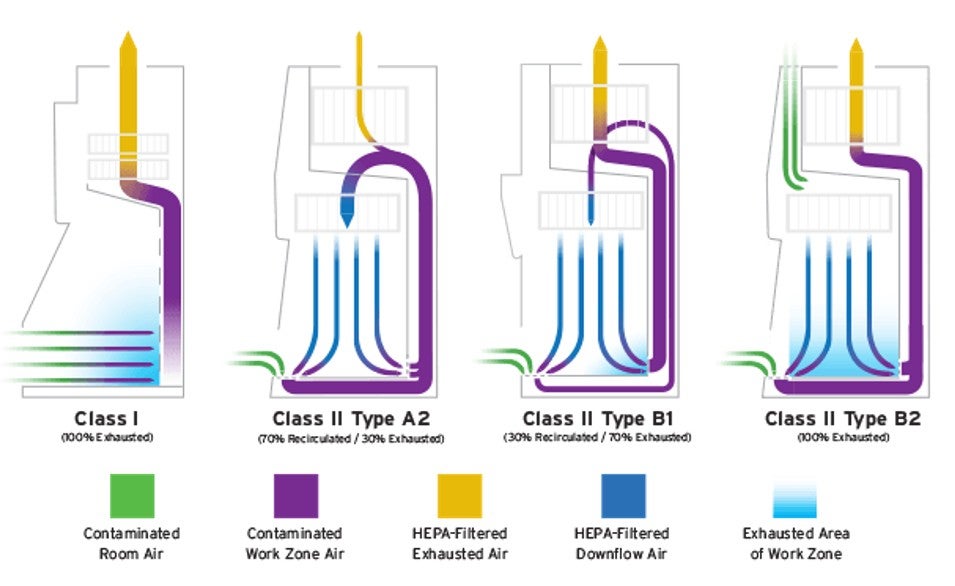
Biosafety cabinets (BSC) are specialized, ventilated workspaces designed to safeguard laboratory personnel, the work conducted within, and the surrounding environment from exposure to infectious agents and hazardous materials. BSCs are essential in microbiology, virology, and anywhere that safe handling of biohazards is critical.
Class I Cabinets Provide personnel and environmental protection by HEPA‑filtering exhaust air. They do not protect the product and are suitable for low‑ to moderate‑risk work where sterility is not required.
Class II Cabinets Provide personnel, product, and environmental protection, making them appropriate for microbiological and biotechnological work requiring aseptic conditions. Class II BSC types include:
-
Type A1 — For non‑volatile, non‑toxic microbiological work. Minimum inflow of 75 fpm. Recirculates ~70% of air; exhausts ~30% through a HEPA filter. Not suitable for volatile or toxic chemicals.
-
Type A2 — Similar to A1 but with 100 fpm inflow for improved containment. Can accommodate minute amounts of volatile chemicals when connected to the building HVAC system.
-
Type B1 — Suitable for small quantities of toxic chemicals and biological agents when work is performed at the rear of the cabinet. Exhausts ~70% of air and recirculates ~30%, both HEPA‑filtered.
-
Type B2 (Total Exhaust) — For work involving significant quantities of toxic chemicals and biological agents. Minimum inflow of 100 fpm. Exhausts 100% of air to the building system with no recirculation.
Laminar Flow Cabinet
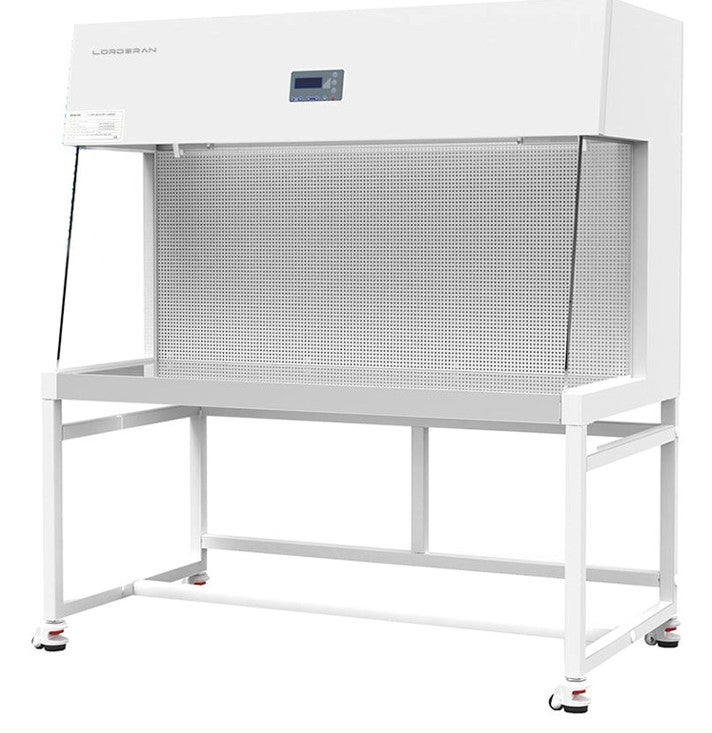
A laminar flow cabinet is used to create a clean, particle-free environment for handling sensitive materials. It works by directing air through HEPA filters and across the work surface in a smooth, unidirectional stream—either horizontally or vertically—effectively sweeping away contaminants.
It’s important to note that laminar flow cabinets protect the product, not the user. They should never be used with hazardous chemicals or infectious agents—biosafety cabinets or fume hoods are better suited for those tasks.
Toxic Gas Cabinets
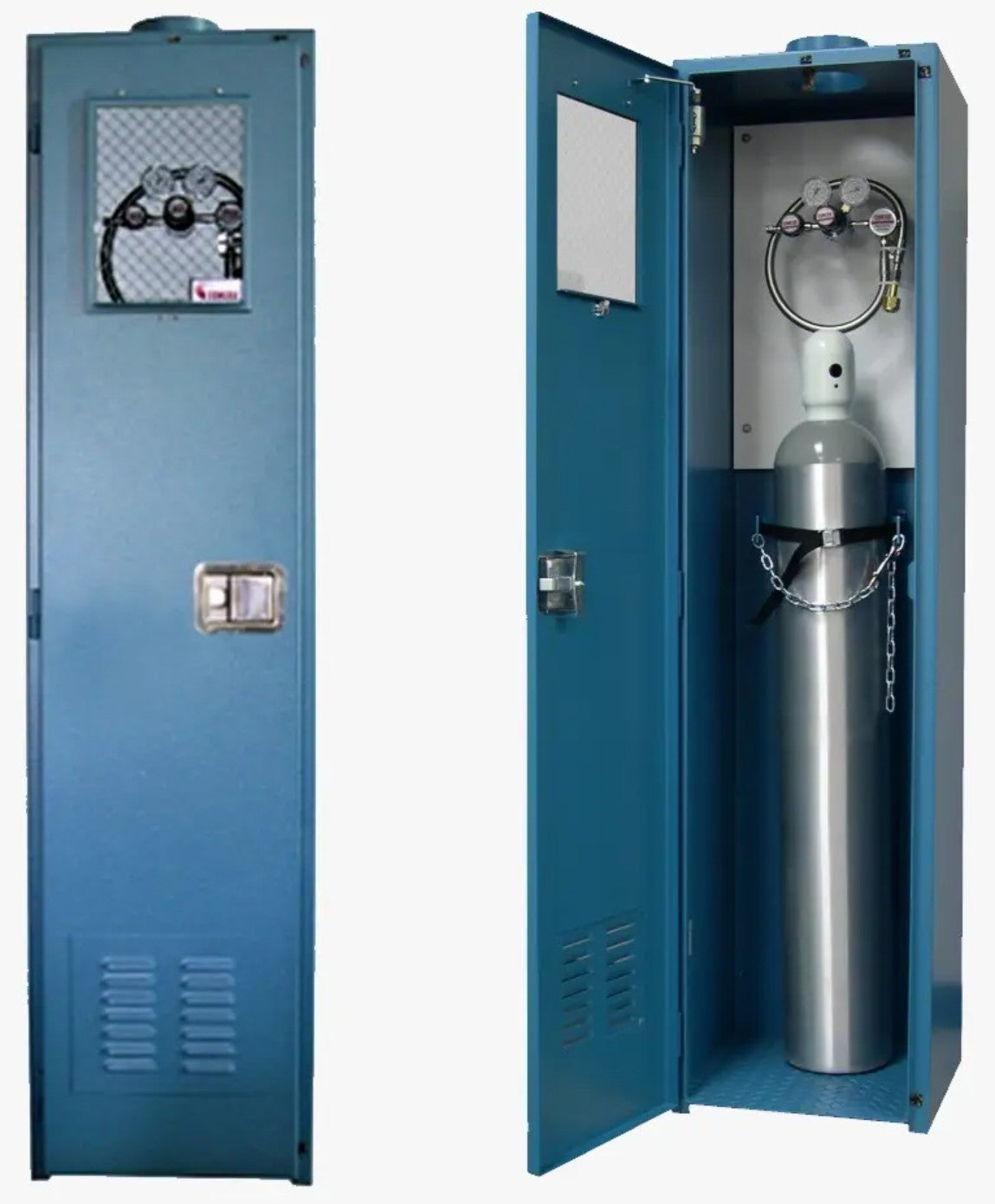
Toxic gas cabinets are ventilated enclosures specifically designed to safely store and contain the release of toxic or odorous gases such as carbon monoxide, ammonia, hydrogen sulfide, etc. Gas cabinets are connected to laboratory exhaust ventilation and are designed to prevent the gas from contaminating the laboratory in the event of a leak or rupture. Toxic gases are required to be stored in this type of cabinet.
Other Subsections
