News

Filter by:

Limit to news where the title matches:
Limit to items where the date of the news item:
Date range
Limit to news items tagged with one or more of:
Limit to news items where the audience is one or more of:
Wednesday, August 27, 2025

From the classroom to the workplace

In the final term of the Master of Climate Change program, students have the option of completing an internship in a role focused on climate or climate change. This term, nine students are completing an internship, including Taylor Wiebe and Jack Phibbs. Wiebe is completing an internship with the Oil, Gas, and Alternative Energy Division (OGAED) at Environment and Climate Change Canada in Gatineau, Quebec. Phibbs is completing his internship at the City of Waterloo as a Project Planner and Community Engagement Associate in the Parks and Forestry Department.

Trees are valuable components of the Canadian ecosystem and natural instruments of carbon storage and sequestration. Karisa Tyler, a recent Master of Science graduate from the Department of Geography and Environmental Management, linked the tree growth of black spruce trees to local hydroclimate in two fen sites in the Athabasca Oil Sands Region.

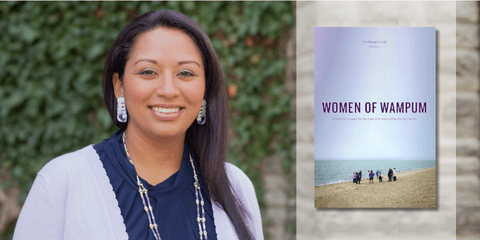
Access to Water, Sanitation and Hygiene (WASH) is an issue that disproportionately impacts women and girls as they are often responsible for finding and collecting water for their households. This issue has a greater impact in rural areas of Sub-Saharan Africa, where water access, solid waste receptacles and improved toilet facilities are not commonly present in households. Julius Jebuni, a Master of Arts graduate from the Department of Geography and Environmental Management, grew up in the Upper West Region of Ghana.  His research explored women’s experiences and empowerment through WASH and cash transfer programs post-COVID 19 in his home community.

We are honoured to welcome Sir Andrew Steer as the 2025 TD Walter Bean Professor in Environment. This fall, he will join the Faculty of Environment to deliver two compelling lectures exploring how leaders, innovators, and citizens can rise to meet the world’s most urgent environmental challenges  for nature, our cities and for our shared future. 

A neighbourhood’s stores and restaurants can significantly influence the health and lifespan of its residents. This is due to the area’s retail food environment, which affects how convenient and affordable it is to access nutritious food. Patrycia Menko, a recent Master of Environmental Studies graduate from the School of Planning, identified food deserts and food mirages in Toronto and the cross-sectional links between these areas and gentrification, broken down by dissemination area.

Small-scale fisheries supply about two-thirds of the global fish for direct human consumption, and are facing increased vulnerability to climate change, biodiversity loss, and livelihood security. Farah El-shayeb, a Master of Environmental Studies student in the Department of Geography and Environmental Management, worked with Dr. Jeremy Pittman on an undergraduate research project to determine the role of family in adaptive capacity.

The Government of Canada’s Social Sciences and Humanities Research Council (SSHRC) recently announced the funding recipients of their Insight Grants and Insight Development Grants in which five Faculty of Environment researchers were awarded project funding. Congratulations to Jennifer Asanin Dean, Brian Doucet, Marta Berbés, Rosella Carè and Seth Wynes. Additionally, The Natural Sciences and Engineering Research Council of Canada (NSERC) has named Peter Crank, Christine Dow and Richard Petrone as recipients of the 2025 NSERC Discovery Grants.