Current students

The Velocity Concept Funding Grant Finals took place on July 14th, both virtually and in person at the Student Life Center. Out of 49 total applicants, 9 teams of students compete for four $5,000 funding awards for their innovative projects. While the competition finals are normally eight teams, this year the judges decided nine was necessary due to the high quality of the competitors.
On June 29th, Member of Parliament Bill Blair presented Dean of Health Dr. Lili Liu and her team with $2.1 million dollars of funding over three years to support their project to enhance search and rescue capabilities for when people with dementia go missing.

The project titled “Managing Risks of Going Missing among Persons Living with Dementia by Building Capacities of SAR Personnel, First Responders and Communitieswill create dementia-friendly resources across six provinces and in collaboration with two indigenous communities, the Peguis First Nation in Manitoba and the Kahnawá:ke Mohawk Territory in Quebec.

Dr. Shana Macdonald (Communication Arts) was interviewed on July 11th about the massive Canada-wide Rogers outage that saw many Canadians without access to the internet, phone service, or even ATMs.

On June 16th, Alex Flek (English Language and Literature) and Dr. Jason Grove (Chemical Engineering) spoke to GI members and guests about the development process of their game Canadian Cap and Trade Simulation (CCTS), a serious game meant to teach students about carbon cap and trade systems. They came together because of their research expertise—Alex in games and Jason in emissions.  

Members of  qCollaborative (qLab) participated in this year’s DH Unbound virtual conference which took place from May 17th – 19th. Drs. Jennifer Roberts-Smith (Brock University), Shana MacDonald (Communication Arts), Brianna Wiens (English Language and Literature), and Aynur Kadir (University of British Columbia) presented on the nature of the qLab and how the lab has enabled collaborative, interdisciplinary scholarship and become a space of friendship and care. qLab was designed as a space to better articulate how feminism can be incorporated into design practices, materializing the digital, and remediating lived experiences into social justice design.

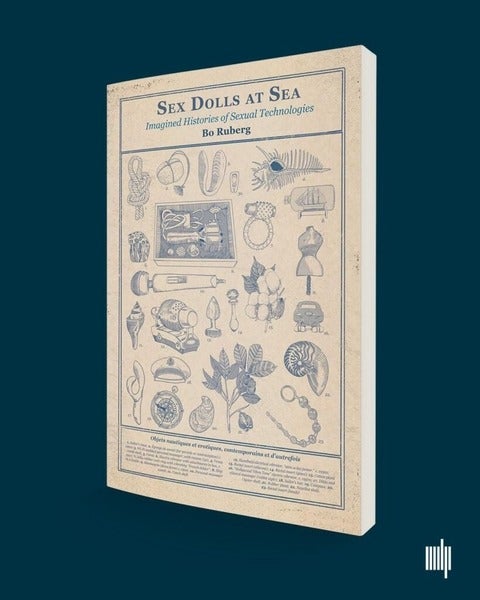
On April 19th Dr. Bo Ruberg presented Imagined Histories of Sexual Technologies” at the Games Institute to an audience of internal and external researchers. Dr. Ruberg is an associate professor at the University of California, Irvine, whose research explores gender and sexuality in digital media and digital cultures.

Each year many GI faculty and student members present at the Canadian Game Studies Association conference, better known as CGSA.

GI faculty member Gerald Voorhees is currently CGSA president and organized this year’s conference with the assistance of the CGSA executive.

This year nine GI members and Alumni presented a wide array of research ranging from the games industry and education to the depiction of animals in games.

GI members also participated as reviewers, panel moderators, and adjudicators for CGSA’s best paper competition.

Games Institute faculty member Ben Thompson (School of Optometry and Vision Science) was recently named a 2022 University Research Chair. Dr Thompson is the CEO and Scientific Director of the Center for Eye and Vision Research, and his research focuses on human brain plasticity and visual cortex particularly in promoting plasticity to improve outcomes for patients with brain-based visual disorders. 

Tuesday, July 5, 2022 1:30 pm - 1:30 pm EDT (GMT -04:00)

A Discussion on Health and Games

Join us on July 5th at 1:30 for a panel discussion with three Games Institute (GI) faculty members about their work in games and health. This event will be held both online and in-person and the GI. The panel will feature Dean of Health Dr. Lili Liu, Associate Professor Dr. Michael Barnett-Cowan and SYDE Instructor Dr. John Muñoz.

Games Institute PhD student and Research Communications Writer Sid Heeg (Environment) delivered a guest talk to the UW Staff Association about COVID-19 misinformation on May 12th, 2022.

Heeg’s talk Malicious Messaging: How Misinformation Operates Online covered how misinformation forms, how it differs from disinformation and how it appears online using examples from real COVID-19 misinformation that has been spread on social media.

They argued that the “COVID-19 Pandemic has made it clear that we are living in a time of rapid misinformation and distrust in public and government institutions.