


The Waterloo Institute for Nanotechnology (WIN) is a global leader in discovering and developing smart and functional materials, connected devices, next generation energy systems, and therapeutics and theranostics. These discoveries by our scientists and engineers are fundamentally changing our world and helping solve some of humanity's most pressing issues. Our 285, 000 square foot, state-of-the-art facility meets the highest scientific standards for the control of vibration, electromagnetic radiation, temperature, and humidity, making it a global centre of excellence for nanotechnology and its applications.
Why is nanotechnology important? It is about creating new materials and improving ways of manufacturing products. To be more efficient, better, stronger and cheaper. Also improving the economy, environment and society. To achieve societal impact and a sustainable future, WIN has now mapped its thematic areas with the United Nations Sustainable Development Goals.


Events

WIN Seminar Series: Hirohito Yamazaki
WIN Seminar Series: Hirohito Yamazaki at QNC 1501.
News
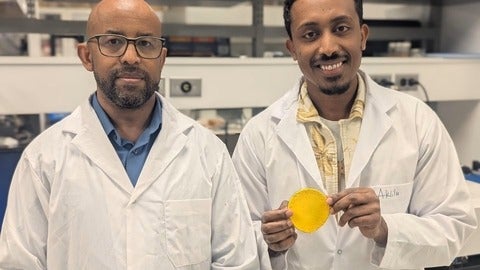
Member Spotlight : Flexible Polymer Shield Provides Radiation Protection
Researchers at the University of Waterloo created a lightweight, flexible material using tungsten nanoparticles that can replace lead in X-ray aprons. It provides similar radiation protection but is about 90% lighter, reducing strain and health risks for workers. The new material is also safer and non-toxic, and may be used in medical, industrial, and other radiation-shielding applications.
Member Spotlight : WIN Member Dr. Lyndon Jones Receives University of Waterloo Excellence in Science Research Award
Dr. Lyndon Jones, a member of the Waterloo Institute for Nanotechnology (WIN), has received the University of Waterloo Excellence in Science Research Award (Senior Career Category) in recognition of his internationally impactful work in ocular and contact lens research. His contributions to dry eye disease, biomaterials, and drug delivery have advanced vision science and improved outcomes for millions of contact lens users worldwide.
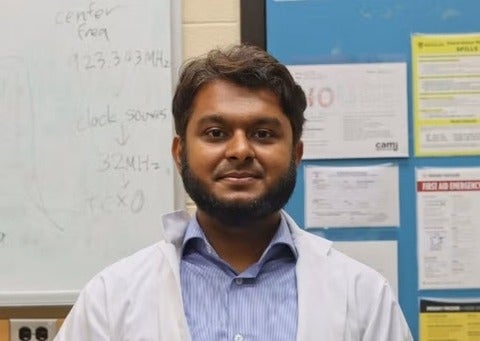
Member Spotlight : Celebrating Nazmul Hossain’s Scholarship Success with Mentorship from WIN Members
Nazmul Hossain, a PhD student in Mechanical and Mechatronics Engineering at the University of Waterloo, has received multiple prestigious graduate scholarships—including OGS, QEII-GSST, and NSERC CGRS-D—in recognition of his research in sustainable energy technologies. Supervised by WIN faculty members Dr. Y. Norman Zhou and Dr. Aiping Yu, his work in next-generation energy harvesting highlights the impact of strong mentorship and innovative research at Waterloo.