Future students

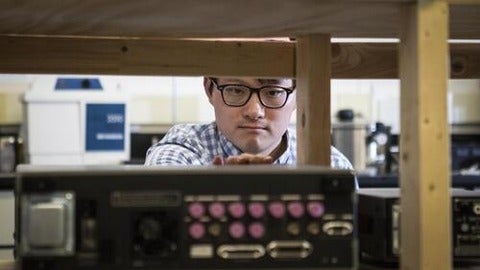
Researchers studying two-dimensional crystalline materials have observed an electromagnetic effect, called the nonlinear anomalous Hall effect, of unprecedented size. Their finding opens the door to exploring other quantum materials using their techniques and hints at promising applications in spintronic devices.

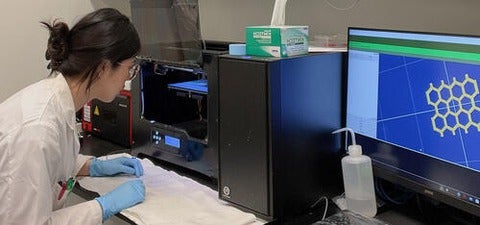
To a scientist, trial and error are common in laboratories to refine new tests and methods and look for potential problems on the small scale. But what happens when these techniques are meant for human tissues, such as for surgeries, medical tests, and treatments, where multiple different trials are not possible?

Tuesday, April 27, 2021

Adding speed to COVID-testing

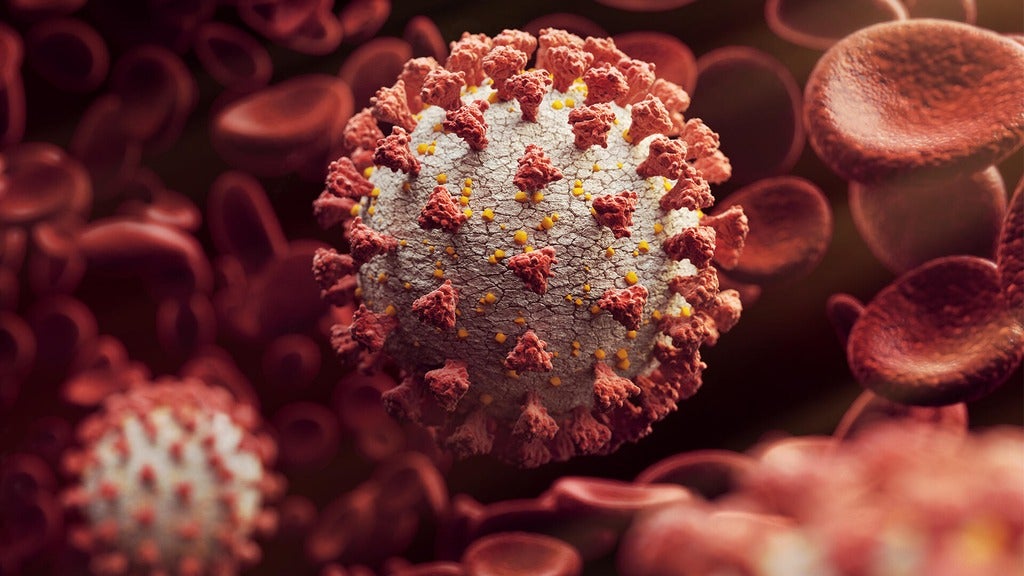
Researchers at the University of Waterloo are developing a new COVID-19 test that can be administered at home using saliva, aiming to deliver a positive or negative result in less than 20 minutes.

It’s a possible solution to the current delays in receiving test results and a much more pleasant option for those requiring frequent tests, researchers said. They hope the tests will become available over the counter at pharmacies across Canada.

“The use of paper devices coated with nanoparticles for COVID detection is a game changer.

A technology startup company founded by two Waterloo Engineering professors has earned a spot in the finals of an international pitch competition for water innovations.

AquaSensing, which was launched by WIN member Norman Zhou and George Shaker in 2019, booked its spot in the global Water Dragons event by finishing second in an Ontario heat featuring eight companies.

The Waterloo Institute for Nanotechnology (WIN) at the University of Waterloo (UWaterloo) and the economic development agency of Brainport Eindhoven in the Netherlands have taken another step towards bringing Waterloo’s top nanotechnology innovations to the EU market. 

Wednesday, April 21, 2021 1:00 pm - 2:00 pm EDT (GMT -04:00)

WIN Member Seminar Series: XiaoYu Wu

The Waterloo Institute for Nanotechnology (WIN) is happy to welcome Professor XiaoYu Wu to the WIN family! Professor Wu will deliver a seminar in order to introduce himself and his research to our community. Please join us in giving him a warm welcome. 

Registration is required. If you have any questions or issues registering, please contact win-office@uwaterloo.ca 

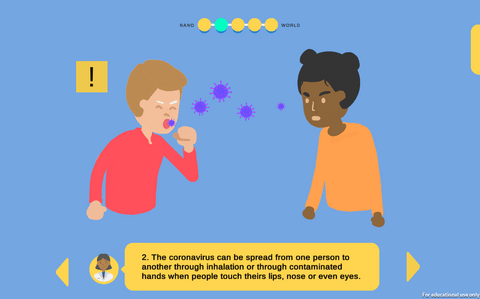
What is nanotechnology, and how does it help us everyday?

To answer this question, the Waterloo Institute for Nanotechnology (WIN) partnered with the Games Institute (GI) to create a playful online education app. This project aims to explore and explain how nanotechnology is used in our everyday lives using digital visual storytelling and game technology.

Each year, Waterloo Engineering recognizes Faculty members for their outstanding contributions and unwavering dedication to education and research. The recipients of the Faculty's four faculty and staff awards were recently announced by Mary Wells, dean of engineering, and celebrated virtually. This year three WIN members were awarded, see below for their names along with the award descriptions.

The Engineering Research Excellence Award honours outstanding research accomplishments, innovative ideas and dedication to the Faculty’s research. The award honorees are:

The province is investing $2.5 million to accelerate the development of wearable contact tracing technology Waterloo Engineering researchers helped design.

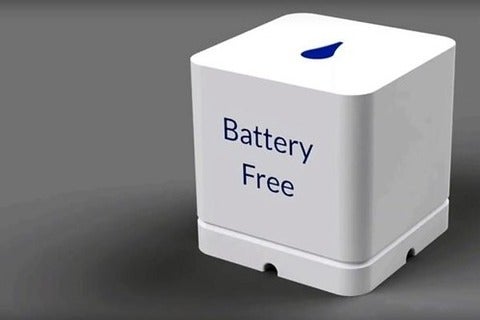
The government’s Ontario Together Fund will provide Facedrive Inc., a Toronto-based technology company, with the funding for its TraceSCAN system that alerts users to possible exposure to COVID-19 in the workplace.

Congratulations to WIN member Professor Graham Murphy of the Department of Chemistry, who was awarded the 2021 Keith Fagnou Award by the Canadian Society for Chemistry (CSC). The award, sponsored by the University of Ottawa and the CSC’s Organic Chemistry Division, is presented to a distinguished organic chemist in Canada within 12 years of receiving their PhD.