Future students

Congratulations to WIN member Jean Duhamel, Professor in the Department of Chemistry, who was awarded the 2021 Macromolecular Science and Engineering Award by the Chemical Institute of Canada. The award is presented to an individual who “has made a distinguished contribution to macromolecular science or engineering.

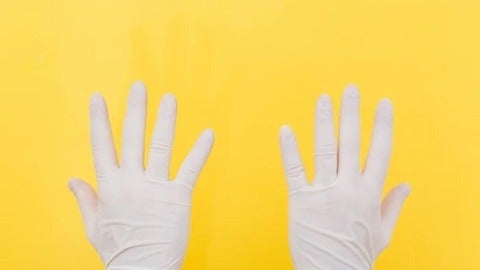
Single-use, medical-grade gloves could be safely reused up to 20 times when using certain disinfection methods – a welcome piece of news for frontline healthcare workers facing PPE shortages during the COVID-19 pandemic.

In a new study of six viral disinfection treatments on two commonly used types of disposable gloves worn for personal protection throughout the pandemic, researchers at the University of Waterloo found that alcohol, UV and heat treatment could be acceptable disinfection methods that allow the reuse of gloves up to 20 cycles.

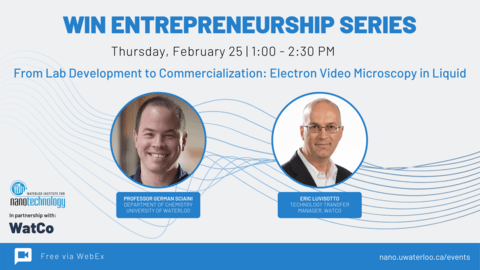
Thursday, February 25, 2021 1:00 pm - 2:30 pm EST (GMT -05:00)

From Lab Development to Commercialization: Electron Video Microscopy in Liquid

Professor German Sciaini from the Department of Chemistry will introduce you to the new development in his research lab where capabilities of Transmission Electron Microscopy in liquid are pushed to its extreme. You can now take images and even record videos of moving nanoparticles with unprecedented resolution. Learn how WatCo is helping Professor Sciaini's group commercialize his technology, and how various types of Intellectual Property come to play.

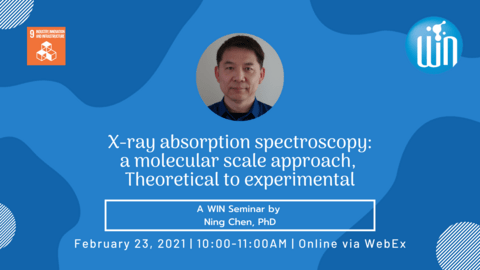
Tuesday, February 23, 2021 10:00 am - 11:00 am EST (GMT -05:00)

WIN Seminar Series: Ning Chen, PhD

The Waterloo Institute for Nanotechnology (WIN) is pleased to present an WIN Seminar talk by Ning Chen, PhD, senior staff scientist and beamline responsible for the Hard X-Ray MicroAnalysis beamline (HXMA) at Canadian Light Source (CLS)

Thursday, November 26, 2020

Turning a new artificial leaf

When Yimin Wu set his sights on finding a solution that would impact both sustainable energy and climate change, he turned to nature for his inspiration.

“Green house gases and CO2 are a big problem that lead to climate change,” says Wu. “I looked at how we could mimic plants and nature. Plants absorb CO2 and water and use sunlight to convert them to glucose — fuel for the plant. I wanted to look at the possibility of using a catalyst with CO2 and water to convert into a useful fuel for human use.

As the first doses of the Pfizer COVID-19 vaccine arrive and are administered in Ontario, researchers in Waterloo Region are trying to design a needle-free option.

The work is still in the pre-clinical stage and their efforts are highlighting the University of Waterloo's dedication to fighting the pandemic.

Thursday, February 4, 2021 1:00 pm - 2:00 pm EST (GMT -05:00)

WIN Member Seminar Series: Hamed Shahsavan

The Waterloo Institute for Nanotechnology (WIN) is happy to welcome Professor Hamed Shahsavan to the WIN family! Professor Shahsavan will deliver a seminar in order to introduce himself and his research to our community. Please join us in giving him a warm welcome. 

Registration is required. If you have any questions or issues registering, please contact win-office@uwaterloo.ca