On October 1, the Faculty of Mathematics welcomed its 2026 Alumni Award winners back to campus for a day of celebration, culminating in a panel discussion with current students. The award recipients talked about their time at Waterloo, career paths and lessons learned along the way.
Unsurprisingly, the conversation turned to AI. Students asked about how the technology is transforming modern workplaces and how they can prepare for this new reality. The panelists shared a reassuring message: the skills that have long made Waterloo graduates successful are more valuable than ever.
Here are some takeaways from the wide-ranging and lively discussion.
Strong mathematical foundations remain essential
Heath Windcliff, (BMath ’98, MMath ’00, PhD ’03) Execution, Quadrature, 2026 J.W. Graham Medalist
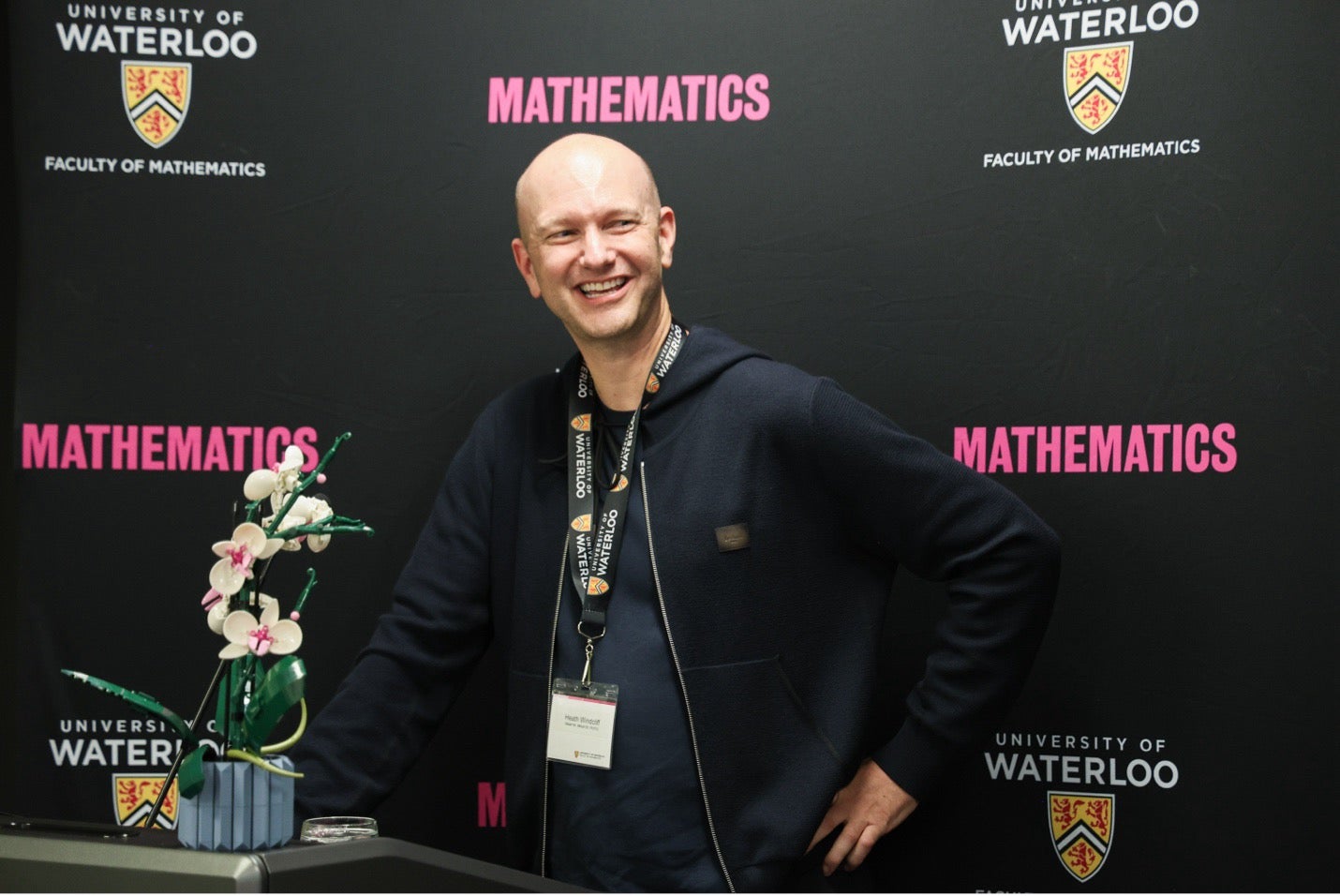
As a PhD student at Waterloo, Windcliff taught many of the same courses he took as an undergraduate. Returning to this material after many years, he was surprised to discover that he still had more to learn. Subjects like linear algebra revealed new depths with each engagement.
Later in his career, Windcliff realized just how valuable this experience was: so much of his innovative work in quantitative finance at Quadrature drew on the same mathematical foundations he had built as a student.
“Go back and do your first-year stats course three times. Do your first-year calculus course four times. Do your first-year linear algebra course another two or three times. Go and learn data structures a few more times,” advised Windcliff. “The reality is that all the fancy math that we do in industry is sitting on top of the foundations of those first-year courses.”
Knowing how to define a problem is as important as being able to solve it
Han Zhao (MMath ’15), Assistant Professor, Computer Science, University of Illinois Urbana-Champaign, 2026 G.O.L.D. Alumni Achievement Medal recipient
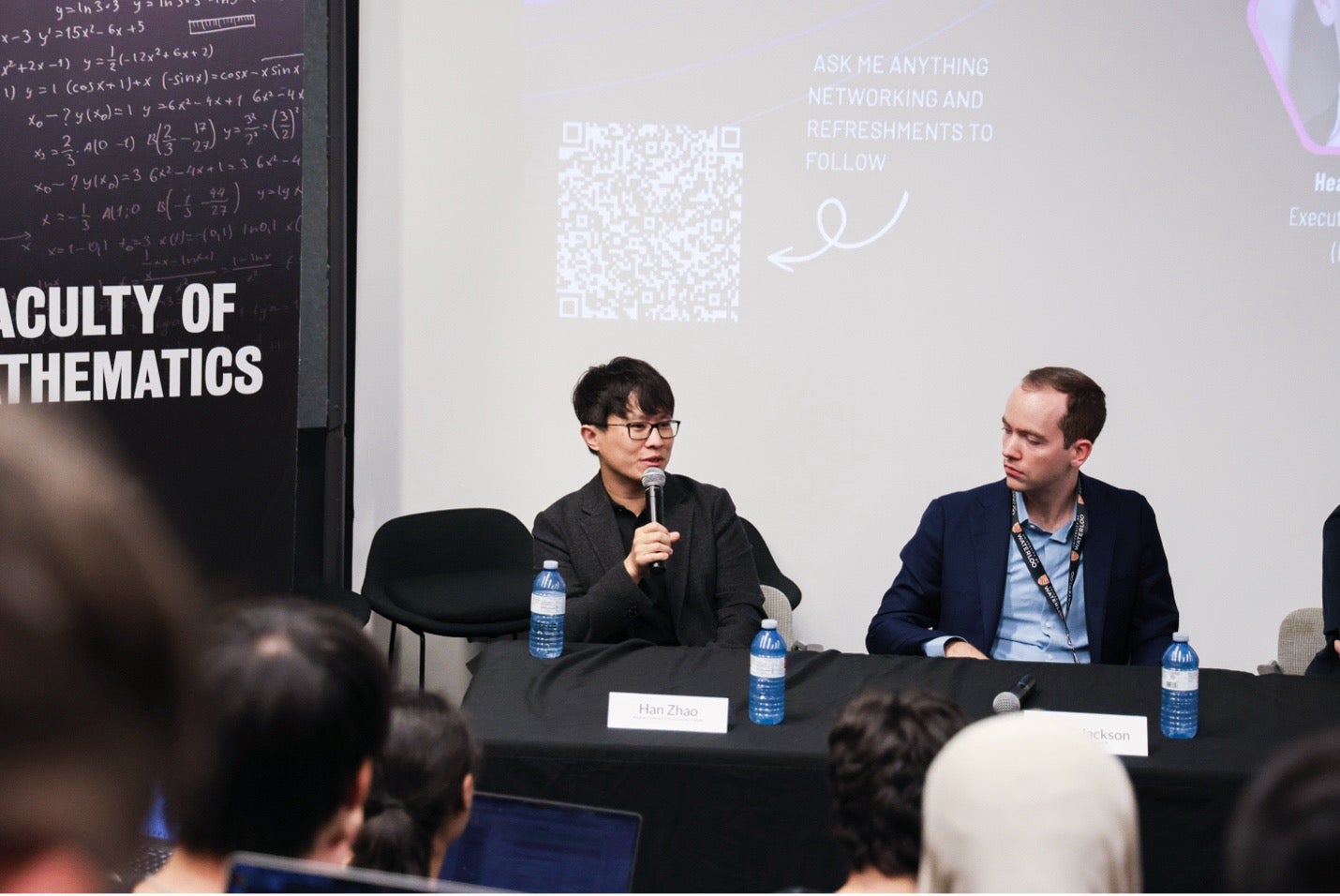
AI is increasingly capable of tackling the most difficult math and computer science problems, but Zhao, a machine learning researcher at the University of Illinois, believes researchers still play an indispensable role in advancing mathematical knowledge. He pointed out that while AI can be a powerful tool for solving well-defined problems, effectively formulating those problems remains fundamentally human work. “There are two parts of the research: one is how to formulate a problem, and two is how to solve it,” said Zhao.
“AI can help with the second part, especially for machine learning and computer science in general. But defining problems still relies on individual researchers. And the success of the solution depends a lot on how you pose the problem.”
What you know, but AI doesn’t, is a valuable resource
Jacob Jackson (BMath ’19), Research Lead, SpaceXAI, Research 2026 G.O.L.D. Alumni Achievement Medal recipient
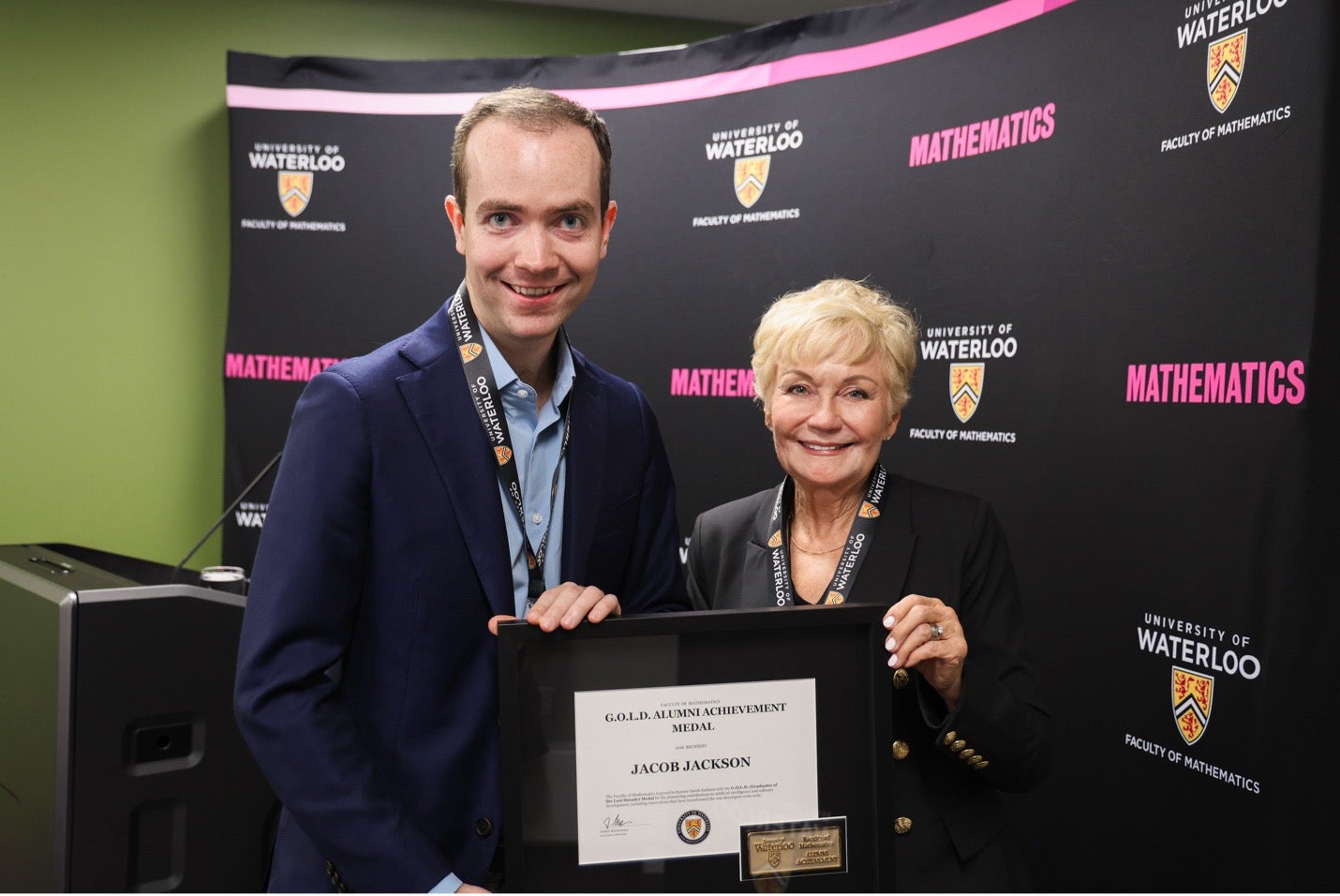
While AI can now match or exceed human performance at certain narrowly defined tasks, Jackson, who is building frontier AI models at SpaceX, points out that humans retain certain key advantages. This includes the capacity to learn directly from real-world experience. While AI can process vast amounts of information, it generally lacks the ability to gain new knowledge from exploring the physical world, taking real-time action and observing results first-hand. Jackson urged students to lean into their advantage, seeking out knowledge that does not exist on any machine.
“The one thing I think will be important is having information that the AI doesn’t,” said Jackson. “AI can read the whole internet. It knows a lot of stuff, but it doesn’t necessarily know everything. If you’ve experienced something in the real world, observed something that AI doesn’t know, you can use in conjunction with AI. But you need to be going out into the world and doing stuff.”
Your Waterloo education will put you in high demand
Susan Heystee (BMath ’86), Vice Chair Board of Directors, Ouster, 2026 Alumni Achievement Medal recipient
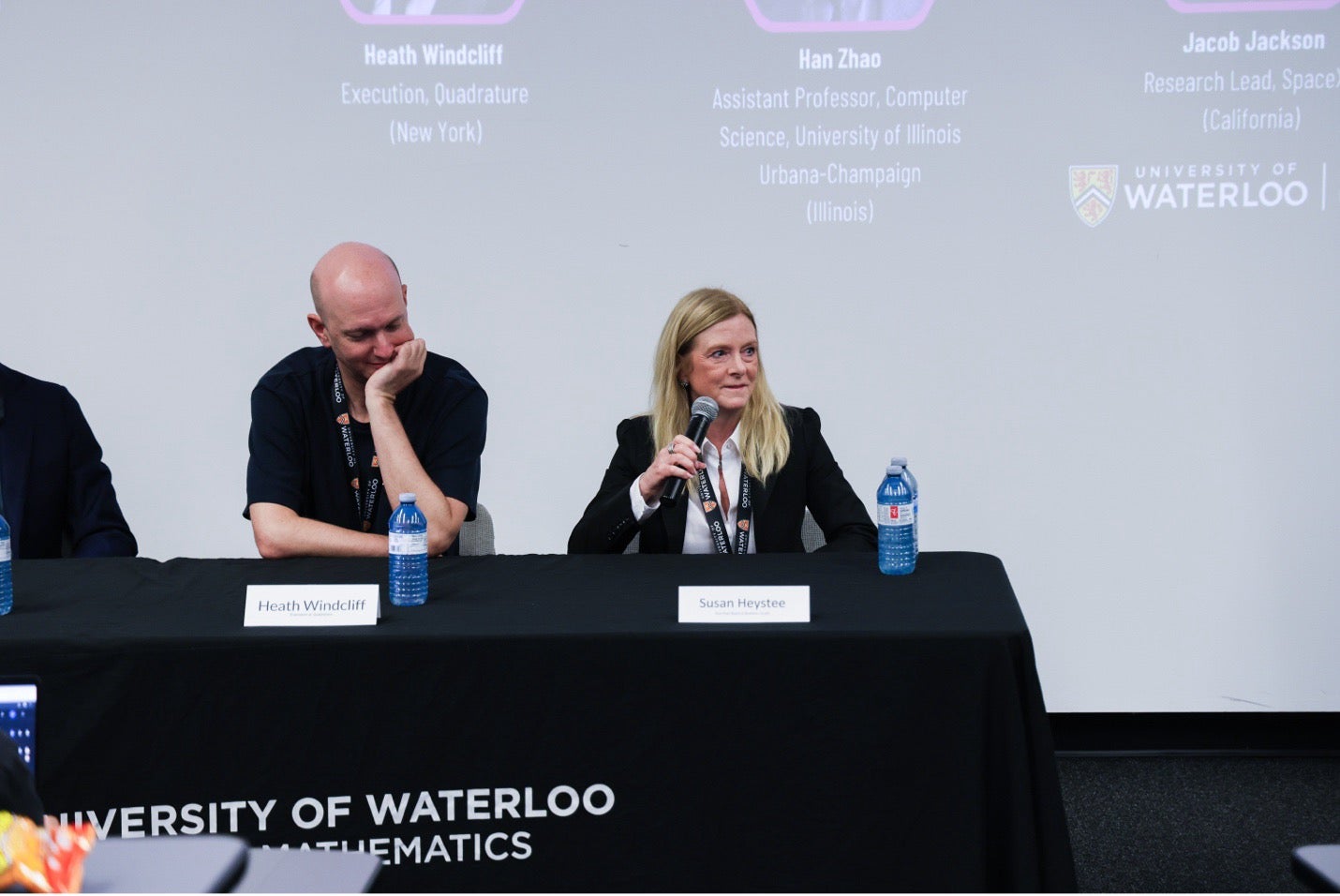
At a time when anxieties run high about the job market for new graduates, Heystee, a strategic advisor who is helping companies like Ouster scale, sees a world of opportunity for Waterloo students. She argued that the combination of strong mathematical foundations and entrepreneurial thinking positions graduates in high demand as organizations adapt to AI.
“What an amazing time to be in math and computer science,” said Heystee. “You have durable skills. You understand the algorithms. You have the training. You have the experience. I think there’s a big opportunity insofar as many organizations are going to look to Faculty of Mathematics students to help guide and steer them through this new age. “You’re incredibly well positioned. I would love to be in your shoes. The challenge for you is figuring out how we can apply AI to solve problems, whether it’s in healthcare, construction or software. This is a transformation like we had with the internet, but in many ways more powerful. It’s going to be a lot of fun.”
If you know an alum who deserves recognition, nominate them for an award.