More than 100 researchers and students from across Canada and around the world attended the 53rd annual Canadian Operator Algebras Symposium (COSY), which took place from May 26-30 at the University of Waterloo. This is the first time Waterloo has hosted since 2015.
“We were really happy with how the conference went this year,” says Dr. Matthew Kennedy, a University Research Chair, professor in the Department of Pure Mathematics, and one of the organizers of the conference. “A significant number of the top people in the field were plenary speakers.”
Operator algebras is part of functional analysis, a branch of mathematics. It has applications to representation theory, differential geometry, quantum statistical mechanics, quantum information and quantum field theory.
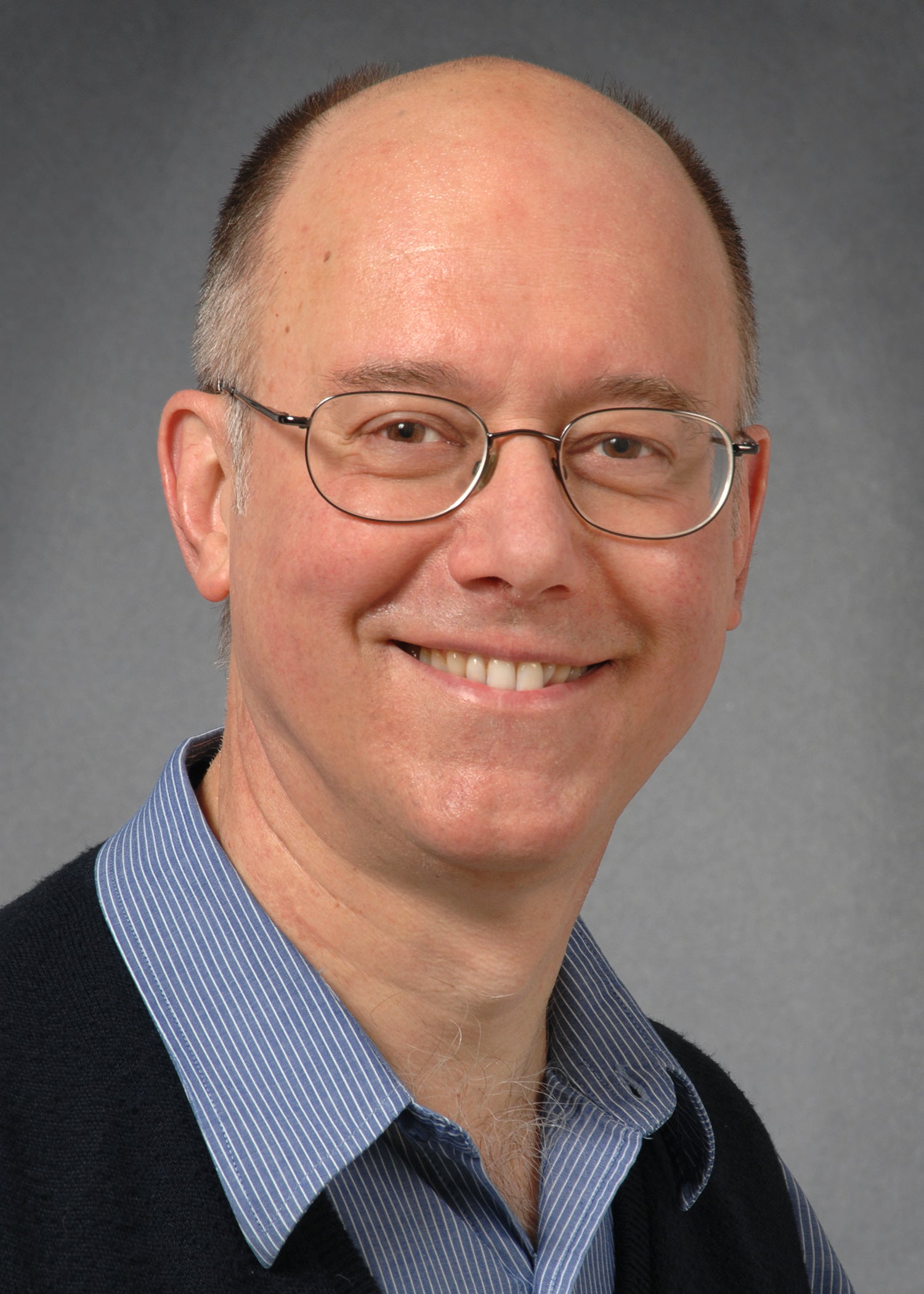
While COSY’s location varies from year to year, this year’s location was particularly apt because it honored Dr. Ken Davidson, a professor in Pure Mathematics at the University of Waterloo. “Celebrating Ken Davidson’s outsized influence on operator algebras in Canada,” the conference closed with a special “Kenfest” on May 31, featuring talks from Davidson’s students, postdocs and collaborators.
“I was at Waterloo for ten years as an undergraduate and PhD student, and was one of Ken Davidson’s students, so I’m really happy to be back” says Dr. Boyu Li, an assistant professor of mathematics at New Mexico State University. “I’m in a general Math department now, so it’s great to see friends here and talk to people working on the exact thing that I do.”
“The thing I’ve enjoyed most about the conference is talking about Ken,” agrees Dr. William Slofstra, an associate professor in Pure Mathematics at Waterloo. “I was his student years ago, so I knew a little bit of his work, but it’s been nice to see the impact he’s had on others.”
Prior to the official start of COSY, Waterloo also hosted a two-day conference for early career researchers interested in operator algebras, titled Conference for the Operator-Minded Philomathic Youth (COMPhY).
Jennifer Zhu, a PhD candidate in quantum information, has attended two COSY conferences in the past, but she particularly appreciated how COMPhY was designed for young researchers. “It’s nice to see people your academic age and make connections early on,” she says. “A lot of these talks, also, go right over your head as a grad student, so having a lead up that was about operator systems – something I had learned before but needed a review – was so helpful leading up to this conference.”
Vaughn Gerrits, an undergraduate student in mathematical physics, also attended both COMPhY and COSY because he is doing an Undergraduate Research Assistantship with Kennedy and Dr. Nico Spronk. “I found COMPhY really helpful for giving me a sense of what this research is about,” he says. “And I think it’s really nice to see how tight knit this community is.”
During the conference, the recipients of the Israel Halperin Prize were also announced. The prize is awarded every five years by the Canadian Annual Symposium on Operator Theory and Operator Algebras to early career researchers. This year two individuals received the award: Dr. Michael Hartz, who did his PhD at Waterloo and is now a professor at Saarland University in Germany, and Dr. Christopher Schafhauser, who did a post-doc at Waterloo and is now an associate professor at the University of Nebraska Lincoln.
“Beyond the research, it’s the interactions you have with people between talks – people from the other side of the world – that really makes this gathering special,” says Dr. Stuart White, professor of mathematics at the University of Oxford. “It’s my first time at COSY, and it’s just been fantastic. It really brings the Canadian community and scholars worldwide together. We started a similar conference in Britain last year because we were inspired by how effective this conference is for the operator algebras research community.”