Congratulations to Zoya Abbasi and Jaden Saïd, winners of the 2026 Applied Mathematics, Modeling and Computational Science (AMMCS) prizes at this year’s AMMCS International conference.
AMMCS aims to promote interdisciplinary research and collaboration involving mathematical and computational sciences within a larger international community, and highlight recent advances in applied mathematics, modeling and computational science. The interdisciplinary international conference started in 2011 and was hosted in Waterloo this year.
Zoya Abassi
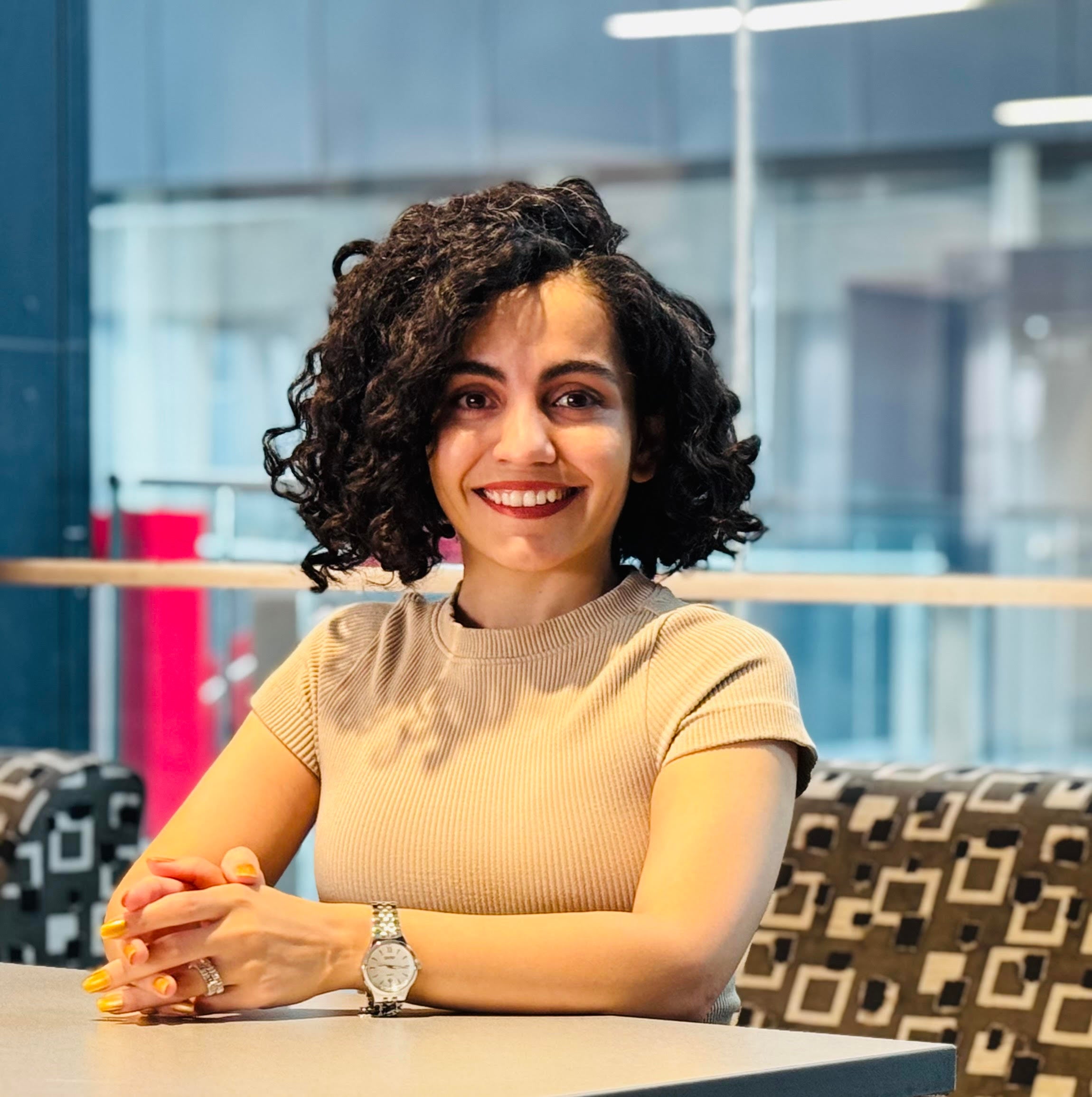
Abassi. a PhD Candidate in Applied Mathematics, received the 2nd place award in the Special Session Talks Category. This award recognizes the talk she gave on her research, titled “Stability Analysis of Multilayer Agent-Based SIWS Epidemic Model.” This is Abassi’s second time receiving this award. She first received it in 2023.
Zoya explains, “My research focuses on developing mathematical models and control methods to better understand and manage the spread of infectious diseases, particularly in interconnected communities.”
“I am very honoured and grateful to receive this recognition.” Zoya says. “AMMCS has been especially meaningful to me. I sincerely thank my supervisor, Professor Xinzhi Liu, my collaborators, and everyone who has supported my research and academic journey.”
Abassi plans to continue developing her research in mathematical modelling, control and AI-enabled approaches for epidemic systems, while exploring postdoctoral opportunities.
Jaden Saïd
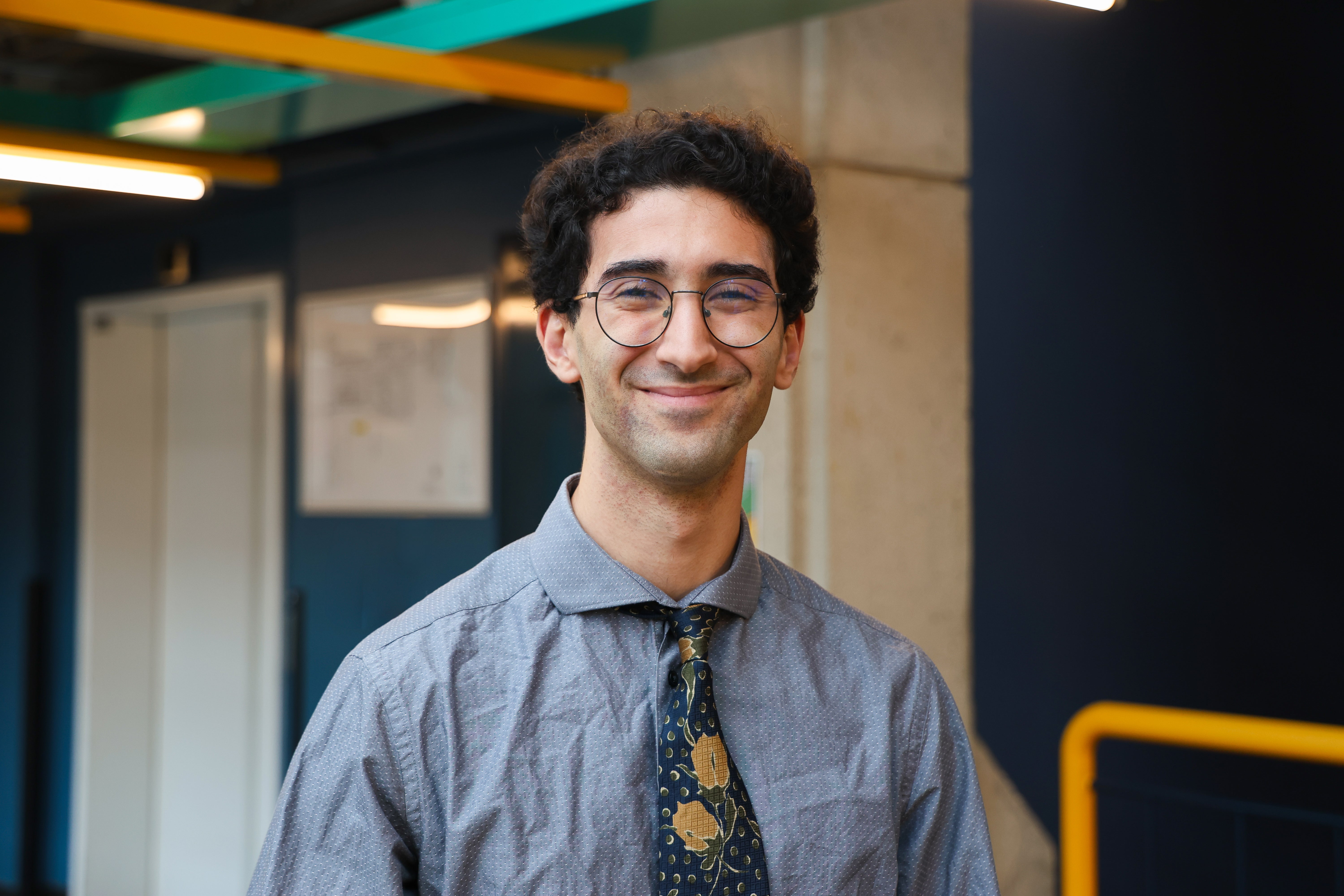
Saïd is a first-year master’s student in the Department of Applied Mathematics. He received the 2nd place Poster Session prize in recognition of his poster “Glimpses of Fractal Analysis on the Navier-Stokes Regularity Problem.”
While the poster he presented is quite different from the direction he’s taking with his master’s research, he wanted to communicate the then central problem for the Navier-Stokes equations to a more general math audience.
“Before it was recently 'solved', people wanted to know if solutions to these equations would 'blow up’ or stop making physical sense. The mathematicians who published the result I presented studied the geometry of the set of points where blow up was possible, they did so using methods originally devised to study fractals,” he explains.
Saïd believes that a lot of the problems society and species face require a holistic, interdisciplinary perspective, and that AMMCS is an example of the scientific community embracing that fact.
“I think that interdisciplinary meetings really broaden people's horizons to a lot of the research they wouldn’t otherwise see,” he says. “The opportunity to ask questions in person and have conversations is so important for understanding other people's research and building necessary connections between disciplines.”
He thanks Professor Herb Kunze at the University of Guelph for inviting him to the conference. “I really didn't think I would win anything, but I'm so happy that people found value in the poster,” he says, “I am truly grateful!”