Researchers at the University of Waterloo have developed a new method of harnessing solar energy. In an innovative study, an algorithm was developed to increase the efficiency of the solar photovoltaic (PV) system, while reducing the volume of power currently being wasted due to a lack of effective controls.
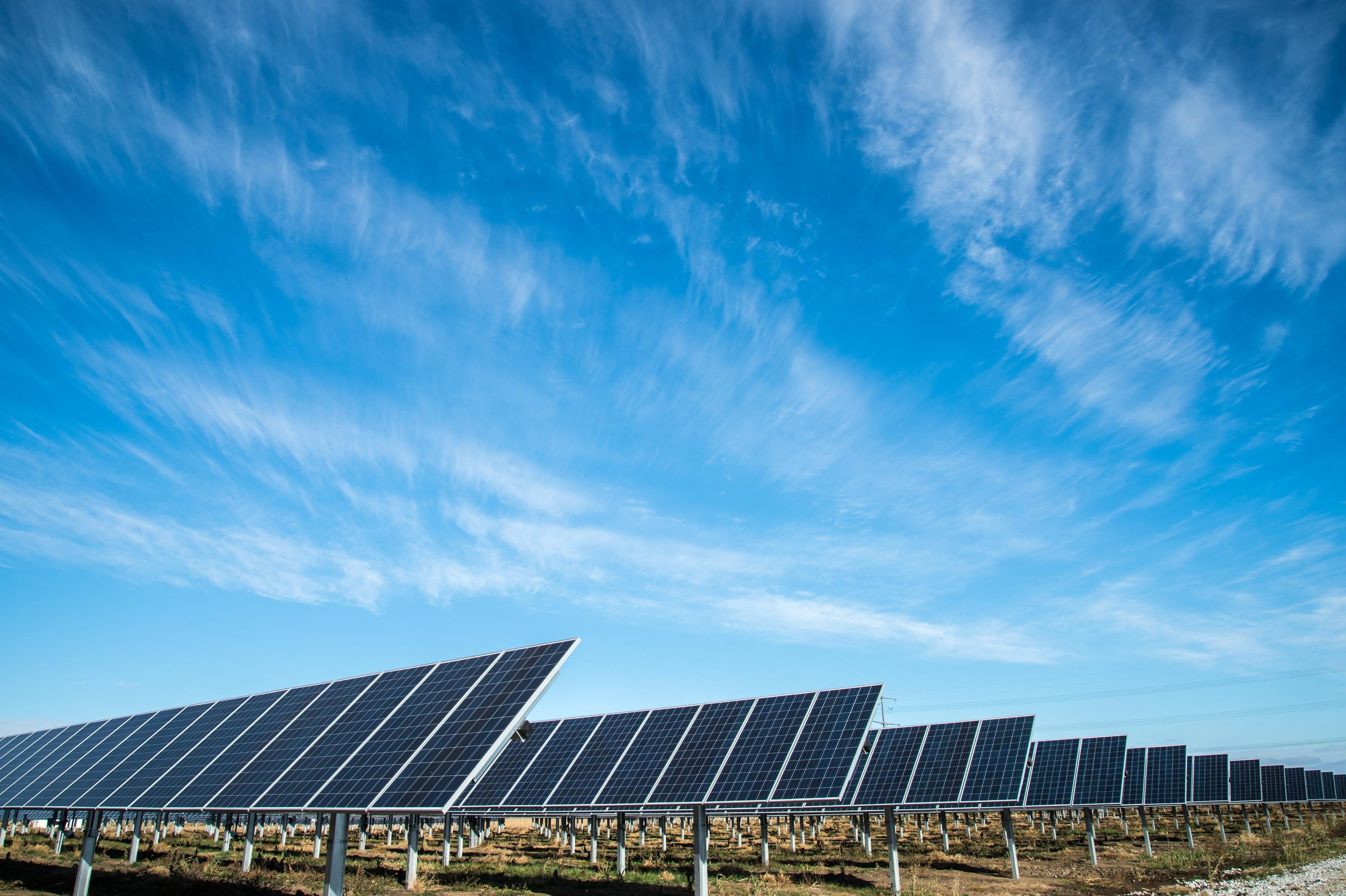
“Hardware in every solar panel has some normal efficiency, but there should be some appropriate controller that can get maximum power out of solar panels,” said Milad Farsi, a PhD candidate in Waterloo’s Department of Applied Mathematics. “We do not change the hardware or require additional circuits in the solar PV system. What we developed is a better approach to controlling the hardware that already exists.”
The newly developed algorithm allows controllers to better deal with changes in the maximum power point of a solar PV system. These fluctuations typically have led to a waste of potential energy collected by solar panels.
Based on simulations conducted in the study, savings in energy may be substantial with large-scale use, such as solar farms or areas that have thousands of local solar panels connected to a power grid. Farsi pointed out that the savings could be even greater under fast-changing environmental conditions that can cause fluctuations.
“Taking Canada’s largest PV plant, for example, the Sarnia Photovoltaic Power Plant, if this technique is used, the savings could amount to 960,000 kWh/year, which is enough to power hundreds of households,” Farsi explained.
The study, titled “Nonlinear Optimal Feedback Control and Stability Analysis of Solar Photovoltaic Systems”, was authored by Farsi and Professor Jun Liu of Waterloo’s Department of Applied Mathematics. It was published in the journal IEEE Transactions on Control Systems Technology.