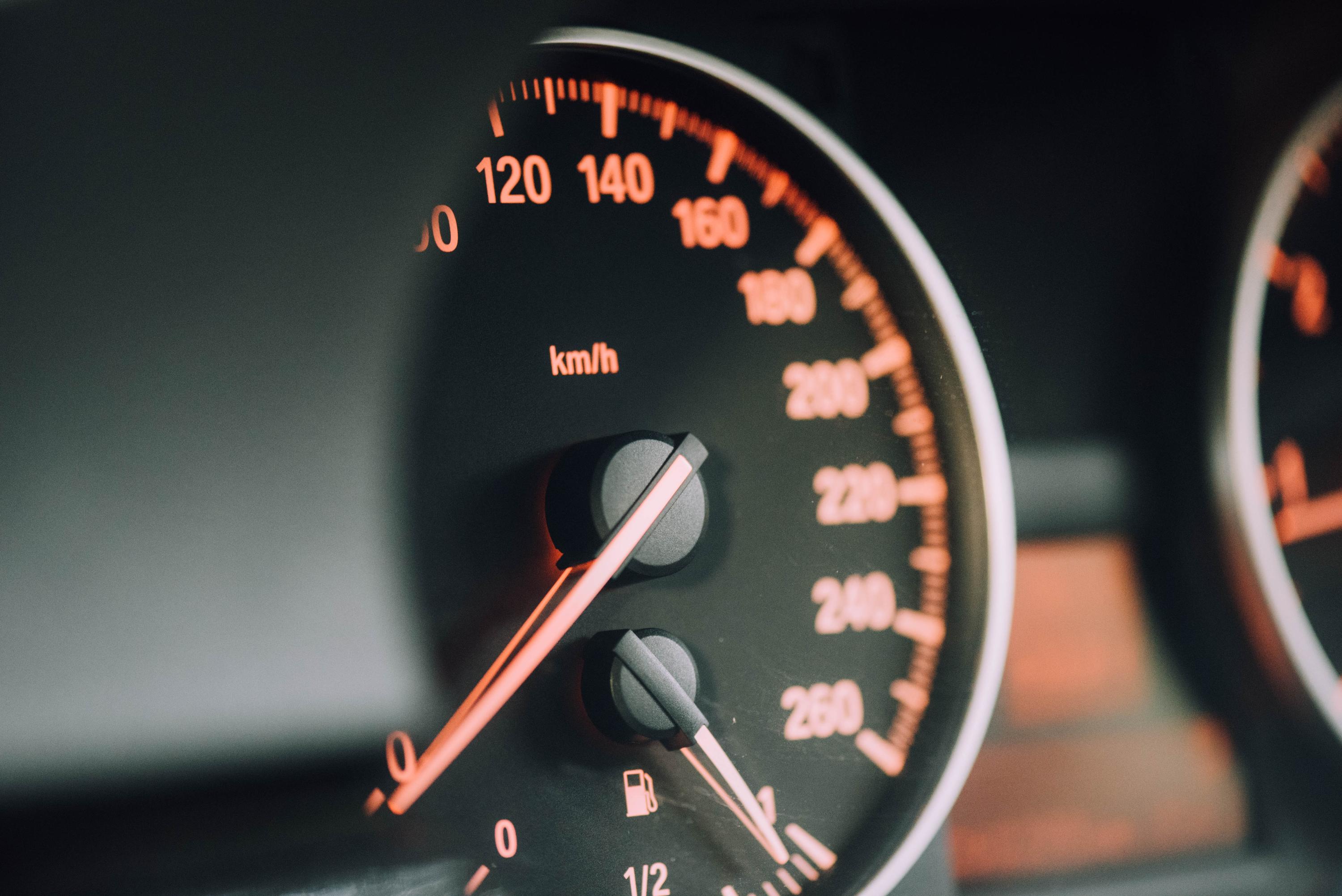
In a study examining data from 28 million trips, researchers at the University of Waterloo have determined that speeding is the riskiest form of aggressive driving and the strongest predictor of car crashes.
This data was taken from insurance companies in Ontario and Texas who have clients with on-board diagnostic devices – a system installed on a vehicle to monitor the performance of major engine components. Three other forms of aggressive driving – hard braking, hard acceleration, and hard cornering – did not reveal any statistically significant links that predicted car crashes.
Researchers began by analysing the data to determine which crashes appeared to be caused by rapid deceleration. The vehicles in those crashes were then compared to a group of control vehicles that were not in crashes but were similar in geographic location, driving distance, and other characteristics.
When the crash cases were compared to the control cases and analyzed for several types of aggressive driving habits, speeding emerged as the key difference between the two groups.
“For insurance companies using this telematics data to assess who is a good risk and who isn’t, our suggestion based on the data is to look at speed, at people driving too fast,” said Stefan Steiner, a statistics professor in Waterloo's Faculty of Mathematics.
Steiner highlighted that the study was limited by several unknown factors, including different drivers using the same vehicle, and that more research is required to verify the findings.
The results of this study could suggest an improvement in the insurance industry by allowing fairer and personalized premiums based on actual driving behaviour rather than age, gender, or location. The data also suggests that roads can be made safer if drivers are given evidence that their speeding behaviour is dangerous.
The study, titled “Using telematics data to find risky driver behaviour”, was written by Steiner, adjunct professor Allaa Hilal from the Faculty of Engineering, statistics professor Jock McKay, and former mathematics post-doctoral fellow Manda Winlaw. It was published in the journal Accident Analysis and Prevention.