
Large amounts of waste heat produced by industrial processes is lost to the environment—but it doesn’t have to be this way. Thermoelectric generators are a streamlined way to capture some of that energy without any additional moving parts or fuel. These solid-state devices directly convert heat into usable electricity through a phenomenon called the Seebeck effect, where a temperature difference across thermoelectric materials generates a voltage. Madi Donohoe’s research as a PhD in Chemistry student focuses on developing more efficient and scalable materials for thermoelectric generators.

Madi Donohoe, (she/her), PhD Candidate in Chemistry

Madi Donohoe, (she/her), PhD Candidate in Chemistry

Madi Donohoe, (she/her), PhD Candidate in Chemistry

Madi Donohoe, (she/her), PhD Candidate in Chemistry
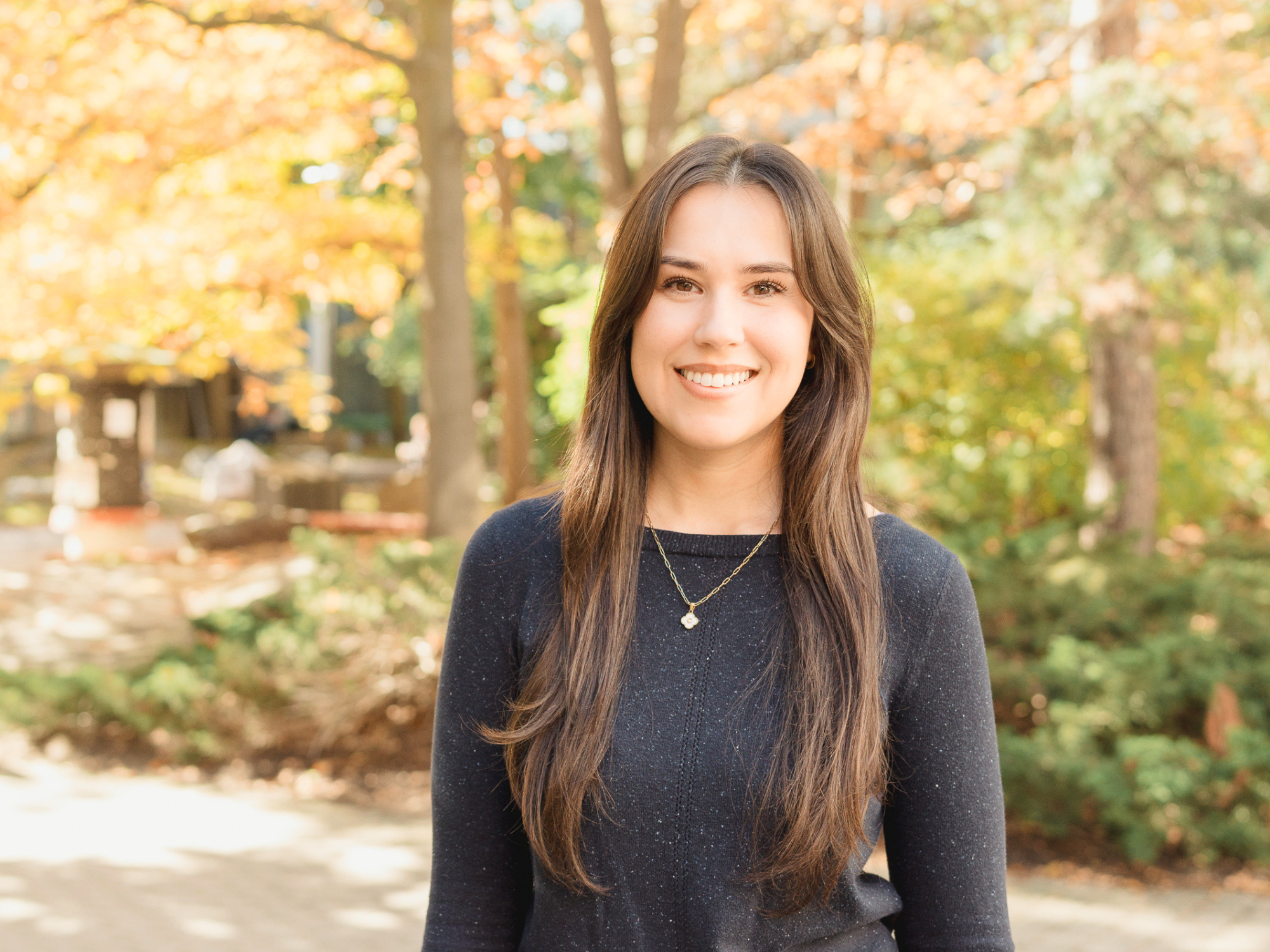
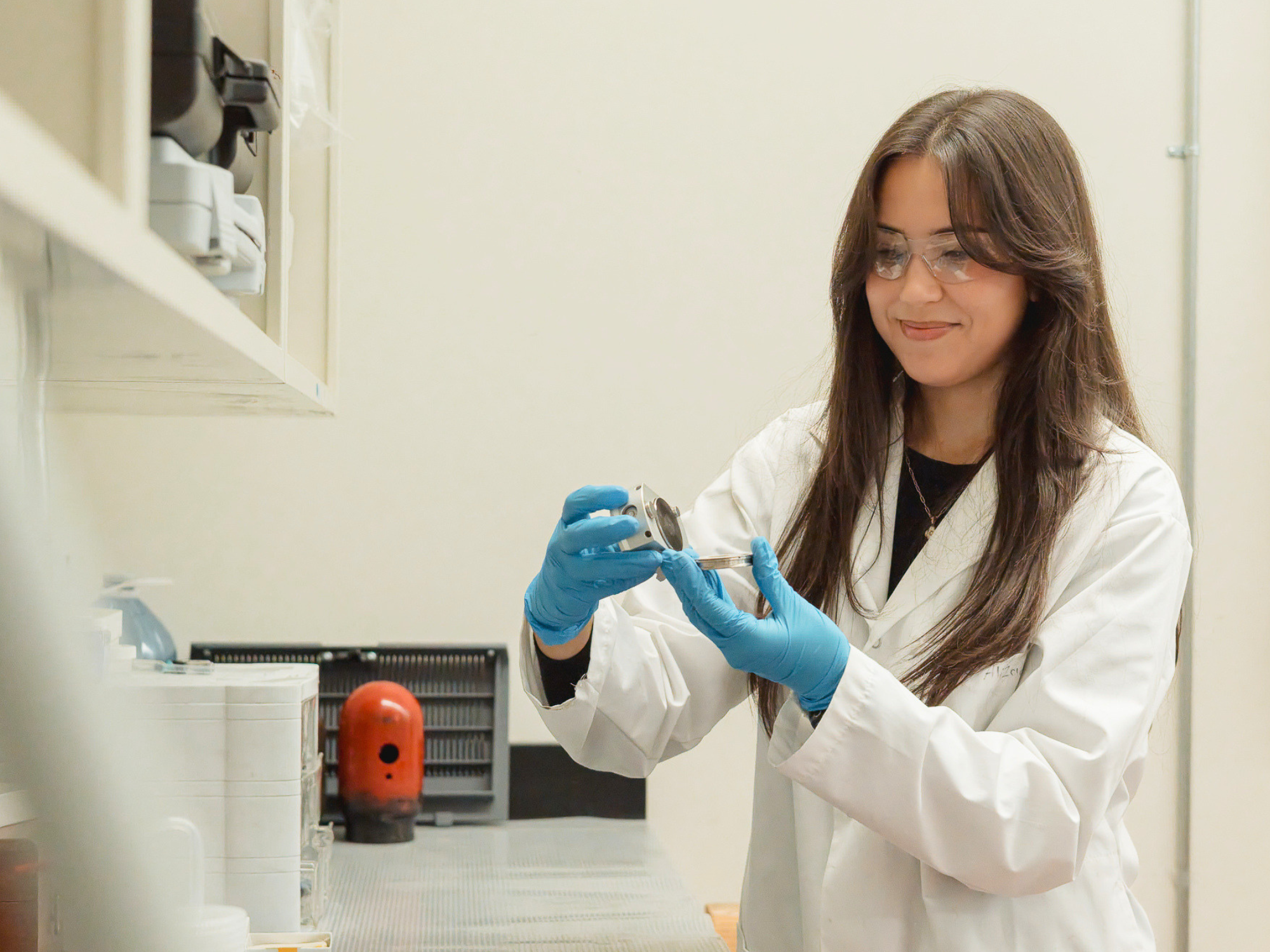
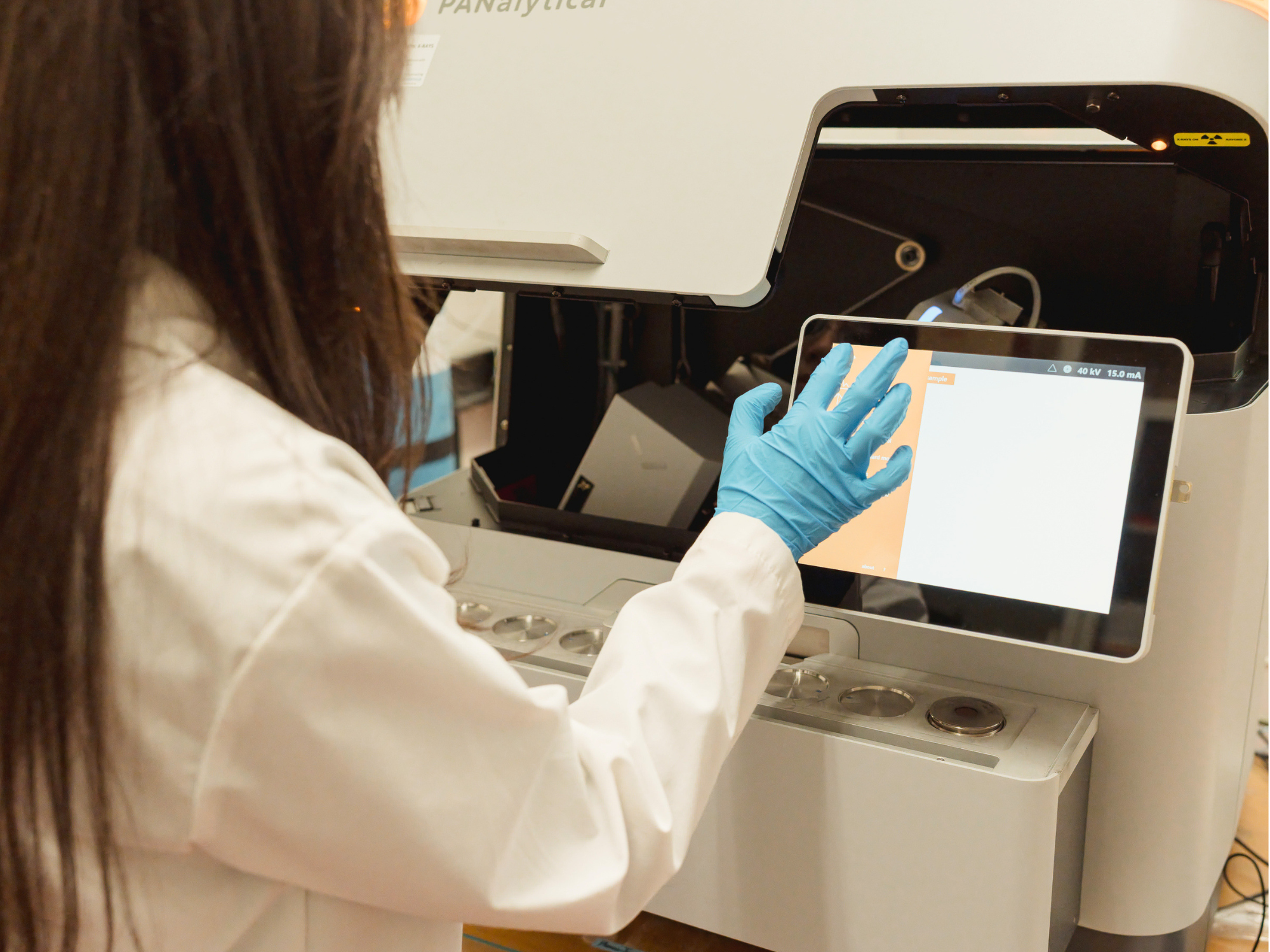
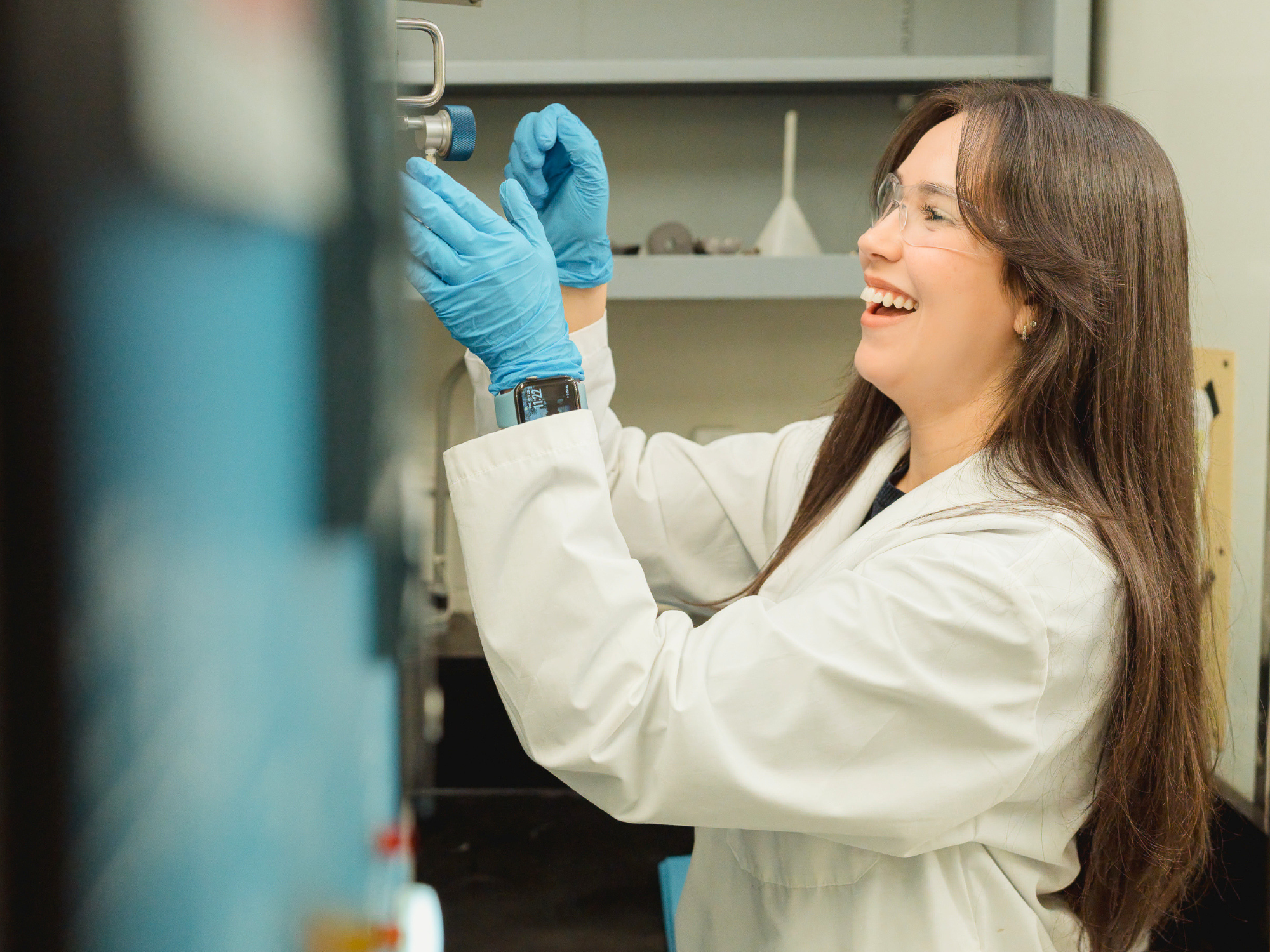
She works on improving bismuth telluride (Bi2Te3), one of the most used materials in the low temperature range, by making synthetic changes and adding small amounts of other elements to it such as selenium, sulfur, and copper. Donohoe then studies how these changes affect the way the material’s crystals form and its ability to conduct heat and electricity. Improving these materials could make thermoelectric generators more practical for large-scale industrial use, and, in the long term, reduce waste and lower environmental impact.
"As I enter the fourth year of my PhD studies, I can say I have had a great experience both academically and socially, with opportunities to work on research I’m passionate about, attend conferences, and network with the scientific community. I’ve also met some of my closest friends in graduate school, and so I’m extremely happy that I chose to continue my studies here.” - Madi Donohoe, PhD Candidate in Chemistry
Looking back on her time at the University of Waterloo, Donohoe credits much of her positive experience to the strong sense of community within the Department of Chemistry, beginning as an undergraduate student. Encouraged by the support of faculty, staff, and fellow students, she found an environment where she could grow both as a researcher and as a person. After starting graduate studies in the Master of Science in Chemistry program, her enthusiasm for research quickly convinced her to transfer into the PhD in Chemistry program just eight months later.
Interested in conducting research in graduate school?
We spoke with Donohoe about her experience as a graduate student and her goals for the future.
What is the working relationship like with your supervisor, Dr. Holger Kleinke?
I really appreciate the balance Dr. Holger Kleinke provides between guidance and independence in our working relationship. He is available to help me work through challenges in my research and gives me the freedom to develop my own ideas, design experiments, and explore questions I find interesting.
When writing my first manuscript, he was especially helpful in guiding me through the publication process, which felt quite daunting. He has also encouraged me to attend and present at conferences, which has helped me become more confident in communicating my research, meeting other researchers in my field, and building connections with industry professionals.
What are you looking forward to in the near future regarding your studies?
I recently presented my research at a materials science conference in Pittsburgh in October, and it was a great opportunity to connect with researchers from different areas, learn about new research, and build valuable connections. I’m currently writing my first review paper, which has involved a lot of reading and a comprehensive look at the research in my field to identify trends and gaps in our current understanding. I’m looking forward to finishing this fall and hopefully getting it published, which will be a great milestone for me!
How did you become involved with the Chemistry Graduate Student Society (CGSS) and what do you enjoy about your role so far?
I became involved with the CGSS very early in my graduate studies because a friend who was involved encouraged me to join. Since then, I’ve had the opportunity to take on several different roles, including social representative, co-vice president, co-president, and Graduate Student Association representative. Through these roles, I’ve helped organize social events and initiatives for graduate students, while also representing the Chemistry graduate student community and helping advocate for student needs.
My favourite part of the experience has been meeting people from all different areas of Chemistry and getting to know students outside my own research group. Being involved in CGSS has also given me the opportunity to develop leadership and organizational skills while helping create a welcoming community.
How do you like to spend your time outside of your studies? What do you enjoy about living in Waterloo Region?
I enjoy going to hot yoga and Pilates classes, watching movies and going to concerts with friends, cooking fun dinners, and going on walks with my boyfriend and our dog. One of my favourite things about living in the Waterloo Region is how easy it is to get around without a car, whether by walking or public transit. There are always events happening and new restaurants, cafés, and places to explore, so there’s never a shortage of things to do. I’ve lived in the region for about nine years now, and I still feel like I’m discovering new things to enjoy!