This page lists the current PhD students. For a list of previous years, see Our PhD Graduates.
Atefa Abdallah
Sadia Afrin

Email: s5afrin@uwaterloo.ca
Linkedin: Sadia Afrin
Sadia Afrin is a PhD Candidate under the stream of Rhetoric and Communication Design (RCD) at the Department of English Language and Literature in the University of Waterloo. As a sessional instructor, she taught in Arts First and English Department. She brought innovative, reflective, and Socratic seminar classroom practices in teaching courses titled “Rebellion to Academic Writing” and “Introduction to Academic Writing” to the First-Year students from both Arts and STEM. Currently, she is working on her dissertation to complete her degree.
Sadia sees herself as an energetic and dedicated teacher, researcher, and learner with 14 years of teaching and academic service experiences at the post-secondary education in the U.S., Canada, and Bangladesh. She has her B.A and M.A in English Literature from Bangladesh. Then Sadia did her second master’s degree in the College of Education at the University of Oklahoma, the U.S. To be specific, she did M.Ed. majoring in “Instructional Leadership and Academic Curriculum” with an area of concentration- English Education. She has published a book chapter as the first author titled: “Trajectories of Language, Culture, and Geography in Postcolonial Bangladesh” in the book Handbook of the Changing World Language Map publishedby Springer International Publishing. Also, she published in the popular online journal Medium in collaboration with University of Idaho educators (link provided below). She has and continues to present at various prestigious conferences, such as IWCA, CCCC, and MLA from 2016. She is originally from Bangladesh. Her areas of expertise are Post-colonial Literature and Theory, Writing Center studies, Composition and Rhetoric, Critical Pedagogy, Critical Race Theory, Counterstories, and Academic Writing.
Sadia’s research is invested in Writing and Composition studies and anti-racist classroom practices in the North American higher education, advocating for liberatory writing practices, creating equity in knowledge-making, and challenging colonial power structures within the educational system. She offers her experiences of epistemic injustice, counterstories, and essence of Freirean critical pedagogy so that non-white, non-traditional students can use their languages and cultural repertoire consciously in the Western academia for their rights to their own languages and rhetorical traditions. Her current focus is on decolonial writing practices to integrate cultural capitals of the multilingual, multi-cultural, and multi-ethnic identities in Canadian universities. Sadia strongly believes that liberatory writing practices can transform boundaries into bridges among various cultures and scholarships.
Maab Al-Rashdan

Email: Malrashd@uwaterloo.ca
Maab Al-Rashdan completed her first MA in English Language from the University of Jordan, her second MA in English Literature from the University of Waterloo and is currently a PhD candidate at the latter. She is the recipient of the UWaterloo’s Graduate Creative Writing Award - Doctorate (2024), Rhetoric Essay Prize - Doctorate (2022), and Beltz Prize in Literature - Doctorate (2021). Maab is also the recipient of the RhetCanada’s Michael Purves-Smith Student Paper Award (2021). Her research interests include Postcolonial Literature and Postcolonial Life Writing, Critical Race Theory (CRT) and Counterstory, Critical Discourse Analysis and Rhetorical Analysis.
Maab cherishes her coffee accompanied by reading and writing and admires watching documentary crime shows in her free time – if such time can be captured in any way… Her motto during her academic journey is: if your studies scare you with their mounting complexity, and infinite amount, scare them back with your passionate motivation, solid determination and ferocious organization! – At the end, the victory is all yours!
Becky Anderson

Email: becky.anderson
Twitter: @beckyanderson35
LinkedIn: Becky Anderson
Becky Anderson (she/her) completed a BA (English; French Studies), MA (Literary Studies), and GDip (Cognitive Science) at Waterloo. Becky is the recipient of the Provost Doctoral Entrance Award; a Jack Gray Fellowship; a W.K. Thomas Graduate Scholarship; two Ontario Graduate Scholarships; and a SSHRC Doctoral Fellowship. Becky’s research examines the immersive potential of fantastic ontologies across different forms of media. She’s also concurrently pursuing a Certificate in University Teaching from the Centre for Teaching Excellence to complement her extensive instructional experience with a firm theoretical grounding in the scholarship of teaching and learning.
In addition to her doctoral studies, Becky is a Career Advisor at the Centre for Career Development where she supports folks navigating their path to further education.
Sarah Casey

Email: smcasey@uwaterloo.ca
Sarah Casey is an English PhD student at the University of Waterloo, with over fifteen years experience as a communications professional in the health, wellness and fitness industry. Her research project, Alternative Risk, focuses on the rhetoric of risk and disinformation, engaging with the study of risk across disciplines (sociology, anthropology, political and management sciences) to understand how risk discourse contributes to social and political polarization. She holds an MA in English (Rhetoric and Communication Design) and a BA in Rhetoric, Media, and Professional Communication, both from the University of Waterloo.
Sarah is an honoured recipient of the Michael Purves-Smith Paper Award from The Canadian Society for the Study of Rhetoric (2024), the UW Beltz PhD Essay Prize (2025 and 2024), the Provost Doctoral Entrance Award for Women (2023) and the UW English Master’s Essay Prize (2023), and has served as a research assistant on multiple federally funded research grants.
In her spare time, Sarah can be found on the squash court, playing for the Waterloo Varsity squash team. In the 2024-25 season, she was named "most improved player" on the women's squad.
Kellie Chouinard

Email: k2chouinard@uwaterloo.ca
Kellie Chouinard (she/they) is a PhD candidate in English. She holds a BA (Hons.) in English, Creative Writing, and History from the University of Windsor, an MA in English and Creative Writing from the University of Calgary, and a graduate certificate in Public Relations from Fanshawe College. Kellie is also an accomplished writer and was awarded a literary creation grant from the Ontario Arts Council (2020) for a novel in progress.
Her SSHRC-funded dissertation research examines young women's transmedia stories about living with and beyond breast cancer.
Alyssa Clarkson

Alyssa Clarkson (she/her) is a PhD student in English Language and Literature at the University of Waterloo. She holds a BA in History from the University of Waterloo and an MA in English Rhetoric and Communication Design from the University of Waterloo. She is completing her PhD on a part-time basis whilst working full-time as a technical writer at a tech company focused on mental health. Her research hopes to examine the rhetoric and discourse surrounding mental health and the care provider - patient relationship, as well as the language used in mental health apps online. Outside of school and work, she enjoys spending time with her two children, reading for fun, fixing her crumbling 130-year-old house, and needlework.
Haley Down
Email: hkdown@uwaterloo.ca
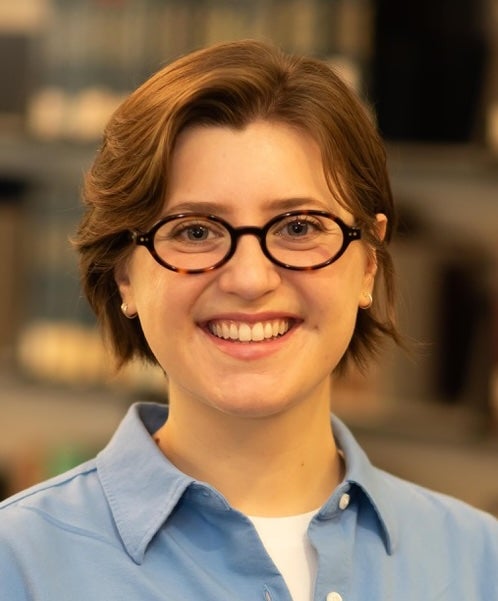
Haley Down (she/her) is a PhD candidate in English with an MA (Wild Writing) from the University of Essex and a BKI (Knowledge Integration) from the University of Waterloo. Her interests meet at the intersection of life writing, food studies, body studies, and gender studies. Haley’s dissertation examines how contemporary women’s food memoirs both resist and reinforce the contradictory cultural narratives surrounding women’s bodies and eating. It explores how the merging of food writing and life writing enables women to challenge and rewrite dominant scripts of embodiment, because while food is commonly associated with nourishment and pleasure, in Western culture it is also a charged site of shame, control, and social regulation.
Haley has been a recipient of the Provost Doctoral Entrance Award for Women. She has completed the New Instructor Foundations program and is currently pursuing the Fundamentals of University Teaching certificate, both through the Centre for Teaching Excellence.
In addition to her doctoral studies, Haley is a writer and poet. She is an assistant editor and contributing writer for Blank Spaces magazine, runs community writing events in Waterloo, and has hosted a weekend writing retreat for beginner poets.
Kavi Duvvoori

Email: kduvvoor@uwaterloo.ca
Bluesky: @geryon.bsky.social
Mastodon: @geryon@kolektiva.social
Website: https://titleduntitled.name/
Two Bios
1. Kavi Duvvoori is a PhD candidate at the University of Waterloo in English, with an MFA from UC Santa Cruz in Digital Arts and New Media and an ScB/AB in Math and Literary Arts from Brown. Their research in computational rhetoric focuses on the impacts of algorithmic mediation, like AI chatbots and social media databases, on communication. It includes an empirical study of large language models (LLMs) abilities to process the form and meaning of rhetorical figures and linguistic constructions; a study of identity and embodiment in algorithmic voice synthesis in relation to the theories of the elocutionary movement; and a project drawing on queer media studies and the metaphor of fungal networks to identify tactics that defend plurality, participation, and fluidity in algorithmically mediated language. They are an editor for the Taper magazine of computational writing, and have shared digital literary art in Taper, Ensemble Park, and the Michigan Quarterly Review.
2. Kavi Duvvoori is a writer (and other things) in Kitchener, Ontario, on the Haldimand tract, working in CUPE local 5524. Their interests include experimental and constrained literature, birds, borders, speculative fiction (Delaney! Le Guin! Lem! Butler!), lists, linguistics, labour, the limits of language, math, worldbuilding, infrastructures, redwoods, the search for ways of living that reject hierarchy and domination, sautéing, maps, and ambiguity. They have published a couple small pieces in online publications and fear the enclosure of language itself.
Omnia Elsakran

Email: omnia.elsakran@uwaterloo.ca
Omnia Elsakran is a Ph.D. candidate in English. She holds a BA in English Language and Literature (with a Minor in Translation Studies) and an MA in Teaching English to Speakers of Other Languages (TESOL). Her research examines information warfare, media studies, and critical discourse analysis, with a particular focus on contemporary propaganda tools.
She is the recipient of the Provost Doctoral Entrance Award and has completed the Fundamentals of University Teaching Program at the Centre for Teaching Excellence. She is also currently involved in the Certificate in University Teaching (CUT) Program, further advancing her professional development in evidence-based teaching strategies. With more than 10 years of teaching experience, she brings extensive instructional expertise that complements her academic and professional training.
Laila Emara
Email: lemara@uwaterloo.ca
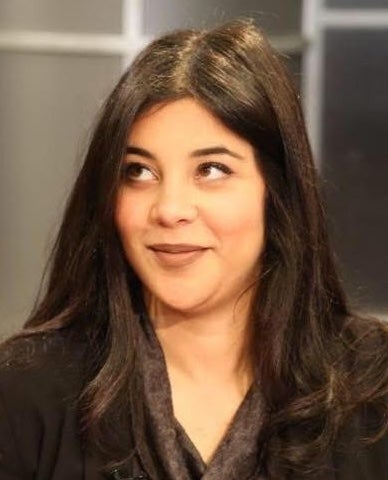
Laila Emara is a PhD student in English Literature at the University of Waterloo. She holds a BA in Communication and Media Arts, with minors in Business Administration and Political Science, from the American University in Cairo, where she also completed an MA in Television and Digital Journalism. Her research interests explore the challenges of science communication and underscore its importance in an era of rapid technological advancement. Drawing on her background in media, she has worked on video projects that translate complex scientific concepts into engaging and accessible content for the public, bridging her academic interests with practical applications.
Nadia Formisano
Email: nformisano@uwaterloo.ca
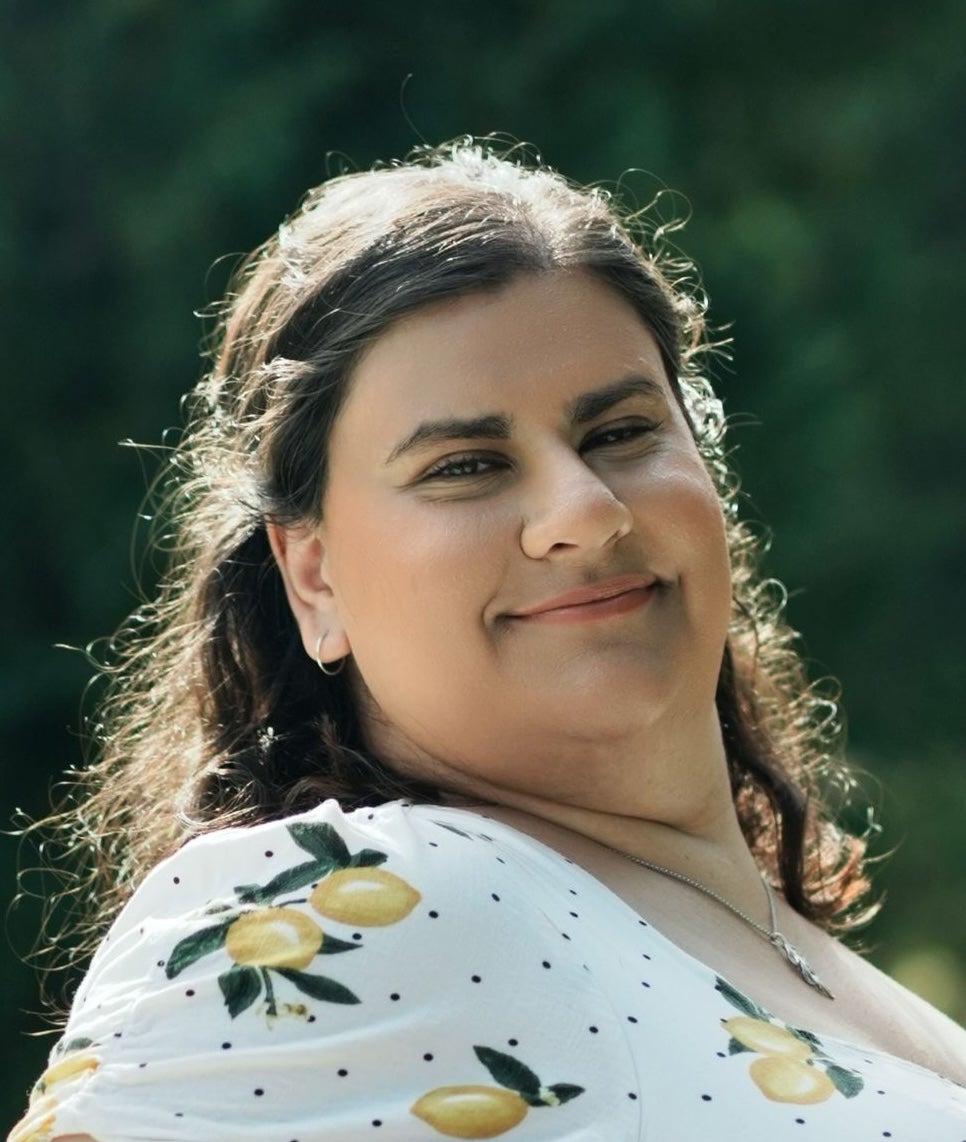
Nadia Formisano (she/her) holds a BA (English Literature and Rhetoric) and an MA (Rhetoric and Communication Design) from the University of Waterloo, and an MA (Italian Studies) from the University of Toronto.
Her research examines the translation of dialects as an act of adaptation in literature and film. She is also interested in the implementation of experiential learning in the classroom, studying specifically how it can be integrated into language-learning environments in the form of community engagement.
Nadia enjoys theatre and archery in addition to her passion for creative writing. She also serves as the First-Year PhD Representative of the Student Association for Graduates in English (SAGE) for the 2026-2027 school year.
Colleen Foster
Email: cnfoster@uwaterloo.ca
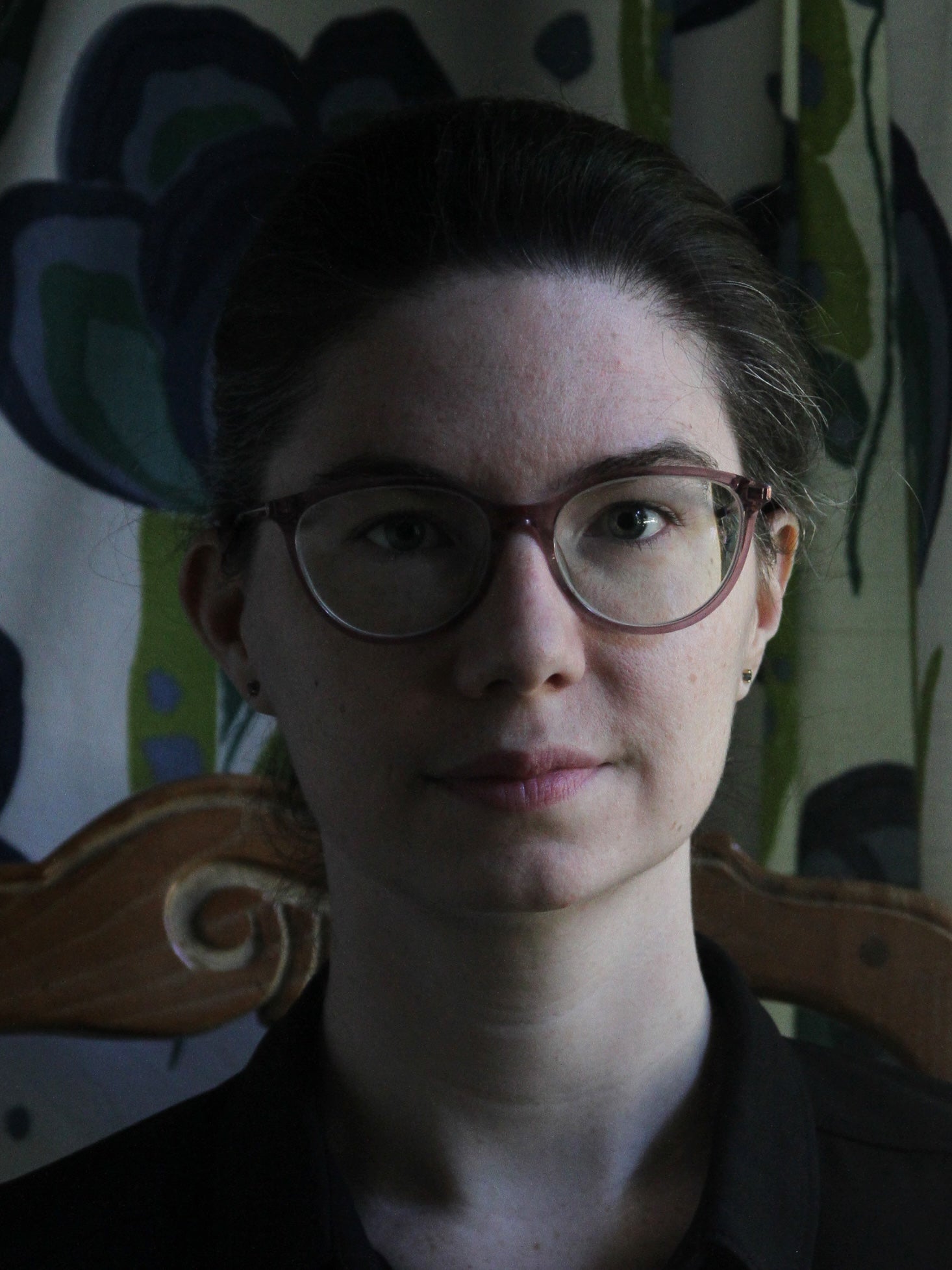
Colleen Foster is an English PhD student at the University of Waterloo. She earned an MA in English Literature from Western University, a GradCert with Honours in Creative Book Publishing from Humber College, and a BA with Distinction in English Language & Literature and Italian Studies from Western University. Colleen is a recipient of the Provost’s Doctoral Entrance Award for Women (2024).
Colleen’s dissertation project considers the relationship between loneliness and environmental sensitivity in 19th- and 20th-century American literature. Her project is motivated by two contemporary global phenomena: climate change and the COVID-19 pandemic. Colleen’s research is supported by the President’s Graduate Scholarship and the Ontario Graduate Scholarship (OGS).
An executive member of the Student Association for Graduates in English (SAGE), Colleen is currently the Graduate Student Association (GSA) Rep and was previously the Conferencing Rep. She also serves on the Graduate Student Caucus of the Association of Canadian College and University Teachers of English (ACCUTE) as the representative for UWaterloo’s English graduate students. In addition to her PhD, Colleen is working towards completion of the Professional Skills Foundations and Fundamentals of University Teaching programs.
Samantha Fowler

Email: samantha.fowler@uwaterloo.ca
LinkedIn: Samantha Fowler
Samantha Fowler (she/her) completed a BSc (Psychology; Biology Minor) at the University of Waterloo and a MScCom (Science Communication) at Laurentian University. She graduated as Valedictorian of the Faculty of Science University of Waterloo (2019). Samantha is a PhD student in English, where her research will examine the rhetoric of community building and digital advocacy for disabled persons in STEM (science, technology, engineering, and mathematics). Her career experiences focus on equity, diversity, and inclusion within science communication and post-secondary education.
In addition to her doctoral studies, Samantha is the Disability Inclusion Coordinator at the University of Waterloo, where she supports institutional accessibility and disability community-building initiatives. She is a Co-Executive Director of The Disabled CoLab.
Kelly Gariepy
Kasturi Ghosh

Email: kasturi.ghosh1@uwaterloo.ca
Kasturi Ghosh is a PhD candidate in the Department of English Language and Literature. Her research is supported by a SSHRC Doctoral Fellowship, several Ontario Graduate Scholarships and UW President’s Graduate Scholarships, the Provost Doctoral Entrance Award for Women, and other institutional and departmental scholarships and awards. Focusing on the portrayal of vampires and other monstrous entities created by Anne Rice, Poppy Z. Brite, and Charlaine Harris, her research studies contemporary Gothic Fiction of the American South, reading it as a body of fiction that reflects both the homogeneous identity forced upon the region and the uncanny re-emergence of its global past and its diverse population. This approach complements psychoanalytical approaches by tracing the changing socio-political imaginary of the American South and its influence on the Southern Gothic, which, by the end of the 20th century, came to challenge the region’s supposedly uniform cultural and political identities. She has presented her research at international conferences, including the IGA, IAMAS, NEPCA, SFU-IGA, and the Louisville Conference on Literature and Culture.
Prior to coming to UW for her PhD in 2020, Kasturi served as an Assistant Professor of English for eight years in her home country, India. She holds an MPhil and an MA in English from Jadavpur University, Kolkata, another MA in Women’s and Gender Studies from IGNOU, New Delhi, and a BA Honours in English from Loreto College, Kolkata, India. She has published papers in peer-reviewed journals. Her interests are Gothic Studies, Gender Studies, Popular Literature and Culture, and Adaptation Studies.
Vanya Gnaniah

LinkedIn: Vanya Gnaiah
Vanya Rachel Gnaiah is a PhD Student whose research interests include Animal Studies, Posthumanism, Food Culture and Media Theory. She previously completed an Integrated MA in English Studies with a minor in Development Studies at the Indian Institute of Technology, Madras. She was also the recipient of the Erasmus Mundus scholarship and was selected for an exchange program to Aarhus University, Denmark. She currently holds the Exceptional Doctoral Student Scholarship and her PhD research examines the conditions that make the animal killable in the abattoir and the biopolitical consequences of technological innovations centered around lab-grown meat and plant-based proteins.
Melika Hashemi
Alicia Latimer

Alicia Latimer (she/her) completed a BA (English Literature), MA (English, Rhetoric and Communication Design), and is currently a PhD candidate at the University of Waterloo. Alicia is the recipient of the Provost Doctoral Entrance Award for Women (2020). Alicia’s research examines the representation of disability in Young Adult literature and how readers respond to this representation in online spaces. She has completed the Fundamentals of University Teaching program and is currently pursuing a Certificate in University Teaching from the Centre for Teaching Excellence.
Christopher Lawrence

Email:clawerence@uwaterloo.ca
During my undergraduate studies at Carleton I double majored in English Literature and Linguistics, and played a lot of video games. During my Masters in English Literature at Carleton I specialized in science fiction and dystopia, and played a lot of video games. At some point I realized that I ought to combine these interests.
Video games are everywhere now: in books, in film, on your TV, on your phone, in the classroom, in the workplace. I want to make sense of their impact on our lives. People today spend as much time playing games as they might have spent reading books fifty years ago. How does that restructure our cognition? McKenzie Wark summarizes that “Games are no longer a pastime, outside or alongside of life. They are now the very form of life, and death, and time itself." So "play" isn't just about play anymore. Play has become work.
I believe that it's essential to understand how we are using what we learn in games to approach challenges in our real lives. To plead ignorance is to allow external forces to co-opt those influences and manipulate them in their favour. Nick Dyer-Witheford and Grieg de Peuter warn that "video games are a paradigmatic media of empire." To this I ask: what is our alternative? How can we take this cognitive capital back from the gamified office and leverage it positively? Big questions. I can't answer them on my own. That's why I'm here at the University of Waterloo.
Rency Luan

Email: r2luan@uwaterloo.ca
Rency Luan (she/her) is a PhD candidate in English with a BA (Hons. English; Rhetoric) from the University of Waterloo and MA (Rhetoric) from Carnegie Mellon University. Rency’s research examines the intersection between mental health, immigration, and race to explore how mental health discourse is circulated linguistically, culturally, and globally.
Rency is the recipient of the Ontario Graduate Scholarship and Jack Gray Fellowship. She is an executive member of SAGE and also an advisor for The Garden of Rhetorica at Soochow University. Her favourite rhetorical figure is epizeuxis, and her favourite Care Bear is Cheer Bear.
Christine McCollough
Anna McWebb
Email: anna.mcwebb@uwaterloo.ca
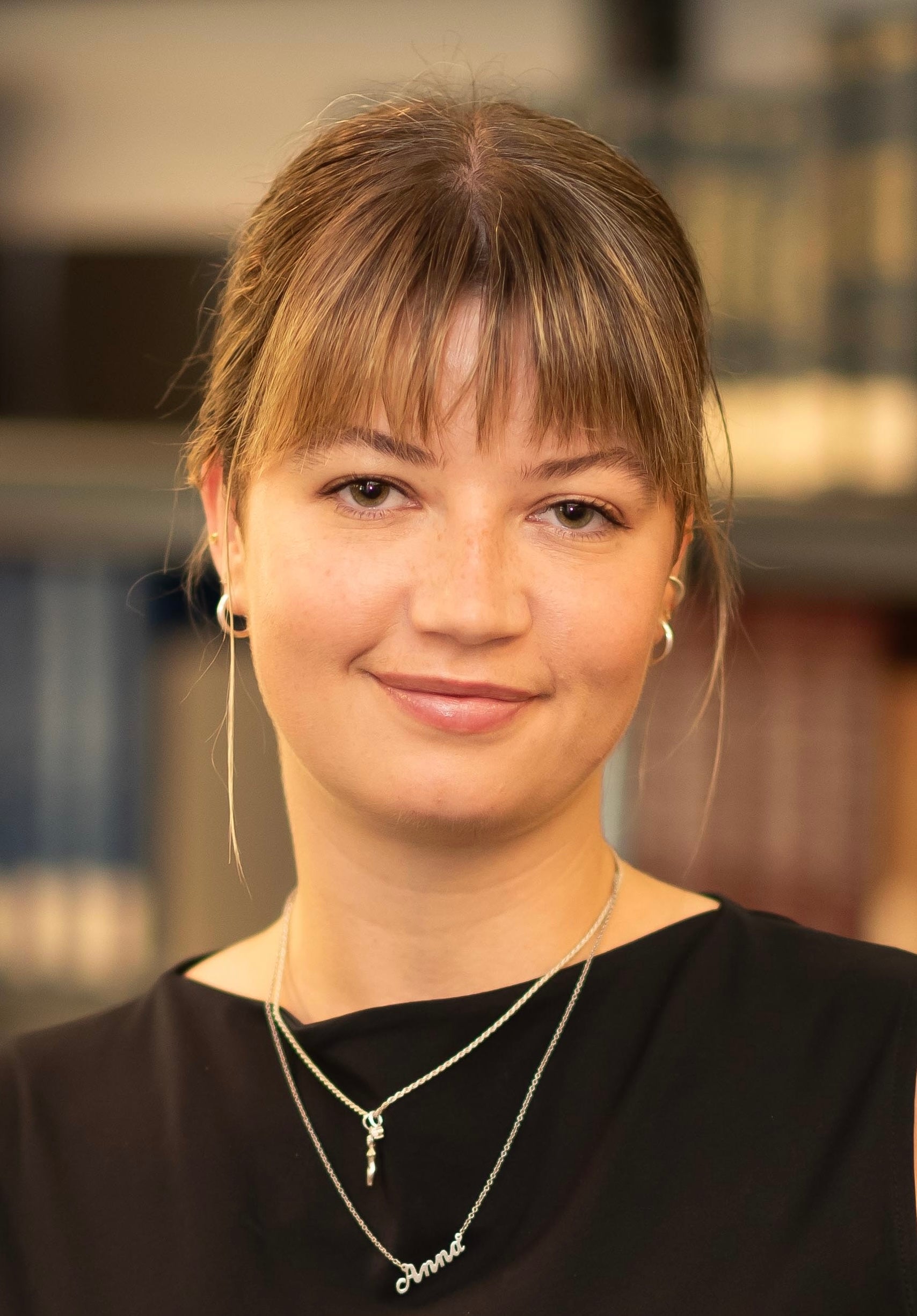
Anna McWebb (she/her) is a PhD candidate (ABD) in English with a BA (Creative Industries) from Toronto Metropolitan University, and an MA (Art History and Visual Culture) from the University of Guelph. Her research focuses on the relationship between queer and feminist digital culture and political rhetorics that perpetuate misogyny and queerphobia, primarily on social media.
Anna is the recipient of the Ontario Graduate Scholarship (2025/2026), and aside from dissertation work, holds the role of the Managing Editor for (un)Disturbed: A Journal of Feminist Voices, a UW-based digital publication.
Sarah Menzies
Dakota Pinheiro

Email: ddpinhei@uwaterloo.ca
Twitter: @DakotaPinheiro
Dakota Pinheiro (he/him) is a PhD Candidate and Sessional Instructor in the Department of English Language and Literature and a Graduate Educational Developer (GED) for the Centre for Teaching Excellence. He completed his BA in Honours English Literature at the University of Waterloo and his MA in English at the University of Toronto. He has also completed the Fundamentals of University Teaching (FUT) certificate and is currently completing his Certificate in University Teaching (CUT) from the Centre for Teaching Excellence. Dakota has served as Treasurer and Co-President of the Student Association for Graduates in English (SAGE), as a voting member on the English Chair succession committee, as a chair for the graduate student stage of 2022’s English faculty interviews, and as an Editor and Section Head of Commentaries at First Person Scholar (FPS).
Dakota’s dissertation project critically examines socially-conscious works of contemporary American literature and their representations of labour protest, in/justice, and intersectional solidarity. His project, divided into three sections, examines representations of labour in corporate fiction, superhero satire, and in the COVID-19 pandemic’s literary corpus. His work employs an interdisciplinary approach, integrating economic theory, critical labour studies, and literary theory (to name a few) into his investigation of the social implications of labour and equity advocacies in some of America’s most recent literary works. Dakota presently has forthcoming articles being published by First Person Scholar and English Studies in Canada and has presented his research at several prestigious venues including MLA, ACCUTE, CAAS, NeMLA, and CASDW.
Dakota has been the recipient of a number of merit-based scholarships including a Viola Whitney Pratt Memorial Scholarship, two Ontario Graduate Scholarships (OGS), a Jack Gray Graduate Fellowship, an Arts Graduate Enhancement Scholarship, UW President’s Scholarship, the Lea-Vogel Nimmo Graduate Professionalization Award, and a W.K. Thomas Graduate Scholarship. He has also been the recipient of his cohort’s Grade Average Award and Betty G. Headley Senior Essay Award during his undergraduate studies.”
Alison Purnell

Email: ampurnel@uwaterloo.ca
Alison Purnell is a PhD student in English Language and Literature at the University of Waterloo. She has a BA in Religious Studies from the University of Waterloo, an MA in Medieval Studies from the University of Toronto, and studied at the Centre for Medieval Studies at the University of York (UK) for several years. Her interdisciplinary work explores the social discourses and rhetoric around mental disability in 14th and 15th century England through the lens of critical disability theory. Alison's translation of her manuscript source material was included in the Medieval Disability Sourcebook published by Punctum Press (2020) and she tweets about disability history and amusing medieval shenanigans at @14thCdisability.
Jenn Rickert
Email: jrickert@uwaterloo.ca
LinkedIn: @jennrickert
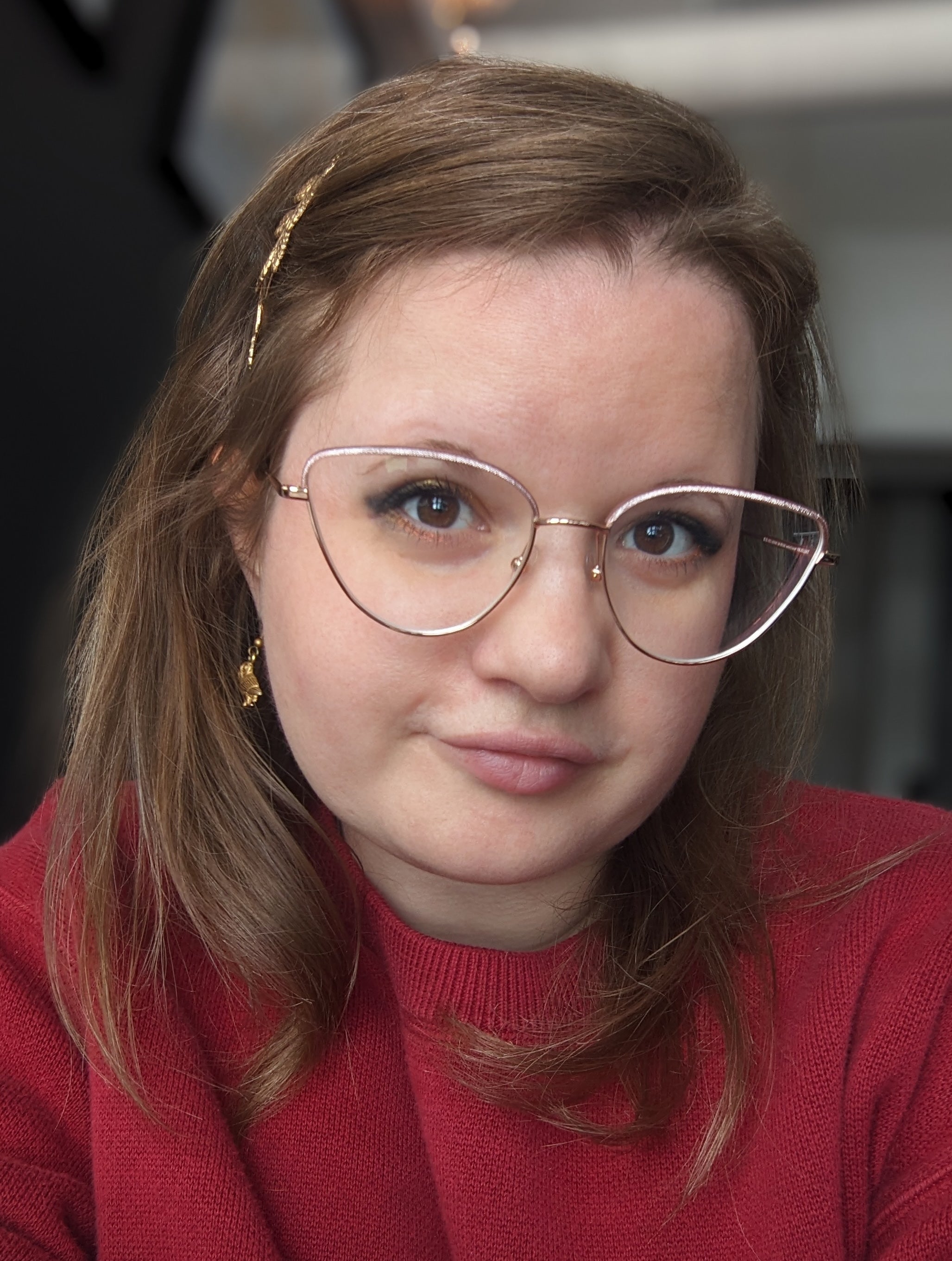
Jenn Rickert is an interdisciplinary-trained academic (BA Hons Classical History & Anthropology; MA Public Issues Anthropology) specializing in the interconnectivity of people, technology, and culture. She is a PhD candidate actively writing her dissertation, which focuses on video game mechanics (and game mechanics more broadly) and how they are fundamental in creating, enhancing, or giving meaning to players' interactions within game worlds. She is developing methodology for interpreting these complex systems of meaning-making-interaction, in hopes of building not only more inclusive and positive gaming experiences, but also in affecting video game communities as well. In addition to her primary research goals, she also is particularly interested in accessible, inclusive, and applicable research, bridging research and industry, as well as other socially constructed aspects of video games (e.g. cheating & modding, emotion, etc.)
Christopher Rogers

Email: christopher.rogers@uwaterloo.ca
Christopher Rogers is a PhD student in English. He completed his BA in Political Science at the University of Toronto and his MA in Experimental Digital Media at Waterloo. His research explores the rhetoric of watery spaces – shores, riverbanks, beaches – as places where the vibrancy of the material world comes into focus. Chris’ work asks what hopeful paths forward we can imagine, observe, and create when we pause and consider our entanglements with the nonhuman world.
Sabrina Sgandurra

Email: sasgandu@uwaterloo.ca
Sabrina Alicia Sgandurra (HBA Toronto Metropolitan University, MA University of Waterloo) is a PhD student specializing in games studies. As a resident of the Games Institute and as a student, her research focuses on the intersection of oral storytelling traditions in the act of streaming story-focused video games. Sabrina has won two OGS awards, has presented her research at distinguished conferences such as DiGRA 2023, PCA 2021 & 2022, MLA 2022, CGSA 2021, and ACCUTE 2022, and has published her research in Simulation & Gaming. In addition to her role as a student, she is also currently working at First Person Scholar as the Editor-in-Chief.
Mohsina Shafqat Ali

Email: mshafqatali@uwaterloo.ca
Mohsina Shafqat Ali completed her BA (High Distinction) from the University of Toronto, MA from York University, and World Literature Diploma from York University. She is currently a PhD Candidate in the Department of English Language and Literature at the University of Waterloo. Her research interests include South Asian Women’s Life Writing, Postcolonial Studies, Discourse Analysis, Diaspora Studies, Translation Studies, and World Literature. Her MRP responded to the paucity of life writing texts by South Asian women writers who have not been analyzed in the discourse of Postcolonial Studies, Diaspora Studies, and Translation Studies. In order to close the gap of this understudied field, in her dissertation, she plans to continue her investigation of women’s Diasporic Intersubjectivity by examining South Asian Women’s Memoirs from a Transcolonial perspective.
Besides writing for her dissertation, Mohsina likes to expand her teaching skills by attending the courses provided by the University of Waterloo. She has tutored students from Accessibility at the University of Toronto, and was a TA and a GA at the University of Waterloo. She is currently a GI at the University of Waterloo. She has also served as the Co-President for SAGE (Student Association for Graduate in English) at the University of Waterloo. Besides that, she reads for the Puritan Magazine. In her free time (if she has any), she likes to set up her telescope in her backyard to gaze at the moon.
Rebecca Sherlock
Humaira Shoaib

Email: h3shoaib@uwaterloo.ca
Humaira Shoaib, B.A. (University of the Punjab), M.A. (University of the Punjab), is a PhD candidate in the Department of English Language and Literature. Humaira’s research focuses on Canadian Muslim fiction and its engagement with the “Bad Muslim” stereotype through a Critical Muslim Studies lens. Her research is enriched with ideas from post-colonial studies, Diaspora Studies, and social justice rhetoric.
Since 2021, Humaira has been involved as a research assistant for a collaborative research project between the Coalition of Muslims Women-KW and Researchers from the University of Waterloo. She is also volunteering to organize a Muslim Writers Festival to be held in the US in the year 2025. Humaira has been an influential member of the university community, taking on leadership roles that have made a significant impact. For SAGE (Student Association for Graduates in English), which is the departmental GSA, she has served as the Equity Liaison (2021-2022), President (2022-2023), and the current Co-President (2023-2024). In 2024-25, she is employed as a Teaching Assistant Workshop Facilitator with the Center for Teaching Excellence.
At Waterloo, her research is supported by the Ontario Graduate Scholarship (OGS), and she is the grateful recipient of numerous awards, including the Lea Vogel-Nimmo English Graduate Professionalization Award, the TA Award for Excellence in Teaching, and the W.K. Thomas Graduate Scholarship. Her research work was also nominated for the Beltz Essay Prize in Literature. Humaira likes to spend her free time with her family of three boys and a loving husband.
Juliana Stacey
Email: jstacey@uwaterloo.ca
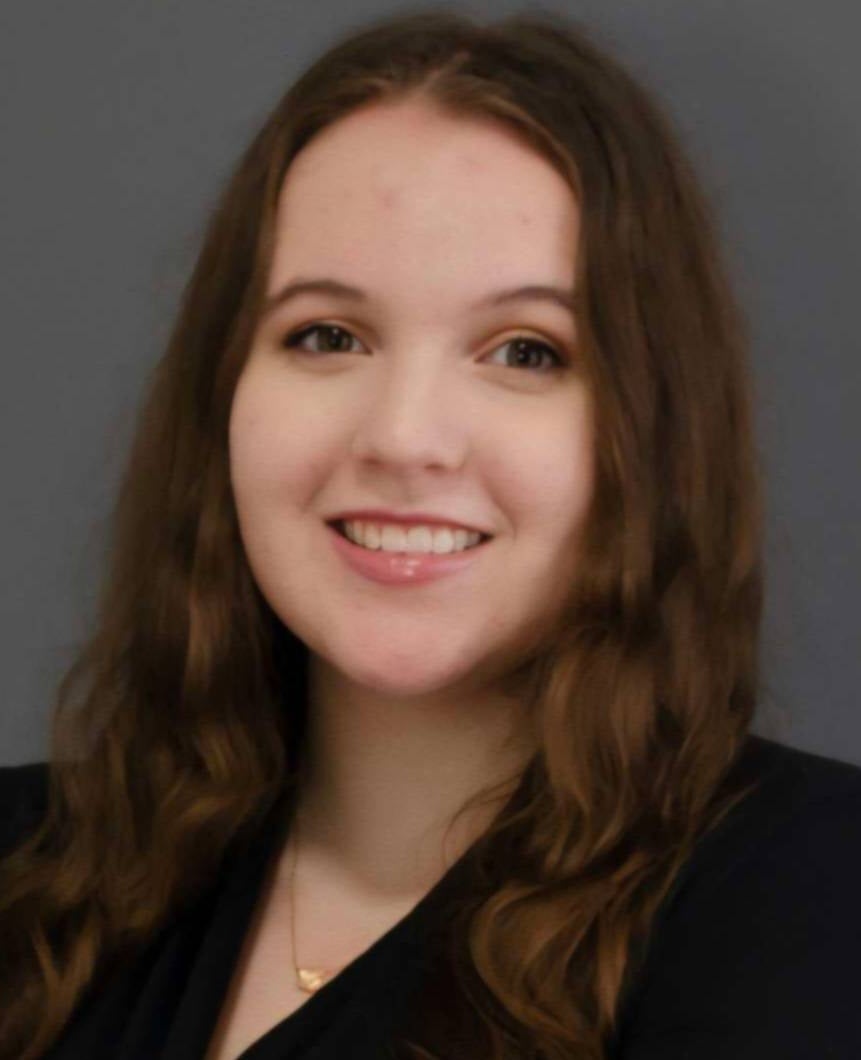
Juliana Stacey (she/her) is a Ph.D. student at the University of Waterloo. She holds an Honours Bachelor of Arts (Professional Writing and Communication, English) and a Master of Arts (English) from the University of Toronto. She is primarily interested in how women’s health narratives – especially those of women’s reproductive illness – are portrayed through social media. She is also excited to be the First Year Ph.D. Representative for SAGE for the 2025-2026 school year. Outside of school, Juliana is a board game enthusiast, an amateur crocheter, and loves spending time with her three dogs.
Ava Stratton
Email: a3stratt@uwaterloo.ca
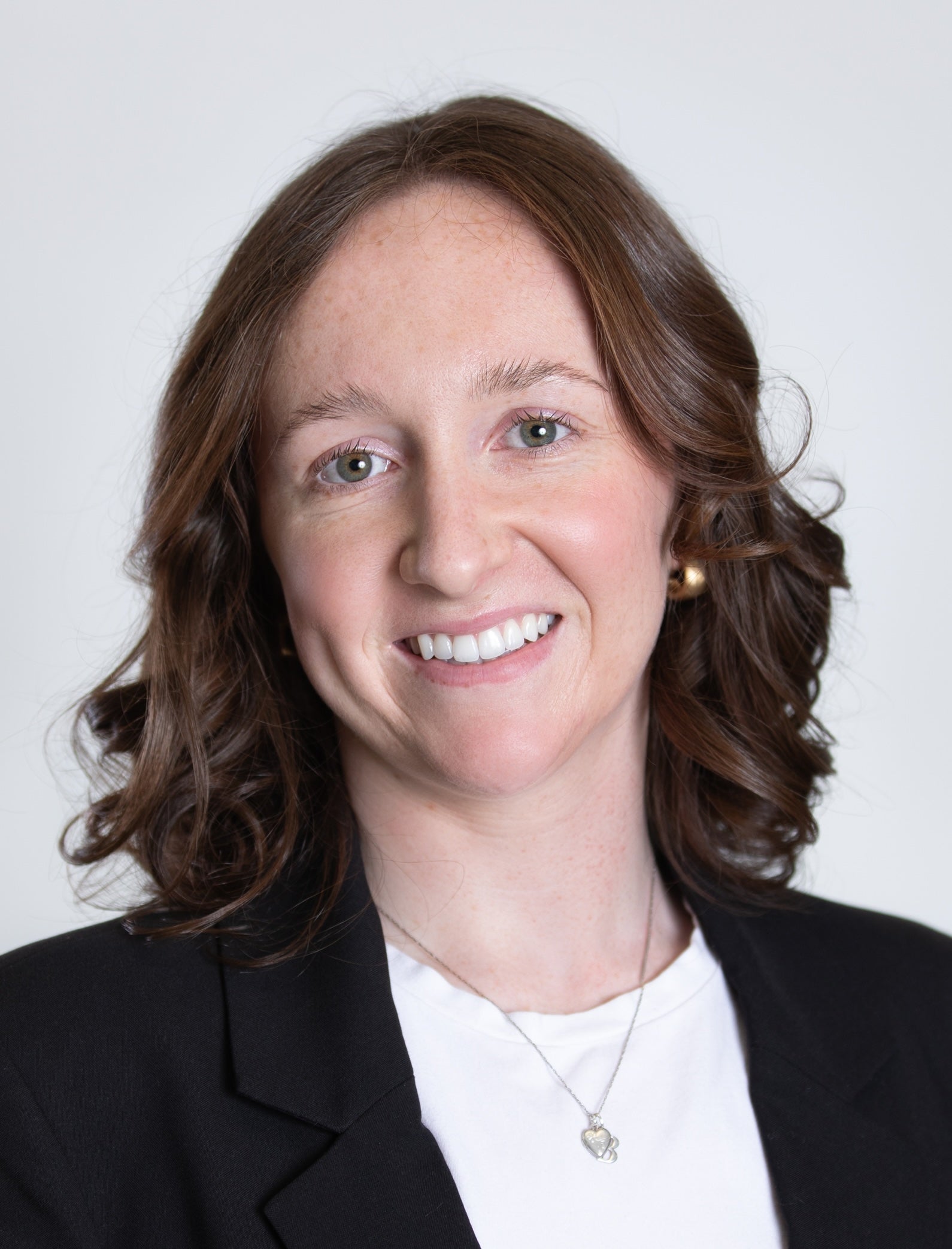
Ava Stratton is an English PhD student at the University of Waterloo. She holds an Honours Bachelor of Science (Life Sciences) from McMaster University, and a Master of Science Communication from Laurentian University. With her background in science, she is primarily focused on the rhetoric of "hot topic" science issues in the media, aiming to understand how rhetorical framing is used to influence society’s belief in science.
Outside of school, Ava can be found spending time outside, often with her friends, family, and golden doodle, Hali.
Kirk Sullivan
Fiona Thompson

Email: fthompson@uwaterloo.ca
Fiona Thompson (she/her) completed a BSc in Chemistry (Honours) at the University of Victoria, a Certificate in Dance Education at the Royal Academy of Dance, and an MSc in Chemistry (Quantum Information) at the University of Waterloo. Fiona's scientific research background is in two-dimensional superconductivity. Her doctoral research focuses on the rhetoric of science, especially as it relates to best practices for communicating about emergent quantum technologies. She also works at the Institute for Quantum Computing in the role of Scientific Outreach Officer.
Fiona is a recipient of the Ontario Graduate Scholarship (2025), the English Rhetoric Essay Award: PhD (2025), the David Johnston Award for Scientific Outreach (2024), and the Provost Doctoral Entrance Award for Women (2024). She has over a decade of public speaking and instructional experience, including extensive outreach work with children, university students, and professionals. She is the former Editor-in-Chief of Acta Victoriana, the oldest university publication in Canada. When she’s not working, you can find Fiona browsing a vintage store, dancing at a ballet class or punk show, or just hanging out at home with her cat. The latter is, by far, the most likely.
Michael Veenstra

Email: mdveenstra@uwaterloo.ca
Michael Veenstra (he/him) completed his BA in English & Cultural Studies (McMaster) and his MA in Literary Studies (Waterloo). His research looks at the narrative value and techniques of “lore” and its impacts on culture through adaptations across media. Michael’s Master’s major research project - “Power and Madness in Fantasy Fiction” - examines how fantasy engages with disability and appears in The Journal of the Fantastic in the Arts 35.1. Michael is also passionate about teaching, and is pursuing his Certificate in University Teaching from the Centre for Teaching Excellence. He lives in Hamilton with his wife and pets.
Julie Veitch

Email: jveitch@uwaterloo.ca
Julie Veitch is a PhD candidate and Sessional Instructor in the English Language and Literature department at the University of Waterloo. She completed a BA (Honours English, Minor History) at Toronto Metropolitan University and MA (English Language and Literature) at Brock University. Her research focuses on modern children's and YA horror-mystery books, movies, and video games. She is especially interested in exploring character agency, depictions of monstrosity, and the lingering legacy of the Gothic within these narratives.
In 2024, Julie presented a paper at the MLA Conference, titled “Staring Death in the Face: The Gothic Working-Through of Loss and Trauma in A Series of Unfortunate Events”. She also presented a paper at the 2025 International Conference on Games and Narrative, which was based on an article she published with First Person Scholar: “Interpretation as Interaction and the Horror of Limited Agency in Until Dawn”.
Julie has served as an editor for First Person Scholar and a reader for the literary magazine The Ex-Puritan since 2021,and she has been the Internal Communications Officer for the Student Association for Graduates in English (SAGE) since Fall 2023.
Karen Ward
Rachel Warner
Email: rnwarner@uwaterloo.ca
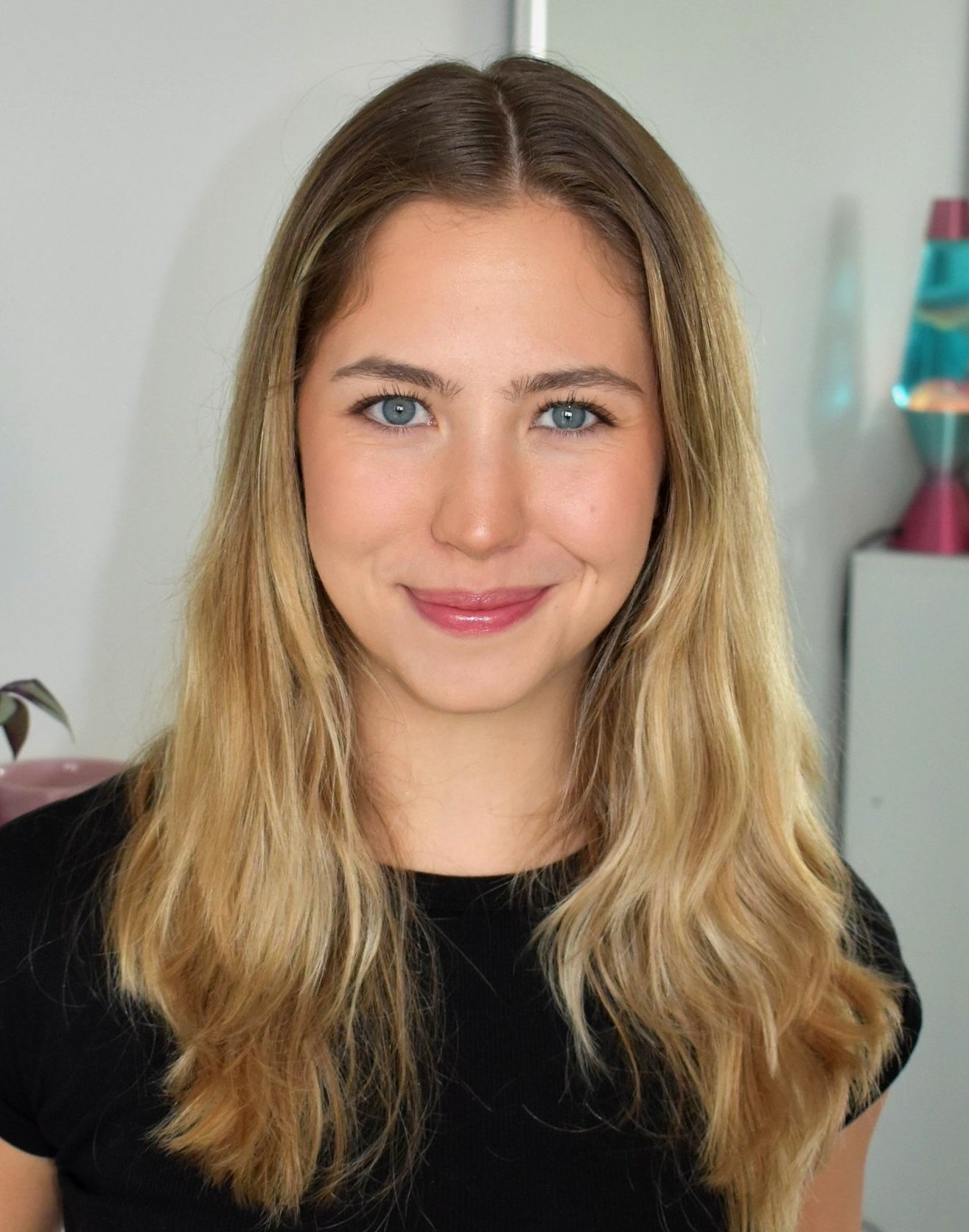
Rachel Warner (she/her) completed a BA (Communication Studies and Business) at the University of Waterloo and an MA (Psychotherapy) at Wilfrid Laurier University. In addition to her studies, Rachel is a Registered Psychotherapist working predominantly with teens and young adults navigating challenges related to anxiety, body image and eating disorders, gender and sexuality, social pressures, and perfectionism. Rachel’s research examines how disordered eating is constructed, normalized, and legitimized through social media.
Blaze Welling
Email: bsjwelling@uwaterloo.ca
LinkedIn: Blaze Welling
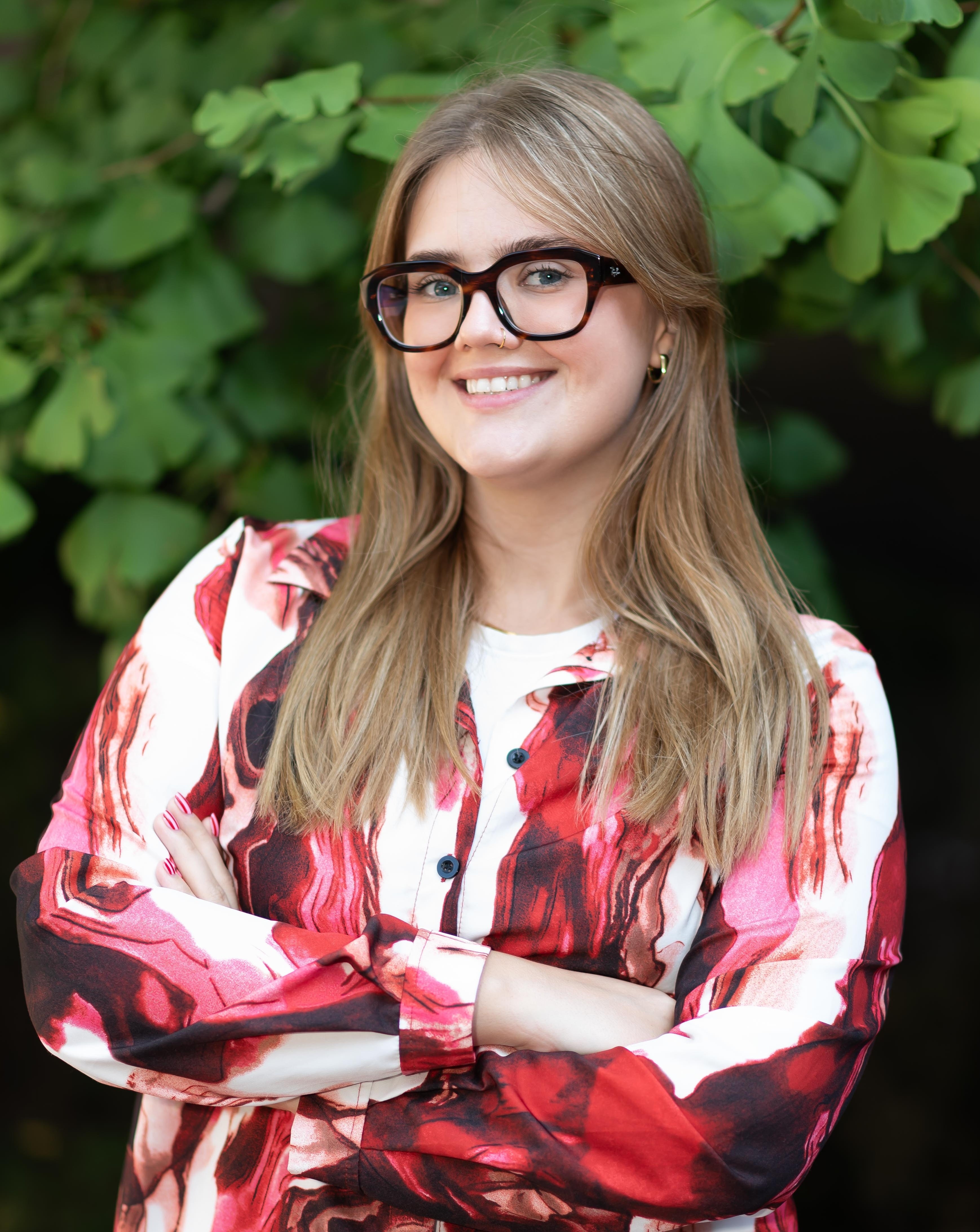
Blaze Welling (she/her) completed her BA (Honours) and MA in English and Film Studies at Wilfrid Laurier University and is now a Ph.D. candidate in English Language and Literature at the University of Waterloo.
Blaze’s SSHRC-funded research examines the entanglement of rhetoric, technology, and colonial power in the construction of Canadian and Indigenous identities from roughly 1869-1871. Her work investigates how political discourse circulated through networks of print culture, communication technologies, and transportation infrastructures, shaping public understandings of nationhood, sovereignty, and citizenship. Her dissertation explores how these rhetorical and technological systems operated within the broader structures of settler colonialism. Specifically, she analyzes how communication and transportation technologies facilitated Canadian nation-building and territorial expansion while simultaneously constraining Métis sovereignty and self-determination.
As a settler scholar, Blaze is committed to conducting research with care, respect, and reflexivity. Her work seeks to critically examine colonial histories while supporting and amplifying Indigenous voices and perspectives.
In addition to her doctoral studies, Blaze is a recipient of both the Social Sciences and Humanities Research Council (SSHRC) Doctoral Award and the Ontario Graduate Scholarship (OGS) for 2025-2026. She also serves as the outgoing President of the Student Association for Graduates in English (SAGE).
Sonia Zafar

Email: sa2zafar@uwaterloo.ca
Sonia Zafar is a PhD student in English Literary Studies. Her research interests include Feminist and Post-colonial Research Studies. She did her MS from Lahore College for Women University, Pakistan, in English Literature. She has also worked at the University of Engineering and Technology Lahore, Pakistan as a Lecturer under the Higher Education Commission of Pakistan. Her previous research at the University of Waterloo focused on the South Asian Muslims as Model Minorities within the diaspora fiction of the South Asian Anglophone writers. She is particularly interested in exploring the experiences of postcolonial diaspora and depicting the identity deconstructions due to their displacements.