Future students

Each year many GI faculty and student members present at the Canadian Game Studies Association conference, better known as CGSA.

GI faculty member Gerald Voorhees is currently CGSA president and organized this year’s conference with the assistance of the CGSA executive.

This year nine GI members and Alumni presented a wide array of research ranging from the games industry and education to the depiction of animals in games.

GI members also participated as reviewers, panel moderators, and adjudicators for CGSA’s best paper competition.
Fifteen Games Institute members presented at CHI 2022 (Conference on Human Factors in Computing Systems) both online and from the conference venue in New Orleans Louisiana from April 30th-May 5th. Research topics included realism in games, VR, smart glasses, livestreaming, and more!

Excitingly, this year’s CHI included an opening Keynote by GI Advisory Board member, Dr. Kishonna Gray (University of Kentucky), one of the world’s foremost experts on the interactions between race, gender, games, and technology.

Games Institute (GI) and Waterloo Institute for Nanotechnology (WIN) researchers have been working together on strategies to better educate the public about how the application of nanotechnology (the manipulation of materials on an atomic or molecular scale) impacts our daily lives. The first of these projects focuses on educating the public about how DNA-based nasal sprays can be used as intranasal vaccines during this crucial time.  

Professor Darren Wershler spoke to Sabrina Marandola for CBC Radio on March 14th 2022, about teaching his class Video Games and/as Theory” at Concordia University within Minecraft during the pandemic.

Games Institute Executive Director Neil Randall and other representatives from The University of Waterloo are working together on a trans-Atlantic collaboration with The University of Warwick, focusing on collegiate esports.

Members of the two schools have been meeting to share their experiences and discuss ways that they can help each other innovate and grow their esports programs.

UW Professor Ian Rowlands, Associate Vice-President, International, explains,

The virtual reality experience “Digital Oral Histories for Reconciliation” (DOHR) was recently peer-reviewed in Reviews in Digital Humanities volume 3 issue 1 on January 18th, 2022.

The DOHR project uses VR to explore the Nova Scotia Home for Coloured Children (NSHCC) as part of the curriculum for Grade 11 Canadian History students in Nova Scotia. NSHCC was opened in 1921 and operated until the 1980s and former Residents have come forward with stories of the physical, psychological, and sexual abuse they suffered there as children.

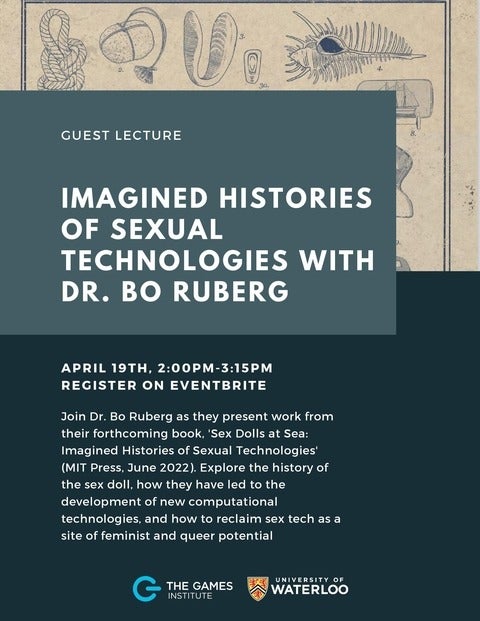
Tuesday, April 19, 2022 2:00 pm - 3:15 pm EDT (GMT -04:00)

Imagined Histories of Sexual Technologies With Dr. Bo Ruberg

Today’s interactive and playful technologies are increasingly intersecting with technologies of sex. Yet these intersections also have long histories. Tracing these histories—and challenging the ways that they are often told—has important implications for how we understand the cultural origins of contemporary video games and other forms of digital media.

Monday, December 6, 2021

Matt Parker: Carbon Collector

On December 2nd Matt Parker, a professor at the NYU Games Center, presented his work focusing on games and climate change to the researchers at the GI. Professor Parker taught the GI’s members about “carbon removal”, a technology that uses machines to remove CO2 from the atmosphere. Parker emphasized that because emissions goals have not been met, even if people never released any more CO2 again, we would still need to remove carbon from the atmosphere to survive.

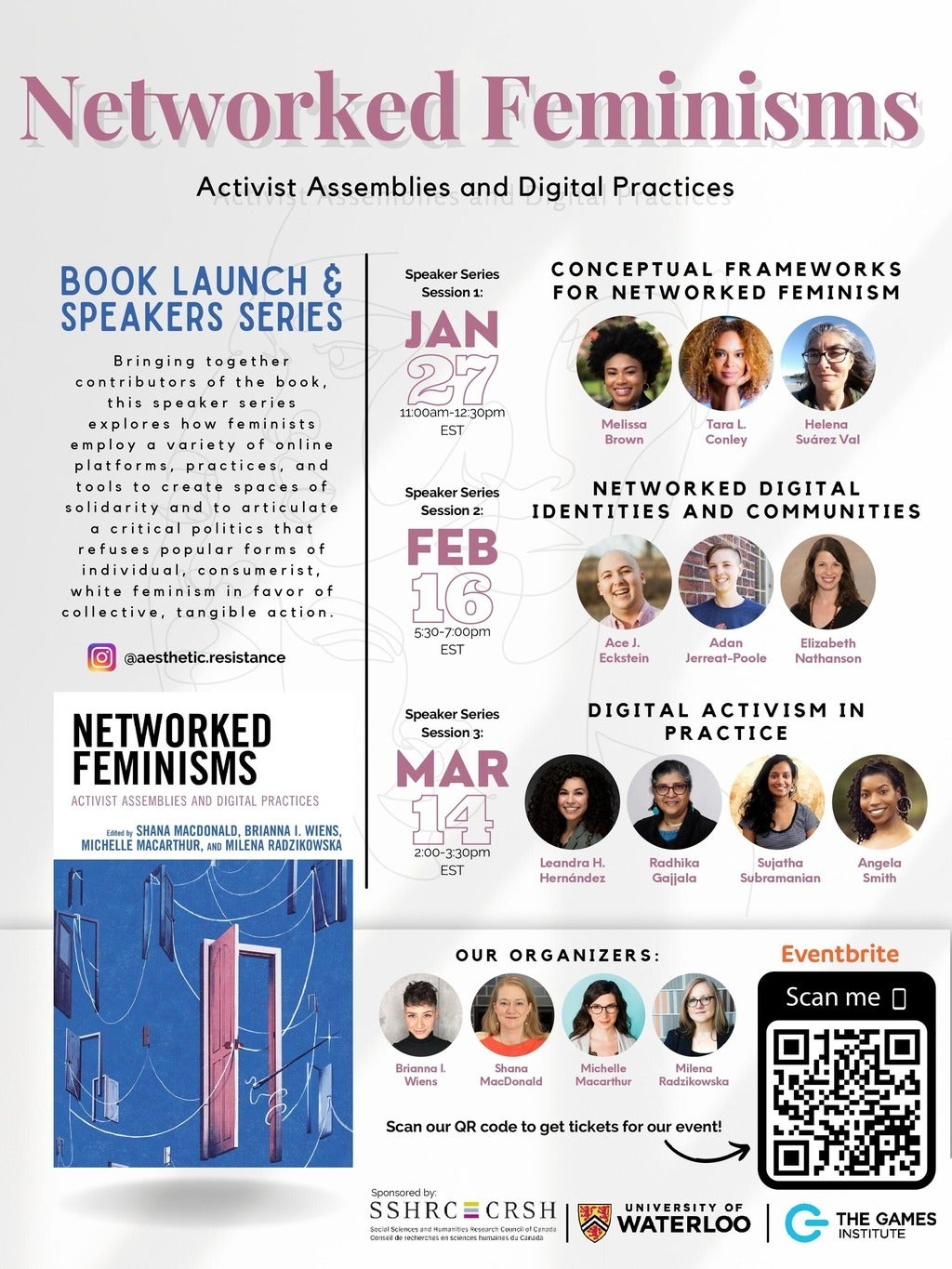
Wednesday, February 16, 2022 5:30 pm - 7:00 pm EST (GMT -05:00)

Speaker Series Session 2: Networked Digital Identities and Communities

Hi everyone! Join Feminist Think Tank this Wednesday (February 16th) at 5:30pm for the second event in their ♀️Networked Feminisms Speaker Series: Activist Assemblies and Digital Practices♀️