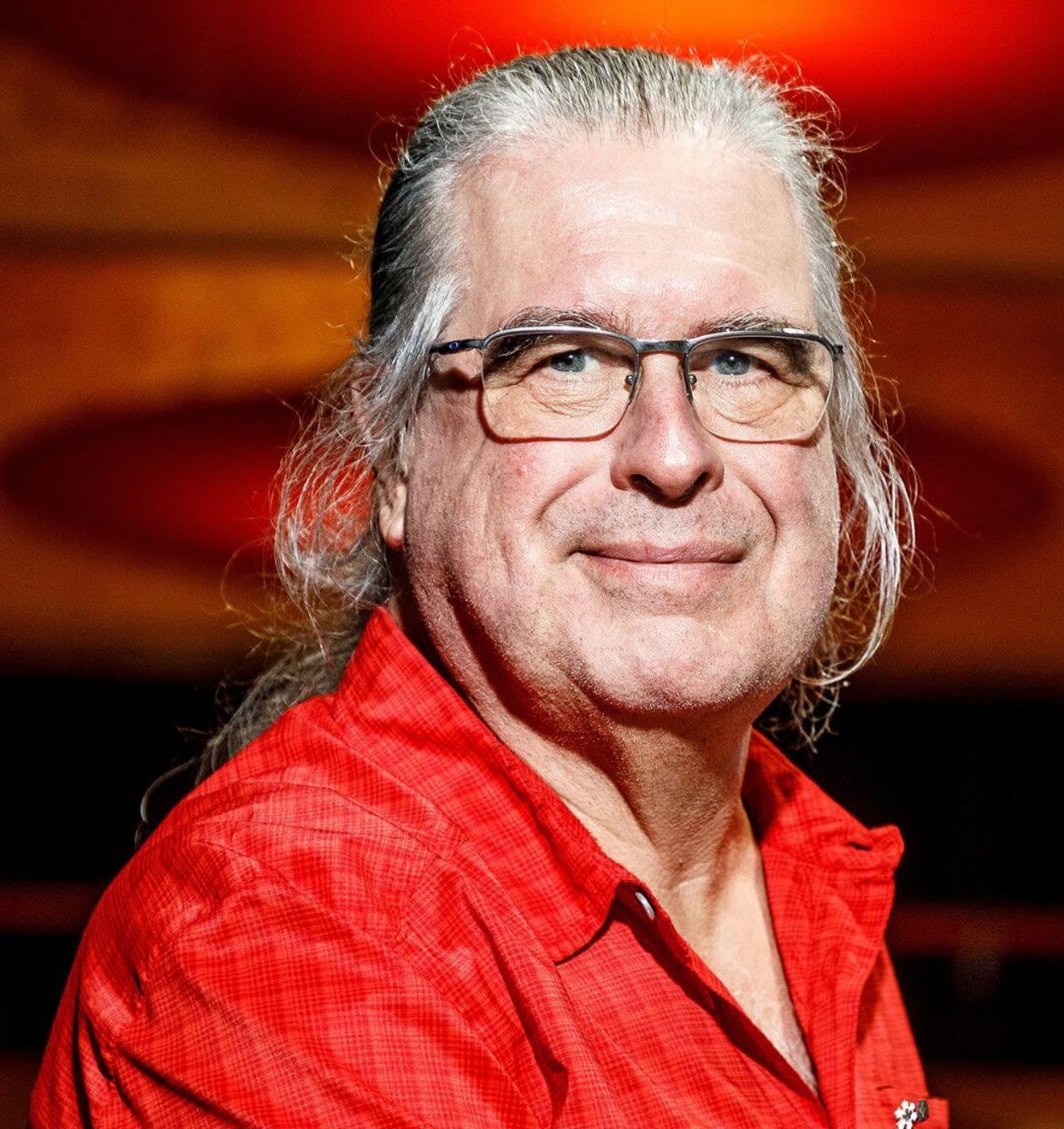
Professor of computer science Gilles Brassard, at the Université de Montréal, is one of the pioneers of quantum information science. On June 17, as part of this spring’s convocation proceedings, the Faculty of Mathematics will award him a Doctor of Mathematics, honoris causa.
In 1984, along with his lifelong collaborator Professor Charles H. Bennett, Brassard published the BB84 protocol for quantum cryptography. His fundamental research in quantum cryptography, quantum teleportation, quantum entanglement distillation, quantum pseudotelepathy, and the classical simulation of quantum entanglement have transformed the field, and earned him recognitions including the Gerhard Herzberg Canada Gold Medal, the Killam Prize in Natural Sciences, the Wolf Prize in Physics, the Breakthrough Prize in Fundamental Physics, election as a Fellow of the Royal Society of Canada and the Royal Society of London, and nominations as Officer in the Order of Canada and the Ordre national du Québec.
Most recently, Brassard and Bennett received the 2025 A. M. Turing Award, often considered the “Nobel Prize of Computing.” “Bennett and Brassard fundamentally changed our understanding of information itself,” says Professor Yannis Ioannidis, president of the Association for Computing Machinery. “Their insights expanded the boundaries of computing and set in motion decades of discovery across disciplines. The global momentum behind quantum technologies today underscores the enduring importance of their contributions.”
How have you seen attitudes towards quantum research change throughout your career?
When I first began doing quantum research in the late 1970s, it was fringe pursuit. It was not anybody’s day job. We were doing it for fun, not thinking that it would ever get anywhere practical.
We have seen things change in enormous ways, including here in Canada. At the University of Waterloo, we particularly owe that transformation to the vision of Research in Motion co-founder Mike Lazaridis, former UWaterloo president David Johnston, and pioneer Raymond Laflamme, who created the Institute for Quantum Computing in 2002. Waterloo is a leader in quantum research today because they believed in its importance.
It is gratifying to receive this honorary doctorate – much like the Turing Award – because it is given by my peers. It is very pleasant to be recognized by people who appreciate and understand our work.
Much of your research has been in collaboration with Charles H. Bennett. How did that collaboration begin, and how has it shaped your work?
Meeting Charlie in 1979 was the most defining moment in my professional life. It changed everything – my entire career switched from that moment.
Quantum information theory could not have been born from either of us alone. Quantum cryptography in particular is the meeting of physics and computer science. It serves as proof that interdisciplinary research can be very fruitful.
More generally, I believe that a pathway to original research is to bring one’s bags of tools into a different fertile ground that doesn’t have these tools. That’s what both Charlie and I did by having our different bags of tools and putting them together.
Why do you think fundamental research is so important?
I don’t want to belittle the importance of innovation and applied research and industry, but none of that would exist if it weren’t for fundamental research. It is a pipeline in which fundamental research feeds everything else. If fundamental research is not granted funding by agencies then the pipeline will dry out and soon there won’t be any more discoveries.
Think of Albert Einstein and Niels Bohr and these other giants of physics from the early twentieth century. They did their research for the pure benefit of understanding nature, with absolutely no inkling that any of that would become useful.
Today, our entire society is based on quantum theory. If quantum theory had been dismissed as useless fundamental research in the 1920s and 1930s, we would not have any of the technological marvels such as computers that we take for granted today.
It is crucial that we not ask whether a research topic will have an application in the future. Some of it will not, and that’s okay. We cannot tell in advance which research will have an impact. It must all be encouraged for its own sake.
We have to invest in curiosity-driven research: research that comes from a simple desire to improve our understanding of the world.
Why is quantum cryptography such a crucial area of research right now?
There are a number of reasons why quantum research is already so important, and becoming more and more so. One is that the current cryptographic infrastructure is an impending disaster due to the power of quantum computing. There are all sorts of things that can be done to protect our security, including quantum cryptography, which was actually invented ten years before an algorithm was invented to break the present infrastructure on quantum computers.
Quantum computers can also be used for very positive tasks such as drug discovery. We aren’t just putting our energy into discovery how to break existing cryptography. Research into quantum information is important both for positive applications and also for finding ways to protect our privacy, which is essential.
Ultimately, quantum computers will become very powerful tools for the betterment of mankind. We are only at the beginning.