Class of 2026 alum receives three awards for academic excellence
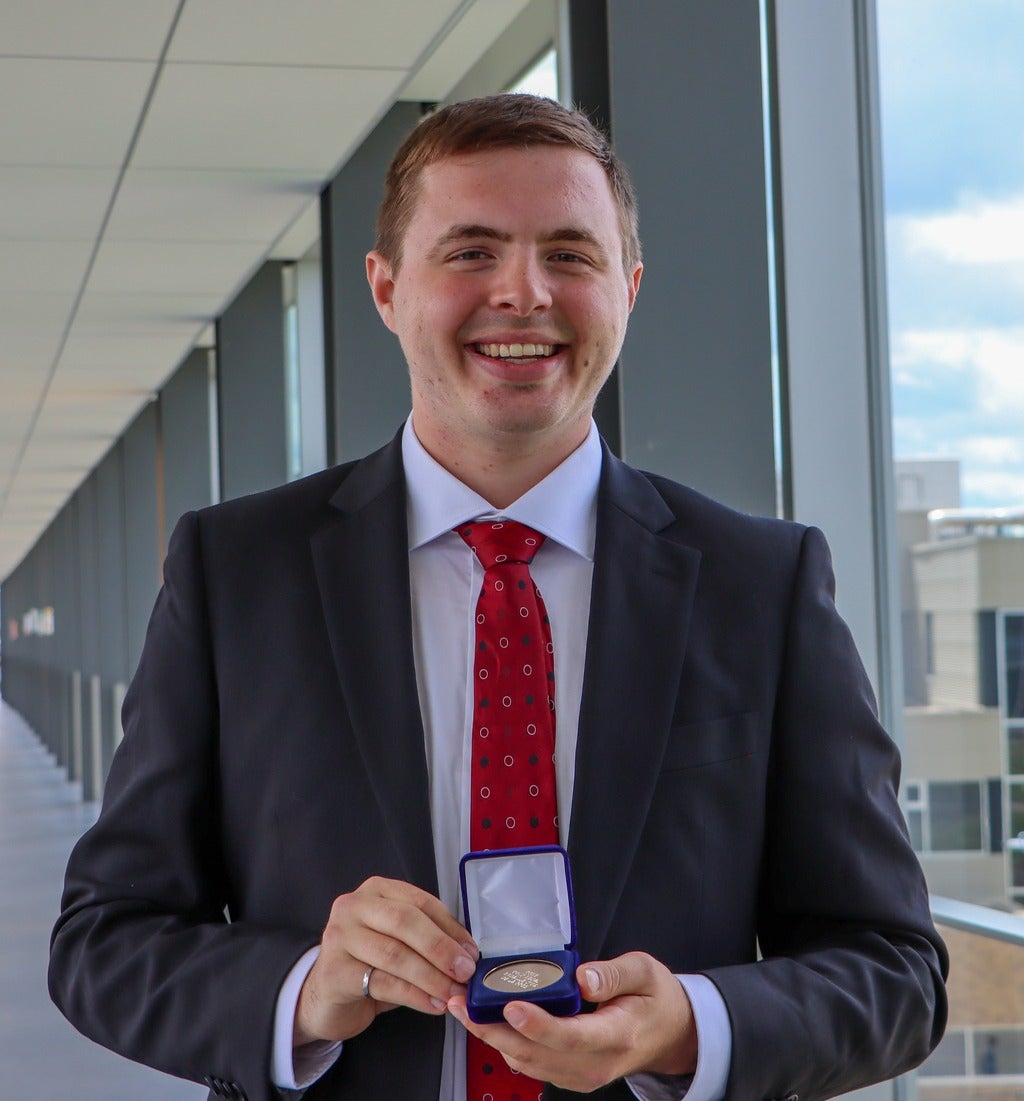
A newly minted mechanical engineering alum has received three awards for his academic excellence.
Jeffrey Lee, a PhD candidate in Mechanical and Mechatronics Engineering, is being celebrated for his tenacity as a teaching assistant and has received the Amit and Meena Chakma Award for Exceptional Teaching by a Student.
Professor Mary Robinson received an award in the educator category at the 2026 Kitchener Waterloo Oktoberfest BMO Women of the Year Awards for her commitment to student-centred learning and innovation in engineering education.
Dr. Duane Cronin has received a Safety Engineering Excellence Award from the U.S. National Highway Traffic Safety Administration (NHTSA) at the 28th International Technical Conference on the Enhanced Safety Vehicles (ESV) in Toronto on May 12, 2026, for his commitment to advancing road safety.
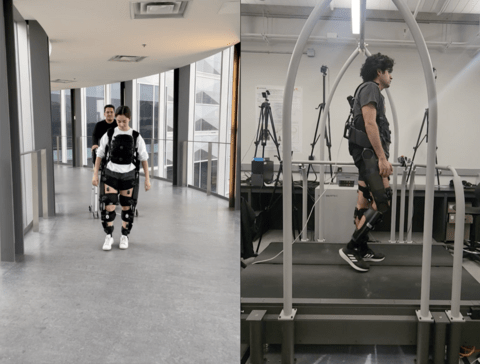
In the Arami Research Lab, researchers are developing next-generation exoskeletons that better align with natural human movement, rather than forcing patients to adapt to the device.
Dr. Sushanta Mitra, a professor in the department, along with two professors in chemical engineering, have been awarded $600,000 by the Natural Sciences and Engineering Research Council of Canada (NSERC) and Environment and Climate Change Canada (ECCC) through the Call for Proposals on Plastics Science and Innovation for a Cleaner and More Sustainable Future.
University of Waterloo Alternative Fuels Team (UWAFT), a mechanical and mechatronics-focused team, has been selected from among 20 universities across North America and is one of two Canadian universities to compete in the EcoCAR Innovation Challenge on the Stellantis track.
MME professor Amir Khajepour has been elected as a fellow to the Canadian Academy of Engineering (CAE)--one of the highest honours the profession bestows in Canada.
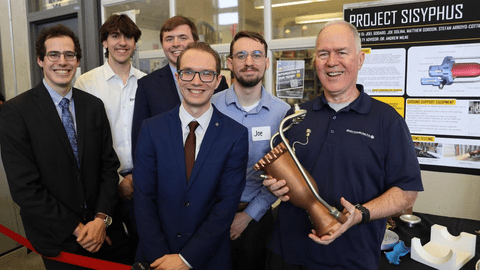
Capstone team Project Sisyphus designed and built an engine that uses regenerative cooling, circulating fuel through built-in channels to prevent the chamber from melting. The 3D-printed copper parts made through additive manufacturing also help with this.
For over three decades, co-op students like Smita Basak have helped drive innovation at Toyota Motor Manufacturing Canada.