


The department's small class-sizes, engaging teaching practices, and hands-on learning in our state-of-the-art facilities empower our students to solve real-world problems.
The Department of Chemical Engineering is a vibrant center of collaborative research addressing some of the most pressing challenges in energy and materials. Our faculty members are engaged in a diverse array of research in areas such as machine learning and process systems engineering, CO2 capture and conversion, polymer engineering, renewable energy, synthetic biology, environmental remediation, and materials science that push the boundaries of innovation.


Find out more by exploring the programs, research and news stories on this site.
News

Turning deep tech research into new start-ups
Three chemical engineering graduate students won in the Academy of Research Commercialization (ARC) inaugural pitch competition.
ARC is a new program launched jointly between the Faculty of Engineering and the Conrad School of Business in collaboration with Velocity and WatCo (Waterloo Commercialization Office).
ARC provides programming such as fund preparation, and workshops for PhD students aiming to transform deep-tech research into for-profit ventures.
Three entrepreneurially minded chemical engineering graduate students were winners of the competition.
Drew Davidson’s start-up ArcticEdge Technologies Inc. was one of the winners. Davidson, who is co-supervised by Professors Milad Kamkar and Valerie Ward, was inspired by his mother, Kelley Willemze who was a firefighter in Cambridge for over 30 years.

Using machine learning to turn fire sensor data into life-saving insight
Professor Joshua Pulsipher is part of a team of researchers that have created a data-driven analysis system that could reveal how fires behave to better inform the building code, evacuation plans and advise first responders.
Fire behavior knowledge has not kept pace with today’s architecture and furnishing materials.Fabric and foam in modern furniture can produce toxic gases when on fire and the make-up and quantity of gases change during the evolution of a building fire.
Historically, older buildings were highly ventilated. However, modern buildings are sealed for energy efficiency with a vapour barrier that blocks airflow from the outside, resulting in oxygen-starved conditions and fires leading to inefficient combustion, which creates more toxic gases along with smoke.
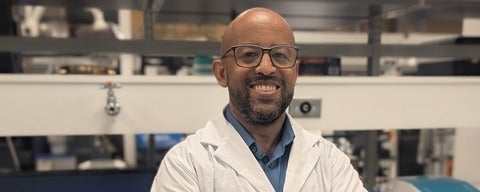
Replacing lead in X-ray shielding
A research group led by Professor Tizazu Mekonnen has designed a lightweight, flexible polymer-based material that blocks X-ray radiation, offering a potential alternative to heavy lead aprons currently used.
X-rays are a necessary tool in medical diagnostics, industrial inspection, security screening, military applications and more. Exposure to radiation is a concern, highlighting the need for lightweight, lead-free shielding materials that protect against harmful radiation.
In a previous study investigations focused on using safer alternative elements to lead, which comes with its own health risks. Researchers experimented with using bismuth, tungsten, gadolinium, barium, and other heavy metals, as well as their compounds that were incorporated into a polymer matrix.
In the current work, the research group used tungsten because it has high density at the atomic level, which is effective in blocking x-ray radiation. The focus is on the polymer’s design architecture. The group discovered that when they added more tungsten nanoparticles, the material blocked X-ray radiation better but became stiff.
Events

Seminar Speaker/ Prof. Tae Seok Moon
Abstract
The past decade has witnessed the tremendous power of systems and synthetic biology in the creation of genetic parts, devices, and systems, which helps understand complex biological systems. However, its potential for real-world applications has not been fully exploited. One of its promising applications is the construction of programmable cells that integrate multiple environmental signals and implement synthetic control over biological processes. My research interests are focused on developing microbes and microbiota that can process multiple input signals and generate user-defined outputs. Specifically, I aim to build genetic programs to control various bacterial processes such as gene expression, chemical reactions, and evolution. I will present published and unpublished results of my selected research projects by discussing the potential and challenges of systems and synthetic biology to address global problems, including plastic and agricultural waste issues, non-invasive diagnostics and disease treatment using smart probiotics and microbiota engineering, sustainable bioproduction, and biocontainment of genetically engineered microbes.

Seminar Speaker/Professor Charles Xu
Biomass plays a key role in capturing and storing solar energy on Earth. It is estimated that up to 8,500 exjoules (×10¹⁸ joules) of solar energy are captured and stored globally each year through biomass, which is about 10-15 times the current global energy consumption (580 exajoules). This presentation provides an overview of the availability of biomass and organic solid waste resources globally, as well as in Chinese mainland and Hong Kong, and introduces hydrothermal technologies and their applications in the transformation of biomass and organic solid waste. During these transformations, water is used as a reaction medium, solvent, reactant, or catalyst. Hydrothermal technology is especially suitable for the resource utilization of high-moisture biomass and biowaste (such as food waste, sewage sludge, manure slurry, microalgae, etc.), as it eliminates the costly dehydration/drying process (which is essential for other thermochemical processes like combustion, pyrolysis, and gasification). This presentation summarizes Professor Xu's team's past research achievements in various hydrothermal technology development, including methanol aqueous phase reforming (APR) for hydrogen production, biomass hydrothermal carbonization (HTC) to produce water-charcoal, hydrothermal liquefaction of biomass waste (HTL) to produce biocrude oil, and supercritical water gasification (SCWG) of aqueous biomass (sugars) to produce green hydrogen. Professor Xu will also share his experience in scaling HTL technology to 6 kg/h and 100 kg/h, as well as ongoing commercialization efforts, including building pilot units with a daily throughput of 10 tons and demonstration units with a daily throughput of 100 tons.
PhD Comprehensive/Microfluidic - Assisted Engineering of Structured Liquid-State Soft Materials and Hierarchical Cryogel Architectures by Yasamin Noorafkan
Microfluidic - Assisted Engineering of Structured Liquid-State Soft Materials and Hierarchical Cryogel Architectures