


The Waterloo Institute for Nanotechnology (WIN) is a global leader in discovering and developing smart and functional materials, connected devices, next generation energy systems, and therapeutics and theranostics. These discoveries by our scientists and engineers are fundamentally changing our world and helping solve some of humanity's most pressing issues. Our 285, 000 square foot, state-of-the-art facility meets the highest scientific standards for the control of vibration, electromagnetic radiation, temperature, and humidity, making it a global centre of excellence for nanotechnology and its applications.
Why is nanotechnology important? It is about creating new materials and improving ways of manufacturing products. To be more efficient, better, stronger and cheaper. Also improving the economy, environment and society. To achieve societal impact and a sustainable future, WIN has now mapped its thematic areas with the United Nations Sustainable Development Goals.


News

Member Spotlight: Tier 1 Canada Research Chair in Data and AI Research
Congratulations to WIN member Marina Meilă on being awarded a Tier 1 Canada Research Chair in Reliable Structure Discovery. Her work focuses on developing advanced methods to ensure machine learning results are accurate and trustworthy, strengthening the reliability of data-driven discoveries and advancing innovation across scientific disciplines.
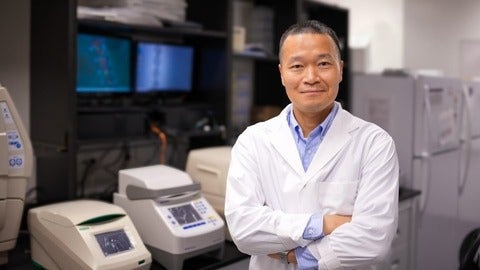
Member Spotlight: Exploring the Expanding Potential of DNA Materials
Congratulations to Juewen Liu for his pioneering work in DNA-based materials, where he is advancing the use of aptamers for applications in sensing, therapeutics, and environmental technologies.

Member Spotlight : Federal funding supports new research on microplastics detection and removal
Congratulations to Sushanta Mitra, Boxin Zhao, and Nasser Mohieddin Abukhdeir on receiving $600,000 in federal funding to advance research on microplastic pollution. Their project focuses on developing an innovative, made-in-Canada platform that enables the real-time detection and removal of microplastics using advanced materials, sensors, and AI. This work supports more efficient monitoring, improved identification of pollution sources, and contributes to Canada’s goal of reducing plastic waste.