Future students

Popular methods of protecting smartphone personal identification number (PINs) may only be successful in safeguarding your personal information 20 per cent of the time, according to a new study out of the University of Waterloo.

The study found that methods such as tilting the smartphone, a widely adopted defence strategy, does not guard against people close to you such as romantic partners and co-workers who might be angling for access to your device. 

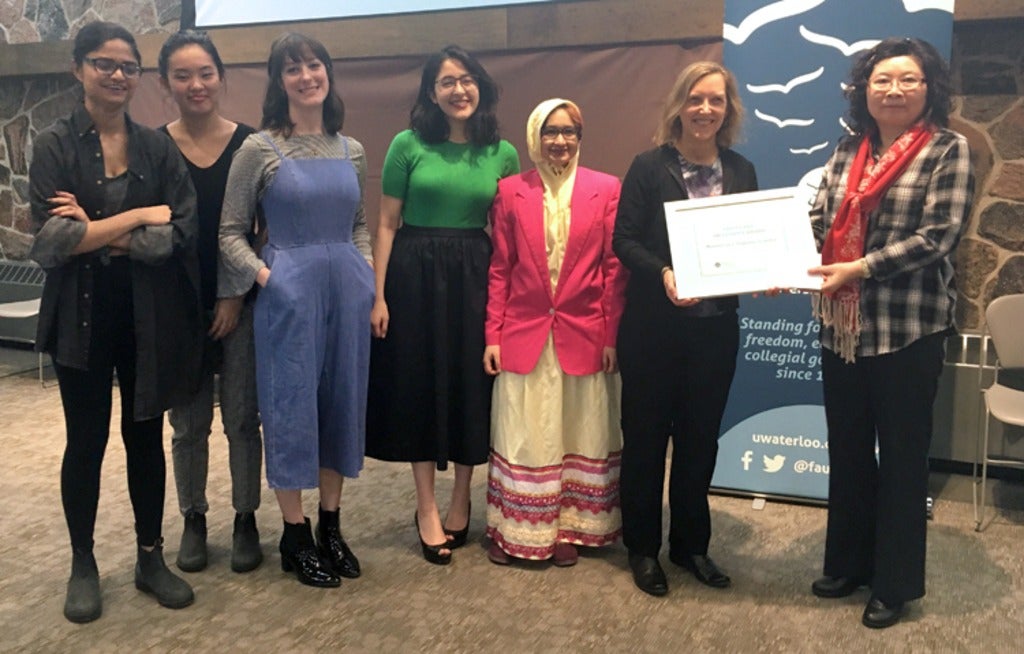
Three faculty members have been awarded the 2018 Faculty of Mathematics Golden Jubilee Research Excellence Award. Jason Bell, Luke Postle, Daniel Vogel are each awarded $2,500. This honour is conferred to early or mid-career faculty members who have made outstanding research contributions, was established in 2017 to mark the 50th anniversary of the Faculty of Mathematics. 

Thursday, June 14, 2018

The perfect picture now a reality

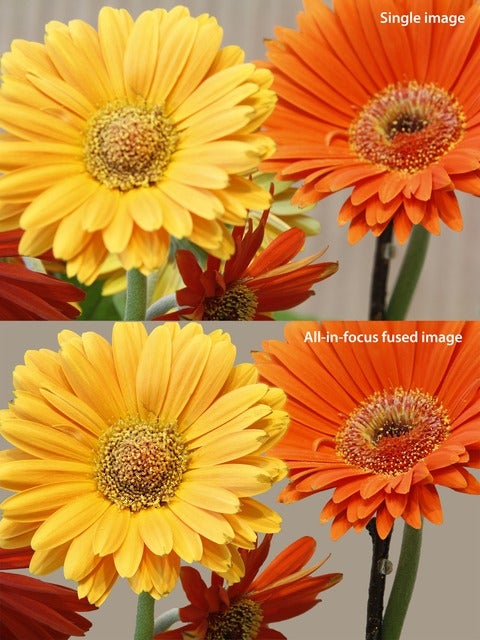
Researchers at the University of Waterloo have developed a faster and more accurate way to take and merge photos. The result is the ability to take sections of each photo to create a single picture where all elements are in focus.

Coupling bikeshare with public transit could be an important component when trying to increase light rail transit (LRT) ridership, according to a new study out of the University of Waterloo. 

In their study, researchers from Waterloo explored the most efficient size of a bike pool that would ensure enough bikes would be available to commuters who sign up for a share program.

Monday, June 4, 2018 4:00 pm - 4:00 pm EDT (GMT -04:00)

Public Lecture: Infinite Games

Antonio Montalban, University of California - Berkeley

Infinite two-player games have been a very useful tool to prove many results in logic and other areas. What makes them fascinating to computability theorists is that winning strategies can be extremely complex even for simple games.

Researchers have developed a new way to improve our knowledge of the Big Bang by measuring radiation from its afterglow, called the cosmic microwave background radiation. The new results predict the maximum bandwidth of the universe, which is the maximum speed at which any change can occur in the universe.
The cosmic microwave background (CMB) is a reverberation or afterglow left from when the universe was about 300,000 years old. It was first discovered in 1964 as a ubiquitous faint noise in radio antennas.

At 14, Mubina Chunari hadn’t chosen her dream job, but she knew she loved math. At the time, she couldn’t figure out how to make a living by loving math and it was holding her back. The only adults she’d met with careers in math were either university professors or her own teachers. Although teaching interested her, she wanted a career outside of academics that would fit more into her personal growth goals.