The optimal career path
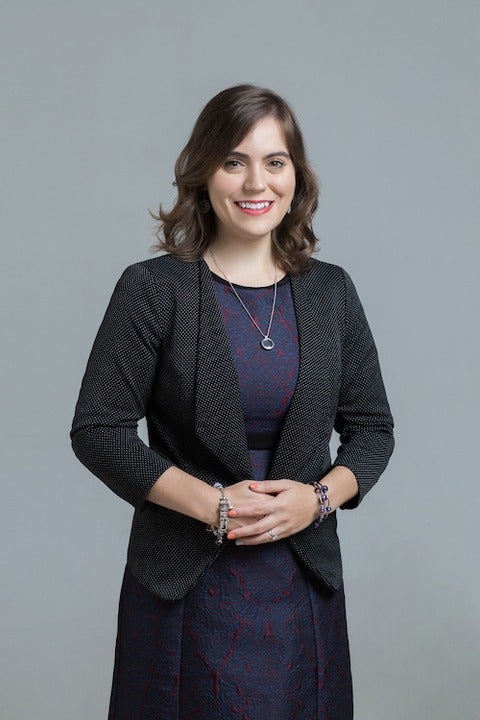
Jodie Wallis (BMath ’93) is always in pursuit of the most efficient way to get something done. “Sometimes my partner will tell me to stop optimizing him when I point out small ways to save time and effort,” she laughed.
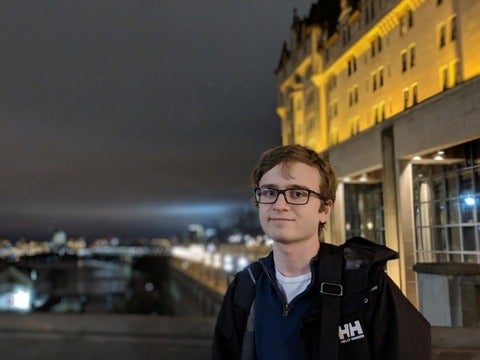
University of Waterloo’s Faculty of Mathematics master’s student, Luke Hagar, is among the 25 finalists in this year’s GRADflix competition.
Hagar’s project, entitled “Beyond p-values: Sample size determination using Bayesian statistics,” will be shown along with the other finalists in the showcase event on Friday, January 29, 2021, where the winners will be announced.
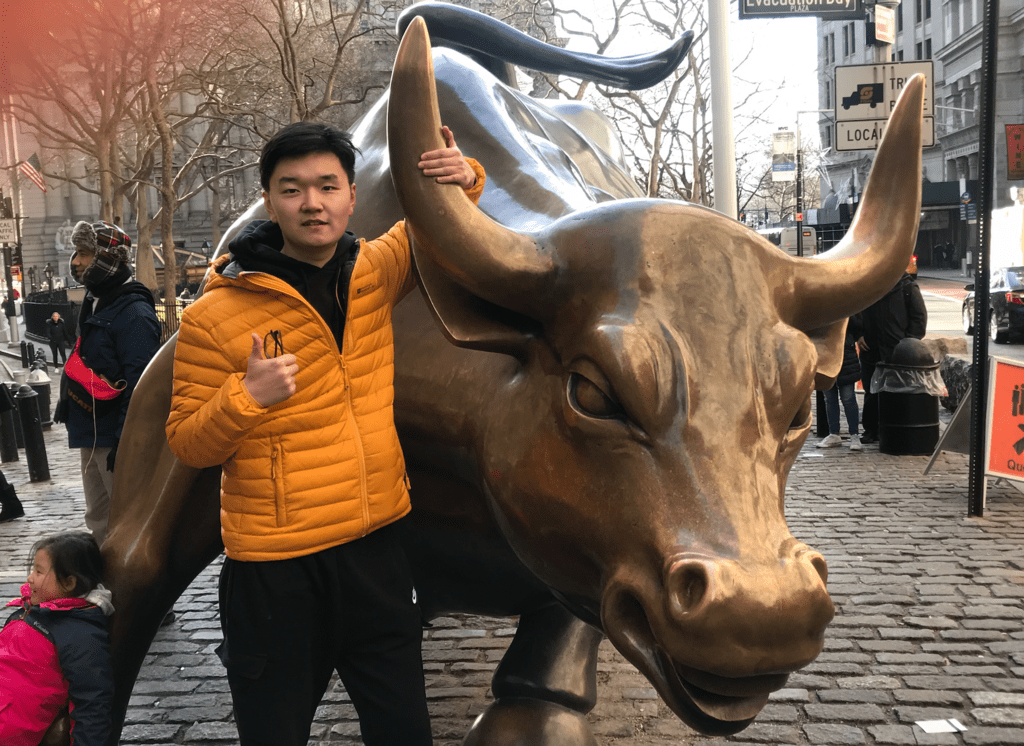
Two years into his undergraduate degree at Sichuan University, Chao Qian regretted his decision to study business management. “I came to the realization that management skills are better learned outside of the classroom,” he said. “I wanted to learn something more solid and quantitative. That’s where my journey to Waterloo began.”
A year into his undergraduate degree at the University of Waterloo’s School of Accounting and Finance, Jonathan Lucki felt pulled in an unexpected direction. “My whole life, I had plans to be an accountant,” he remembered. "I ended up enrolling in the Math/Business Accounting program within the Faculty of Mathematics. But even before university, math had become my favourite subject in school and I found myself writing computer programs in my spare time for fun."
Jinjiang ‘J.J.’ Lian first realized he wanted to become a data scientist while working as a data manager for clinical research at a university healthcare facility in the US. “I noticed that many healthcare workers lacked the skill set to collect and interpret patient data correctly, which negatively impacted patient care,” he recalls. “I decided that whether I ended up in healthcare, tech, or another industry altogether, I wanted to use my data skills to help people.”
She grew up in Alberta and Nova Scotia, but she considers Nanchang, China, her second home. After earning undergraduate degrees in pure mathematics and education, Alyssa Schultz Dey took a leap of faith and accepted a teaching position at the Nanchang No. 2 High School Sino-Canadian Nova Scotia International Program in southeastern China.
High school students, teachers, and families are welcome to join us for captivating lectures and interactive activities.
Join us for sample lectures and activities with some of our best professors and to learn more about the area of Computer Science.
Registration is open until Dec 4 for Ontario high school teachers & students.
Axelar, a decentralized network that connects application builders with blockchain ecosystems, applications and users, has raised $3.75 million USD in seed funding from Silicon Valley investors, including DCVC, a San Francisco–based venture capital firm specializing in deep tech, and notable blockchain companies and investors such as Binance X, Lemniscap, Collab+Currency, North Island Ventures, Divergence Ventures, Cygni Labs, and others.
Every mathematician solves math problems, but only a handful of mathematicians study the logical reasoning that they and their colleagues use to solve problems. They focus on the journey, not just the destination.
The main difference between current wireless networks and 5G networks comes down to two words — speed and latency.
5G networks are expected to be up to 100 times faster than current networks. And at that speed, 5G drastically cuts latency when connecting to the network, the lag between instructing a computer to perform a task and its execution. One thing we know with certainty — by delivering mountains of data at warp speed wirelessly, the impact of 5G will be enormous and it will be felt across all sectors of society.