Michael Houston: Growing up Waterloo
For Michael Houston, PhD ’93, BSc ’87, the University of Waterloo is more than his alma mater. For a good chunk of his youth, the campus is where he called home.
When it comes to hibernation, conserving resources is key for an animal’s survival. For bats of Western North America, water may be the key to assessing a bat species’ ability to thrive during hibernation.
New research that comes as part of a larger project to understand the potential impact of white-nose syndrome in the West found that bats are adept at finding similar hibernation conditions across their large geographic ranges, despite a variety of climates in these areas.
Establishing and supporting innovative research projects is an important priority for the University of Waterloo. The Canadian Foundation for Innovation’s John R. Evans Leaders Fund has recognized four Faculty of Science researchers to embarking upon research or technology development that is innovative, high quality and meets international standards.
From using microbes to breakdown contaminates in landfills to learning how to conserve our amphibian populations in the face of climate change, the Government of Ontario has awarded three Waterloo Science researchers $140,000 each to advance ‘Ontario made’ research and innovation.
Early Researcher Awards
It’s Spring Convocation again, and this year the Faculty of Science will grant over 850 students their hard-earned Bachelor of Science degree. But for Susan and James Hadden, both BSc ’90 biology alumni, there’s one graduate in particular who they’re most excited to welcome into the club: their daughter, Jocelyn, who has earned her Bachelor of Science in Biomedical Sciences.
To a scientist, trial and error is common in laboratories to refine new tests and methods, and look for potential problems on the small scale. But what happens when these techniques are meant for human tissues, such as for surgeries, medical tests, and treatments, where multiple different trials are not possible?
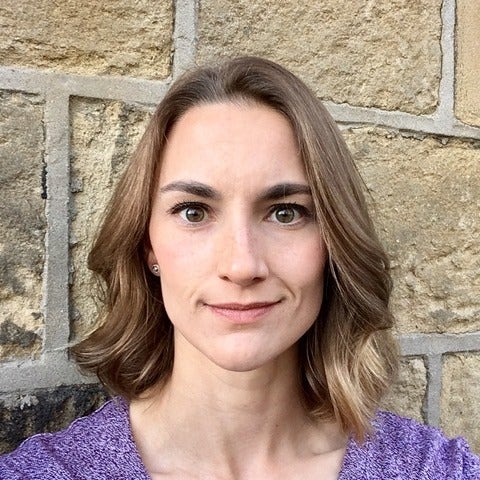
Therese Hayes (BSc ’89)
Chief Sustainability and Business Development Officer
The House of LR&C, PBC
By the time Yvonne Stevens (BSc ’94, MSc ’98) turned 14, she already knew that she wanted to be a scientist. Having grown up in a large family, headed by a single mother, Yvette Stevens, who was an electrical engineer, Yvonne already had the support and drive to make her career dreams a reality. Her ambitions would take her from her home country of Switzerland to Waterloo’s Faculty of Science to study Biochemistry.
Last Friday, Professor Jenine McCutcheon from Earth and Environmental Sciences was featured on CBC's Quirks and Quarks podcast, talking about her recent research on the Greenland Ice Sheet.